As concerns around digital privacy, data tracking, and cyber threats continue to grow, more internet users are searching for tools that can help them browse safely and anonymously.
Two of the most common solutions are Virtual Private Networks (VPNs) and proxy servers. Although these technologies are often mentioned together, they are not interchangeable.
Both can help mask your IP address and bypass geographic restrictions, but their capabilities differ significantly. Understanding the differences between a VPN and a proxy is essential for choosing the right tool based on your needs.
Whether you want to secure your connection on public Wi-Fi, access region-locked content, or simply improve your online privacy, selecting the right option can make a substantial difference.
What Is a Proxy Server?
A proxy server acts as an intermediary between your device and the internet.
When you use a proxy, your internet requests are routed through the proxy server before reaching the destination website. As a result, websites see the proxy server’s IP address instead of your actual one.
This process helps users hide their location, access geo-restricted content, and manage multiple online accounts.
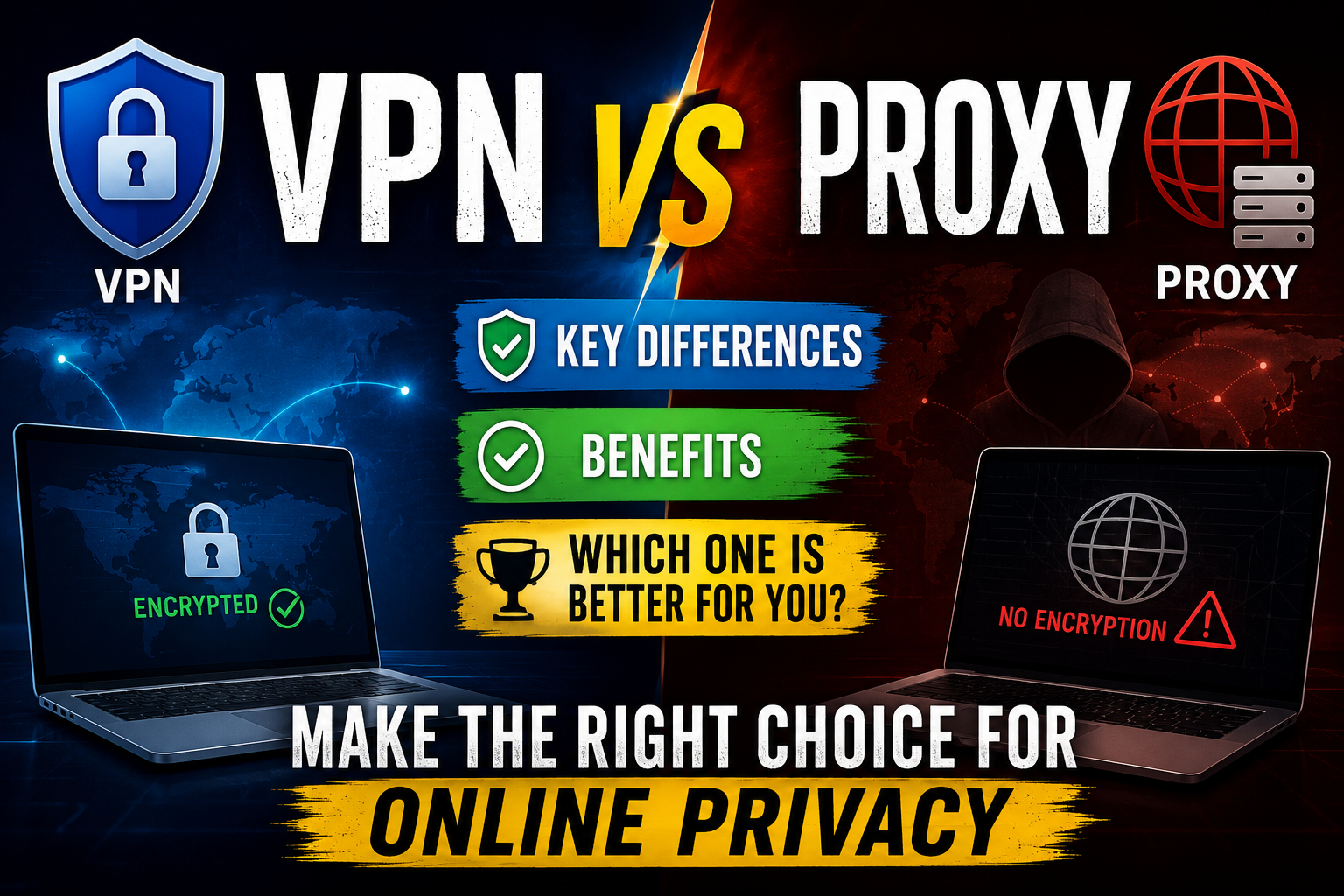
However, most standard proxies do not encrypt your internet traffic. This means your internet service provider, network administrators, and potentially malicious actors can still monitor your online activities.
Common types of proxy servers include:
- HTTP proxies for web browsing.
- SOCKS proxies for broader internet traffic support.
- Transparent proxies used by organisations and networks.
- Residential proxies that use real user IP addresses.
- Datacenter proxies designed for speed and large-scale tasks.
What Is a VPN?
A Virtual Private Network (VPN) creates a secure, encrypted tunnel between your device and a remote server operated by the VPN provider.
Once connected, all internet traffic passes through this encrypted tunnel, preventing third parties from monitoring your activities.
Like a proxy, a VPN hides your real IP address. Unlike a proxy, it also protects your data through encryption.
This added security makes VPNs particularly useful for protecting sensitive information such as passwords, banking details, private messages, and business communications.
VPNs typically secure all internet traffic on a device, including browsers, mobile apps, games, and background services.
VPN vs Proxy: The Main Differences
| Feature | VPN | Proxy |
|---|---|---|
| IP Address Masking | Yes | Yes |
| Traffic Encryption | Yes | Usually No |
| Device-Wide Protection | Yes | No |
| Application-Level Setup | No | Yes |
| Protection on Public Wi-Fi | Strong | Limited |
| Connection Speed | Moderate | Often Faster |
| Privacy from ISP | High | Low |
| Best Use Cases | Privacy and security | Location masking and simple tasks |
How Encryption Changes Everything
The most important distinction between a VPN and a proxy is encryption.
VPNs encrypt your internet traffic before it leaves your device, making the information unreadable to anyone attempting to intercept it.
This encryption protects your data from:
- Internet service providers.
- Public Wi-Fi hackers.
- Network administrators.
- Data trackers.
- Cybercriminals using man-in-the-middle attacks.
Most proxies simply reroute your traffic without encrypting it. While they conceal your IP address, they do not secure your data.
Coverage: Device-Wide Protection vs Application-Level Access
Another major difference is the scope of protection.
Proxies typically work on an application-by-application basis. Users often need to configure individual browsers, apps, or software programs manually.
VPNs, on the other hand, protect all internet traffic on the device automatically once connected.
This means your browser, email client, streaming apps, online games, and background services all benefit from the same level of security.
Advantages of Using a Proxy
Proxy servers remain useful for specific situations where speed and simplicity matter more than security.
- Faster performance due to the lack of encryption.
- Easy access to geo-restricted websites and content.
- Useful for managing multiple accounts.
- Commonly used for web scraping and market research.
- Helpful for testing websites from different locations.
- Many options are inexpensive or free.
Businesses often rely on proxy networks for large-scale data collection and location-based testing because they can deploy multiple IP addresses quickly.
Advantages of Using a VPN
VPNs offer a more comprehensive approach to online security and privacy.
- Encrypt all internet traffic.
- Protect sensitive information on public Wi-Fi.
- Prevent ISPs from monitoring browsing activity.
- Reduce exposure to cyber threats.
- Hide your real IP address.
- Secure multiple applications simultaneously.
Many modern VPN providers also include additional security features such as:
- Kill switches that disconnect the internet if the VPN connection fails.
- DNS leak protection.
- Malware and phishing filters.
- Multi-factor authentication.
- Split tunnelling capabilities.
When Should You Use a Proxy?
A proxy may be the right choice if your primary objective is to:
- Access content available only in certain regions.
- Change your IP address quickly.
- Manage multiple online profiles.
- Conduct web research or data collection.
- Improve connection speeds for non-sensitive tasks.
For casual browsing or business applications that do not involve sensitive information, proxies can offer a practical and cost-effective solution.
When Should You Use a VPN?
A VPN is the better option if you need:
- Secure internet access on public networks.
- Enhanced online privacy.
- Protection against cyber threats.
- Confidential communications.
- Device-wide security.
- Protection from ISP tracking.
If you regularly work remotely, travel frequently, or handle sensitive information online, a VPN provides significantly stronger protection.
Common Misconceptions About VPNs and Proxies
One common misconception is that both tools provide the same level of anonymity.
While both hide your IP address, proxies do not offer the same privacy safeguards as VPNs because they typically lack encryption.
Another misconception is that free services are always safe.
Some free proxies and VPNs may collect user data, display excessive advertisements, or offer weak security protections.
Before choosing any provider, users should review privacy policies, security features, and the company’s reputation.
Which One Should You Choose?
Your decision ultimately depends on your priorities.
If speed and basic IP masking are your primary goals, a proxy may be sufficient.
If security, privacy, and comprehensive protection matter most, a VPN is the stronger choice.
For many modern internet users, the additional encryption and device-wide protection offered by VPNs outweigh the slight reduction in speed.
Conclusion
Both VPNs and proxy servers help conceal your IP address, but they are designed for different use cases.
Proxies are ideal for simple tasks such as bypassing regional restrictions, testing websites, and managing multiple accounts. They offer speed and convenience but provide limited security.
VPNs deliver encrypted, device-wide protection that safeguards your data, prevents tracking, and enhances online privacy.
As cyber threats become more sophisticated and digital privacy concerns continue to rise, VPNs are increasingly becoming the preferred solution for users seeking a safer online experience.
However, proxies remain valuable tools when location masking and performance are the primary requirements.
For breaking news and live news updates, like us on Facebook or follow us on Twitter and Instagram. Read more on Latest Careers on thefoxdaily.com.






COMMENTS 0