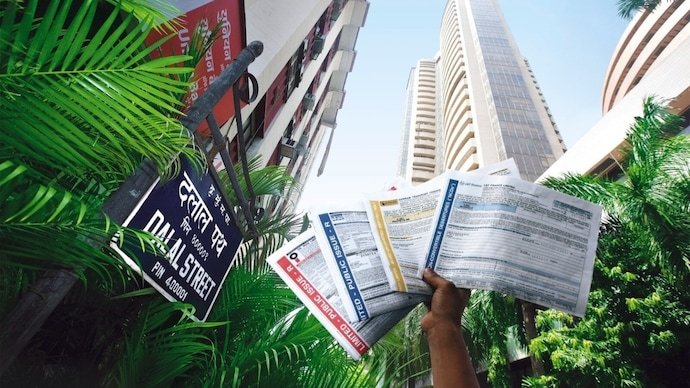
The Indian Stock Market opened higher on Monday, extending its recent gains as investors welcomed signs of stability in global markets. The benchmark Sensex crossed the 77,000 mark, while the Nifty comfortably traded above 24,100, reflecting improving risk appetite among both domestic and foreign investors.
At first glance, the rally appeared to be driven by easing concerns surrounding tensions in West Asia and a decline in global crude oil prices. However, beneath the surface, several powerful factors are working together to support Indian equities. A strengthening Rupee, resilient domestic economic growth, strong participation from retail investors and renewed interest in technology stocks are all contributing to the market’s positive momentum.
For investors, the latest move is not just another trading session. It offers important clues about where markets could be headed next and why India continues to attract attention as one of the world’s most promising investment destinations.
Why Lower Crude Oil Prices Matter So Much for India
Few global commodities have a bigger influence on India’s economy than crude oil. As one of the world’s largest oil importers, India depends heavily on overseas energy supplies to meet domestic demand.
When oil prices rise sharply, businesses face higher transportation and production costs. Consumers often see higher fuel prices, while inflationary pressures increase across the economy. Government finances can also come under strain as the country’s import bill expands.
The reverse is equally true.
When crude oil prices decline, India receives a significant economic advantage. Lower energy costs help reduce inflation, improve corporate profitability and ease pressure on the country’s trade deficit.
Economists often describe lower oil prices as a hidden stimulus for India because the benefits spread across multiple sectors simultaneously.
- Transportation costs decline.
- Manufacturing margins improve.
- Consumer purchasing power increases.
- Inflation pressures ease.
- The current account deficit improves.
- Government fiscal management becomes easier.
This explains why investors closely track every movement in Brent crude prices. As long as oil remains relatively stable, India’s economic outlook becomes more favourable.
The Stronger Rupee Is Providing Additional Support
Another important but often overlooked factor behind the market’s strength is the appreciation of the Indian rupee.
Currency stability plays a crucial role in attracting foreign investment. A stronger rupee reduces the cost of imports and signals confidence in the broader economy.
For India, which imports large quantities of crude oil, industrial machinery, electronic components and raw materials, a stronger currency can significantly reduce costs across multiple industries.
Foreign investors also prefer markets where currency fluctuations are relatively contained. Stable exchange rates help protect investment returns and improve confidence in long-term capital allocation decisions.
The combination of a stronger rupee and lower oil prices creates a powerful tailwind for equities, particularly in sectors dependent on imported inputs.
IT Stocks Stage a Comeback Despite Global Concerns
One of the standout features of Monday’s rally was the strength displayed by information technology stocks.
The sector had faced pressure in recent sessions after concerns emerged regarding slower technology spending by global corporations. Since major Indian IT companies generate a significant portion of their revenue from overseas markets, particularly the United States and Europe, any signs of weaker corporate technology budgets tend to impact investor sentiment.
Yet the latest recovery suggests investors remain confident about the sector’s long-term prospects.
India’s technology industry continues to benefit from several structural trends that are expected to drive demand for years:
- Artificial intelligence adoption.
- Cloud computing migration.
- Cybersecurity investments.
- Digital transformation projects.
- Enterprise automation.
- Data analytics and machine learning deployment.
While short-term demand cycles may fluctuate, the broader digital transformation story remains intact. Investors appear to be looking beyond temporary challenges and focusing on the long-term growth potential of Indian technology firms.
Financial Stocks Continue to Anchor the Market
Financial stocks remain one of the strongest pillars supporting Indian benchmark indices.
Banks, non-Banking financial companies and financial service providers continue to benefit from healthy credit growth, improving asset quality and rising economic activity.
India’s banking sector has undergone a remarkable transformation over the past decade. Non-performing assets have declined significantly from earlier highs, balance sheets have strengthened and digital banking adoption has accelerated rapidly.
Credit demand remains healthy across retail, corporate and Infrastructure segments, creating favourable conditions for earnings growth.
This strength explains why many market experts continue to view banking and financial services as core drivers of India’s long-term equity story.
Broader Market Participation Signals Healthy Sentiment
Perhaps the most encouraging aspect of the rally is that gains are not limited to a handful of large-cap companies.
Mid-cap and small-cap stocks also traded higher, indicating broader participation across the market.
When rallies are supported by multiple segments rather than a few heavyweight stocks, it often reflects healthier investor confidence and stronger economic expectations.
Broader market participation generally suggests:
- Improving growth expectations.
- Higher investor confidence.
- Greater willingness to take calculated risks.
- Positive outlook for corporate earnings.
- Strong domestic liquidity conditions.
Retail investors continue to play a major role in sustaining this momentum. Monthly systematic investment plan (SIP) inflows into mutual funds remain robust, providing a steady source of capital even during periods of foreign investor volatility.
India’s Economic Fundamentals Remain Strong
The market rally is also being supported by India’s broader economic strength.
India remains among the fastest-growing major economies in the world. Strong domestic consumption, government-led infrastructure investment and increasing manufacturing activity continue to provide a solid foundation for growth.
Several long-term policy initiatives are helping reshape the economy:
- Production Linked Incentive (PLI) schemes.
- Large-scale infrastructure projects.
- Digital public infrastructure expansion.
- Manufacturing ecosystem development.
- Logistics and transportation modernization.
- Financial inclusion initiatives.
These reforms are gradually improving productivity, boosting competitiveness and attracting investment across sectors.
Why Foreign Investors Continue to Watch India Closely
Global investors increasingly view India as one of the most attractive emerging markets.
While foreign portfolio flows can fluctuate depending on global conditions, India’s long-term appeal remains strong because of its combination of economic growth, demographic advantages and expanding corporate earnings.
| Key Factor | Impact on Indian Markets |
|---|---|
| Lower Crude Oil Prices | Reduces inflation and supports economic growth |
| Stronger Rupee | Boosts investor confidence and lowers import costs |
| Growing GDP | Supports long-term corporate earnings growth |
| Infrastructure Spending | Benefits industrial and financial sectors |
| Digital Transformation | Creates opportunities for IT and technology firms |
| Strong Domestic Flows | Provides market stability during volatility |
Compared with many other emerging economies, India offers a unique combination of political stability, economic growth and structural reform momentum.
The Bigger Story: India’s Growing Market Resilience
A key insight often missed in daily market coverage is how resilient India’s financial system has become.
A decade ago, geopolitical tensions involving major oil-producing regions could have triggered sharp declines in Indian equities and significant pressure on the rupee.
Today, the situation is different.
India possesses stronger foreign exchange reserves, a healthier banking system, deeper capital markets and a far larger domestic investor base than it did in previous cycles.
This structural improvement means markets are increasingly capable of absorbing global shocks without experiencing prolonged disruptions.
The current rally reflects not just optimism about lower oil prices but confidence in India’s ability to navigate uncertainty more effectively than before.
How Today’s Market Environment Differs From Earlier Cycles
The current market environment stands apart from previous oil-driven rallies.
- Foreign exchange reserves are significantly larger.
- Bank balance sheets are stronger.
- Retail participation has increased dramatically.
- Digital investing platforms have expanded market access.
- Corporate profitability remains relatively healthy.
- Government infrastructure spending is at record levels.
These factors provide a stronger foundation for long-term growth than in many previous market cycles.
Key Risks Investors Should Continue Monitoring
Despite the positive outlook, investors should remain aware of potential risks.
- Unexpected spikes in crude oil prices.
- Renewed geopolitical tensions.
- Global economic slowdowns.
- Changes in interest rate expectations.
- Foreign investor outflows.
- Corporate earnings disappointments.
Markets rarely move in a straight line, and periods of volatility are a normal part of the investment cycle.
Future Outlook: Can Sensex and Nifty Sustain Their Upward Momentum?
The combination of lower crude oil prices, easing geopolitical concerns, a stronger rupee and resilient economic fundamentals has created a supportive backdrop for Indian equities.
Technology and financial stocks appear well positioned to remain market leaders, while domestic liquidity continues to provide stability. If oil prices remain under control and economic growth stays robust, investor sentiment could remain constructive in the coming months.
The most important takeaway is that India’s stock market is increasingly being driven by structural strengths rather than short-term global headlines. Strong domestic consumption, infrastructure expansion, digital transformation and rising investor participation are helping create a more mature and resilient market ecosystem.
The latest rise in the Sensex and Nifty therefore represents more than a reaction to lower oil prices. It reflects growing confidence that India can continue delivering economic growth while navigating global uncertainty. For investors, that may be the most important signal of all.
For breaking news and live news updates, like us on Facebook or follow us on Twitter and Instagram. Read more on Latest Business on thefoxdaily.com.






COMMENTS 0