- Why the May 21 Council of Ministers Meeting Matters Politically
- The Modi 3.0 Government Is Entering a Critical Political Phase
- Recent BJP Electoral Success Has Added Momentum
- What Typically Happens During a Cabinet Reshuffle?
- Governance Reviews Have Become Central to Modi’s Administrative Style
- Why the Timing Ahead of June Matters
- Could Younger Leaders and Technocrats Get Bigger Roles?
- The Broader Message the BJP Wants to Send
- Conclusion: The Real Significance Lies Beyond the Meeting Itself
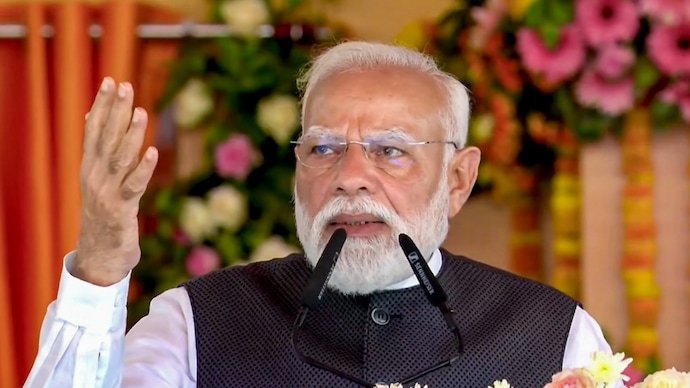
Prime Minister Narendra Modi is expected to chair a high-level meeting of the full Union Council of Ministers on May 21, a development that has immediately intensified political chatter over a possible Cabinet reshuffle in the Modi 3.0 government.
While official sources have maintained that the meeting will focus on Governance reviews, policy implementation, and ministry performance assessments, the political timing of the gathering has drawn enormous attention in Delhi’s power corridors.
The Modi 3.0 government will complete its first year in office on June 10, and speculation is steadily growing that the Bharatiya Janata Party leadership may use the occasion to recalibrate the Cabinet ahead of crucial political and electoral battles over the next two years.
Unlike routine administrative reviews, meetings involving the entire Council of Ministers often carry deeper political significance because they provide the Prime Minister an opportunity to assess governance performance, set future priorities, and indirectly signal accountability expectations to ministers.
Why the May 21 Council of Ministers Meeting Matters Politically
The upcoming meeting is expected to include:
- Union Cabinet ministers
- Ministers of State with independent charge
- Ministers of State
Officially, the agenda revolves around reviewing the implementation of flagship government schemes, ministry coordination, delivery timelines, and departmental performance.
But in India’s political ecosystem, timing is rarely ignored.
The meeting comes at a sensitive moment for the BJP-led National Democratic Alliance government as it prepares to enter the second year of its third term. Historically, Prime Minister Modi has used performance reviews and organisational feedback to make strategic changes within his government.
Political observers believe the current review process could help shape decisions regarding:
- Ministerial promotions
- Portfolio changes
- Inclusion of new regional faces
- Representation from key caste and community groups
- Administrative efficiency improvements
In previous governments, Cabinet reshuffles often served multiple purposes beyond governance balancing regional equations, rewarding performers, addressing political messaging, and preparing for future elections.
The Modi government has traditionally combined governance metrics with political calculations when restructuring ministerial responsibilities.
The Modi 3.0 Government Is Entering a Critical Political Phase
The first anniversary of Modi 3.0 arrives at a politically significant moment.
Although the BJP returned to power in 2024, the electoral landscape has become more competitive compared to the party’s dominant victories in 2014 and 2019. That has increased the importance of governance delivery, alliance management, and state-level political strategy.
The coming months are particularly important because several major state elections lie ahead, and the BJP is expected to sharpen both governance messaging and organisational discipline.
Against this backdrop, a Cabinet reshuffle would allow the leadership to:
- Inject fresh energy into the administration
- Address underperforming ministries
- Strengthen regional representation
- Reward politically significant allies
- Prepare for future state election campaigns
Importantly, Cabinet reshuffles under Prime Minister Modi are often tightly controlled and highly strategic. Unlike coalition-era governments where political compulsions dominated decision-making, Modi’s approach has generally emphasized centralised authority and performance-driven evaluations.
Recent BJP Electoral Success Has Added Momentum
The speculation surrounding a reshuffle has gained further traction following the BJP’s recent electoral performance.
The party and its allies performed strongly in the latest Assembly elections in West Bengal and Assam, while the National Democratic Alliance also retained power in Puducherry. These results have strengthened the BJP leadership’s confidence at a time when opposition parties were hoping to build momentum after the 2024 Lok Sabha elections.
Political analysts believe successful election outcomes often provide governments with greater room to make bold administrative and political decisions.
That could include bringing new faces into the Union Cabinet or assigning larger responsibilities to ministers seen as effective political communicators and administrators.
What Typically Happens During a Cabinet Reshuffle?
A Union Cabinet reshuffle can involve multiple layers of changes.
| Possible Change | What It Means |
|---|---|
| Cabinet Expansion | New ministers inducted into government |
| Portfolio Reshuffle | Existing ministers shifted to new ministries |
| Promotions | Ministers of State elevated to Cabinet rank |
| Performance-Based Changes | Underperforming ministers replaced or reassigned |
| Regional Balancing | Greater representation from key states |
| Alliance Accommodation | NDA partners given larger roles |
In the Modi era, reshuffles have also increasingly focused on administrative specialization. Ministers with strong execution records are often assigned Infrastructure-heavy or politically sensitive portfolios.
The government’s emphasis on large-scale projects, digital governance, Manufacturing growth, and welfare delivery means ministerial efficiency has become more visible than ever before.
Governance Reviews Have Become Central to Modi’s Administrative Style
Prime Minister Modi is known for conducting detailed performance reviews across ministries. Senior officials and ministers are frequently evaluated on implementation speed, coordination, and public delivery outcomes.
Over the years, the Prime Minister’s Office has developed a reputation for closely monitoring flagship schemes, infrastructure targets, and project deadlines.
Meetings involving the full Council of Ministers therefore serve not only as policy discussions but also as mechanisms of administrative accountability.
Several governance initiatives are likely to feature prominently during the May 21 review, including:
- Infrastructure development projects
- Welfare scheme implementation
- Employment generation initiatives
- Manufacturing and investment programs
- Digital governance expansion
- Agriculture and rural development policies
The government is also expected to assess how ministries are communicating achievements to the public, an increasingly important component of modern political governance.
Why the Timing Ahead of June Matters
Sources suggest that if a Cabinet reshuffle takes place, it could happen during the second week of June around the government’s anniversary period.
That timing would carry symbolic as well as strategic significance.
Anniversary milestones often become moments for governments to reset narratives, highlight achievements, and announce new priorities. A reshuffle around that period could help the BJP project an image of proactive governance and internal accountability.
It would also provide fresh political momentum before the next phase of state elections and parliamentary strategy planning.
Additionally, reshuffles can sometimes help governments respond to emerging political realities, including:
- Changing regional dynamics
- Economic priorities
- Coalition management needs
- Public perception challenges
- Administrative bottlenecks
In recent years, the BJP leadership has shown increasing focus on states where the party aims to expand its footprint. Cabinet representation often plays an important role in strengthening political messaging in those regions.
Could Younger Leaders and Technocrats Get Bigger Roles?
One of the recurring discussions surrounding Modi-era reshuffles has been the possibility of giving larger responsibilities to younger leaders, technocrats, and ministers seen as efficient administrators.
The BJP has increasingly positioned itself as a governance-driven party focused on delivery and execution. That approach naturally increases the importance of ministerial performance.
Political observers will closely watch whether the reshuffle, if it happens, reflects:
- A stronger technocratic approach
- Greater youth representation
- Electoral strategy considerations
- Regional outreach priorities
- Administrative specialization
At the same time, alliance management within the NDA remains a major factor. As coalition politics regains importance nationally, balancing partner expectations may also shape final decisions.
The Broader Message the BJP Wants to Send
Beyond individual ministerial changes, the bigger objective may be narrative management.
The BJP leadership appears keen to project three key themes as Modi 3.0 enters its second year:
- Political stability
- Administrative efficiency
- Long-term governance continuity
A carefully managed Cabinet reshuffle could reinforce all three messages simultaneously.
For supporters, it would signal active governance oversight. For bureaucrats, it would reinforce accountability. For political rivals, it would demonstrate that the BJP leadership remains firmly in control of both government and organisational strategy.
Importantly, the Modi government has often preferred gradual recalibration rather than dramatic public disruption. That means any reshuffle, if approved, may appear measured and strategic rather than sensational.
Conclusion: The Real Significance Lies Beyond the Meeting Itself
At face value, the May 21 Council of Ministers meeting is a governance review exercise focused on policy implementation and ministry performance.
But politically, it represents something much larger.
It comes at a moment when the Modi government is preparing for the next phase of its third term, balancing governance delivery with evolving electoral realities and coalition dynamics.
The growing buzz around a Cabinet reshuffle reflects broader questions about how the BJP plans to shape Modi 3.0 moving forward whether through fresh faces, stronger regional representation, or sharper administrative focus.
For now, the meeting itself may not produce immediate announcements. But every signal emerging from it will be closely scrutinized in Delhi’s political circles.
Because in Indian Politics, high-level review meetings are rarely just about reviews.
For breaking news and live news updates, like us on Facebook or follow us on Twitter and Instagram. Read more on Latest India on thefoxdaily.com.





COMMENTS 0