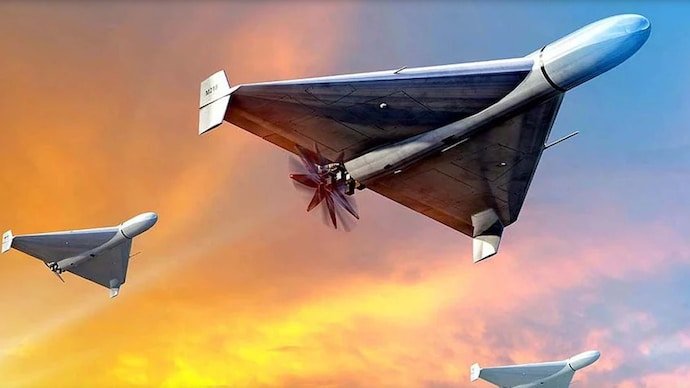
India’s military modernization is entering a new phase. As warfare increasingly shifts toward unmanned systems, Artificial Intelligence, precision strikes, and network-centric operations, the Indian Air Force (IAF) has taken a significant step toward building its own indigenous kamikaze drone capability.
The newly announced programme is far more important than a routine procurement project. It reflects a broader transformation in India’s defence strategy one that prioritizes technological sovereignty, domestic manufacturing, secure supply chains, and operational flexibility.
By partnering directly with Indian companies while retaining ownership of key intellectual property, the IAF is attempting to create a drone ecosystem that can evolve rapidly as future battlefield requirements change.
The initiative also comes at a time when loitering munitions, often called kamikaze drones, have emerged as some of the most influential weapons in modern warfare.
What Are Kamikaze Drones?
Kamikaze drones, also known as loitering munitions or one-way attack unmanned aerial systems (OWA-UAS), combine the characteristics of a drone and a missile.
Unlike traditional missiles, which are launched directly toward a target, kamikaze drones can remain airborne for extended periods while searching for targets.
Once a target is identified, the drone attacks by crashing into it while carrying an explosive payload.
These systems offer several advantages:
- Precision targeting capability
- Reduced risk to pilots
- Lower operational costs compared to fighter aircraft
- Ability to strike time-sensitive targets
- Extended surveillance and loitering capability
- Greater operational flexibility
The growing importance of these systems has fundamentally changed military planning across the world.
Why Kamikaze Drones Have Become a Battlefield Game-Changer
The global military community has witnessed the effectiveness of loitering munitions in several recent conflicts.
Modern battlefields increasingly require weapons that can rapidly identify, track, and eliminate targets without exposing soldiers or aircraft to danger.
Kamikaze drones fill this role exceptionally well.
Military analysts often describe them as a bridge between conventional missiles and reconnaissance drones.
They provide commanders with real-time decision-making flexibility while maintaining precision strike capabilities.
This combination makes them especially valuable against:
- Enemy radar installations
- Air defence systems
- Armoured vehicles
- Command centers
- Logistics hubs
- Mobile missile launchers
As warfare becomes increasingly Technology-driven, these systems are expected to play a larger role in future military operations.
What the Indian Air Force Is Planning
The IAF has initiated a collaborative development programme involving Indian defence companies and the Air Force’s own technical expertise.
Unlike traditional procurement models where the military simply purchases equipment, the Air Force intends to participate directly in design, development, testing, and future upgrades.
This represents a significant shift in India’s defence acquisition philosophy.
The programme will be coordinated through the 5 Base Repair Depot (BRD) in Sulur, Tamil Nadu, which will act as the nodal agency overseeing development activities.
The goal is to create a platform specifically designed around Indian operational requirements rather than adapting an imported solution.
Key Technical Requirements of the Indigenous Drone
The proposed drone is expected to possess capabilities suitable for modern high-intensity combat environments.
| Capability | Requirement |
|---|---|
| Operational Altitude | Up to 16,000 feet |
| Payload Capacity | Minimum 30 kilograms |
| Mission Profile | One-Way Attack System |
| Operating Conditions | Day and Night Operations |
| Navigation | Autonomous Waypoint Capability |
| Additional Functions | Data Relay and Sensor Missions |
These specifications indicate that the IAF is seeking a highly versatile platform capable of supporting multiple mission types beyond simple attack operations.
The Most Important Feature: IAF Retaining Intellectual Property Rights
One of the most significant aspects of the programme is the Air Force’s decision to retain intellectual property rights (IPR).
This may prove more important than the drone itself.
Traditionally, defence manufacturers retain ownership of core technologies, leaving armed forces dependent on vendors for upgrades, modifications, and future enhancements.
Under the new model, the IAF seeks direct control over critical design elements.
This approach offers several strategic advantages:
- Faster future upgrades
- Reduced dependence on suppliers
- Greater customization flexibility
- Lower lifecycle costs
- Improved Security of sensitive technologies
- Long-term technological independence
In modern warfare, ownership of technology is increasingly viewed as important as ownership of the weapon itself.
Why India Wants to Eliminate Chinese Components
A notable requirement in the project is the exclusion of Chinese-origin technology, materials, and components.
This reflects a growing global trend toward securing defence supply chains.
Military systems increasingly rely on advanced electronics, communication modules, processors, sensors, and software.
Dependence on potentially vulnerable foreign supply chains can create operational and security risks.
By insisting on trusted and indigenous components, India aims to:
- Reduce strategic vulnerabilities
- Improve cybersecurity resilience
- Ensure uninterrupted wartime availability
- Protect sensitive military data
- Strengthen domestic manufacturing capabilities
The requirement aligns with broader national security objectives that prioritize technological self-reliance.
How This Fits Into Atmanirbhar Bharat
The project is closely aligned with India’s Atmanirbhar Bharat (Self-Reliant India) initiative.
Over the past few years, the government has aggressively promoted domestic defence production through policy reforms, procurement incentives, and restrictions on certain imports.
The objective is not merely to reduce imports but to transform India into a major defence manufacturing hub.
Several sectors have already witnessed significant growth:
- Missile systems
- Artillery platforms
- Naval equipment
- Electronic warfare systems
- Military communications
- Unmanned systems
The kamikaze drone programme represents another important milestone in that broader journey.
The Growing Global Market for Loitering Munitions
The timing of India’s initiative is strategically significant.
The global market for loitering munitions is expanding rapidly as militaries seek affordable precision-strike capabilities.
Several countries are investing heavily in:
- Autonomous drones
- Swarm technologies
- Artificial intelligence integration
- Networked battlefield systems
- Long-range precision weapons
Industry analysts expect the market for loitering munitions to grow substantially throughout the next decade.
If India successfully develops competitive indigenous systems, it could eventually become an exporter in this emerging sector.
Potential Future Applications Beyond Combat
Although designed primarily as a strike platform, the proposed drone’s architecture suggests broader possibilities.
Its modular design could enable future variants capable of:
- Electronic warfare missions
- Battlefield communications relay
- Intelligence gathering
- Target designation
- Reconnaissance operations
- Border surveillance
This flexibility increases the long-term value of the programme and could create an entire Family of unmanned systems built on a common technological foundation.
How the Programme Could Transform India’s Defence Industry
The initiative may have implications extending well beyond the Air Force.
Direct collaboration between military operators and domestic manufacturers often accelerates Innovation by ensuring that battlefield requirements influence design decisions from the beginning.
Indian companies participating in the programme could gain expertise in:
- Autonomous navigation systems
- Advanced sensors
- AI-enabled targeting
- Secure communications
- Precision guidance technologies
- Military-grade manufacturing
These capabilities could spill over into civilian aerospace, robotics, and technology sectors, creating broader economic benefits.
The Strategic Message Behind the Project
Beyond the technical details, the project sends a powerful strategic message.
Modern military power is increasingly determined not only by the size of armed forces but by control over advanced technologies.
Nations that design, manufacture, and upgrade their own systems possess greater operational independence during crises.
The IAF’s decision to co-develop and retain ownership of critical technologies demonstrates a recognition that future conflicts will be shaped by innovation as much as firepower.
Future Outlook: A Major Step Toward Autonomous Warfare Capability
The Indian Air Force’s indigenous kamikaze drone initiative marks a significant evolution in India’s defence modernization strategy.
Rather than relying solely on imported technologies, the Air Force is pursuing a model that combines domestic innovation, industrial collaboration, intellectual property ownership, and operational customization.
The project’s emphasis on autonomy, modularity, indigenous manufacturing, and secure supply chains reflects the realities of modern warfare, where unmanned systems increasingly determine battlefield outcomes.
If successfully executed, the programme could deliver more than a new drone. It could establish the technological foundation for India’s next generation of autonomous military capabilities, strengthen the domestic defence ecosystem, and position the country as a future leader in advanced unmanned combat systems.
In an era where drones are becoming as important as fighter aircraft and missiles, India’s move to develop its own indigenous loitering munitions may prove to be one of the most strategically significant defence decisions of the decade.
For breaking news and live news updates, like us on Facebook or follow us on Twitter and Instagram. Read more on Latest India on thefoxdaily.com.






COMMENTS 0