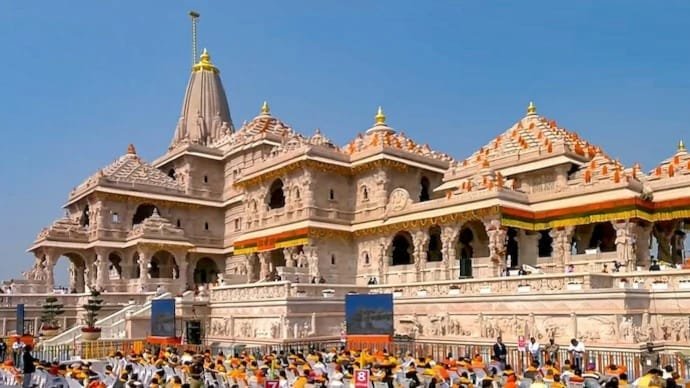
The Shri Ram Janmabhoomi Teerth Kshetra Trust, the body responsible for the construction and management of the Ram Temple in Ayodhya, is expected to hold an important meeting on July 6 amid continuing attention surrounding an alleged donation theft controversy. The meeting is likely to focus on the resignations of two senior trust members, the possibility of organizational restructuring, and discussions on introducing a Chief Executive Officer (CEO) to strengthen administrative management.
The gathering comes at a significant stage in the Trust’s evolution. Since its formation in 2020 following the Supreme Court‘s landmark Ayodhya judgment, the Trust has overseen one of India‘s most prominent religious infrastructure projects. Any leadership changes within the organization are therefore closely watched by devotees, legal experts, policymakers and organizations associated with the Ram Mandir movement.
Beyond the immediate controversy, the meeting presents an opportunity to examine whether the Trust’s Governance structure should evolve to meet the demands of managing one of the country’s largest pilgrimage destinations.
Key Developments Ahead of the July 6 Meeting
| Issue | Current Status | Potential Outcome |
|---|---|---|
| Trust Meeting | Scheduled for July 6 in Ayodhya | Leadership and governance decisions |
| Resignations | Champat Rai and Anil Mishra have stepped down | Trust to decide whether to accept them |
| Vacant Positions | One seat already vacant | More vacancies possible if resignations accepted |
| CEO Proposal | Under discussion | Requires amendment of Trust bylaws |
| Organizational Review | Possible restructuring | New appointments may be considered |
Why the Meeting Is Significant
The July 6 meeting is expected to influence the administrative direction of the Ram Temple Trust at a time when governance and institutional accountability have become central issues.
The Trust is responsible not only for overseeing temple construction but also for long-term management of one of India’s most visited religious destinations. Its responsibilities include financial oversight, infrastructure planning, pilgrim facilities, preservation, administration and future development.
Leadership decisions therefore have implications that extend beyond personnel changes and may shape how the institution functions for years to come.
Background: What Is the Shri Ram Janmabhoomi Teerth Kshetra Trust?
The Shri Ram Janmabhoomi Teerth Kshetra Trust was established in 2020 following the Supreme Court’s verdict in the Ayodhya land dispute.
The Trust was created to:
- Construct the Ram Temple.
- Manage temple administration.
- Oversee financial resources and donations.
- Develop associated infrastructure.
- Coordinate long-term management of the temple complex.
Since its formation, the Trust has supervised multiple phases of temple construction while coordinating with engineers, architects, religious scholars and government agencies.
What Triggered the Current Developments?
The meeting follows controversy linked to an alleged donation theft case that has drawn attention to governance within the Trust.
In the aftermath of the episode, two senior members submitted their resignations:
- Champat Rai, General Secretary of the Trust.
- Anil Mishra, Trustee.
According to sources, the Trust is expected to formally consider these resignations during its upcoming meeting.
As of now, the Trust has not officially announced its final decision.
Who Is Champat Rai?
Champat Rai has been one of the most prominent administrators associated with the Ram Temple project.
In addition to serving as General Secretary of the Trust, he is also a senior functionary of the Vishva Hindu Parishad (VHP).
Throughout the temple construction process, he has frequently represented the Trust in public communications and coordinated administrative activities related to the project.
His resignation therefore represents a significant organizational development.
How Many Vacancies Could Be Created?
The Trust may soon face multiple vacancies depending on the decisions taken during the meeting.
| Position Status | Current Situation |
|---|---|
| Existing Vacancy | One position vacant following the passing of Bimlendra Mohan Pratap Mishra |
| Champat Rai | Resignation awaiting decision |
| Anil Mishra | Resignation awaiting decision |
| Potential Total Vacancies | Three positions if resignations are accepted |
In addition, some senior trustees are reportedly less active because of age and Health considerations, potentially prompting broader organizational discussions.
Could the Trust Be Restructured?
Sources indicate that restructuring may become one of the meeting’s major discussion points.
If several positions become vacant simultaneously, the Trust could consider appointing new members to strengthen administrative continuity and prepare for future responsibilities as pilgrim numbers continue to increase.
Possible considerations may include:
- Filling vacant trustee positions.
- Redistributing administrative responsibilities.
- Improving governance systems.
- Modernizing institutional management.
No official restructuring proposal has yet been announced.
The CEO Proposal: Why It Matters
One of the most closely watched issues is the reported proposal to appoint a Chief Executive Officer (CEO) for the Trust.
Supporters argue that the temple’s growing operational complexity now resembles that of a major public institution, requiring professional day-to-day management alongside religious leadership.
A CEO could potentially oversee:
- Administrative coordination.
- Financial management.
- Infrastructure projects.
- Pilgrim services.
- Operational planning.
- Staff management.
Religious leaders would continue guiding spiritual and traditional aspects of temple administration.
Can a CEO Be Appointed Immediately?
According to legal experts, appointing a CEO is not simply an administrative decision.
The Trust’s governing bylaws would first need to be amended before such a position could legally be created.
This means any proposal for a CEO would likely require:
- Review of the Trust deed.
- Amendment of applicable rules.
- Approval through prescribed procedures.
- Implementation of a revised governance framework.
As a result, even if there is broad support for the concept, additional legal and administrative steps would be necessary.
Names Being Discussed
Although no official appointment process has been announced, two names have reportedly emerged in discussions:
- Nripendra Mishra, Chairman of the Ram Mandir Construction Committee.
- Retired IAS officer Yogeshwar Ram Mishra.
At present, these remain reports and discussions rather than formal nominations by the Trust.
How Governance Needs Are Changing
The Ram Temple has evolved from a construction project into a large-scale religious institution attracting millions of visitors annually.
As the temple’s operations expand, governance requirements also become more sophisticated.
| Earlier Focus | Emerging Priorities |
|---|---|
| Temple construction | Long-term administration |
| Project execution | Pilgrim management |
| Fund collection | Financial governance |
| Infrastructure development | Operational efficiency |
| Construction oversight | Institutional sustainability |
This evolution explains why discussions about professional management structures have gained momentum.
Why Governance Reforms Matter
Large religious institutions increasingly face expectations regarding:
- Financial transparency.
- Administrative accountability.
- Efficient visitor management.
- Digital governance.
- Infrastructure maintenance.
- Long-term institutional planning.
Balancing these modern administrative requirements with traditional religious leadership is becoming an important governance challenge for many major pilgrimage centres.
Expert Insight: Institutional Evolution of Religious Trusts
Across India, several large religious institutions have gradually adopted more structured administrative systems as visitor numbers and operational responsibilities have grown.
Professional management does not replace religious leadership but often complements it by improving operational efficiency, financial oversight and project execution.
The discussions within the Ram Temple Trust reflect this broader trend toward combining traditional governance with modern institutional management.
Future Outlook
The July 6 meeting could mark an important transition in the governance of the Shri Ram Janmabhoomi Teerth Kshetra Trust. Decisions on the pending resignations, potential restructuring and the future of a CEO position may influence how the organization manages its expanding responsibilities as the Ram Temple continues to develop into one of India’s foremost pilgrimage destinations.
While immediate decisions are expected on leadership vacancies, broader governance reforms particularly any proposal to create a CEO position would likely require additional legal processes, amendments to the Trust’s bylaws and consensus among trustees. As the institution grows, balancing administrative modernization with its religious character will remain a central priority.
Conclusion
The upcoming Ram Temple Trust meeting is significant not only because it addresses resignations arising from the donation theft controversy but also because it offers an opportunity to review the institution’s long-term governance structure. Leadership continuity, organizational accountability and effective administration will be essential as the Trust assumes increasingly complex responsibilities beyond temple construction.
Whether the Trust chooses to accept the resignations, fill emerging vacancies or move toward a professionally managed administrative framework, the decisions taken in Ayodhya are likely to shape the next phase of governance for one of India’s most important religious institutions.
For breaking news and live news updates, like us on Facebook or follow us on Twitter and Instagram. Read more on Latest India on thefoxdaily.com.



COMMENTS 0