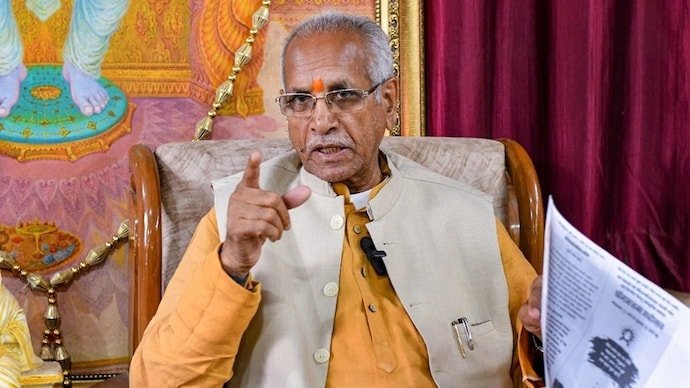
The Controversy surrounding the Shri Ram Janmabhoomi Teerth Kshetra Trust has entered a new phase after General Secretary Champat Rai publicly responded for the first time following reports that a Special Investigation Team (SIT) gave him a preliminary clean chit in the ongoing probe into alleged irregularities involving temple donations.
While the preliminary findings reportedly provided relief to Rai, they have not concluded the broader investigation. Instead, the focus has shifted toward other trust officials, internal administrative procedures, donation management systems, and governance practices. Simultaneously, the trust has begun introducing structural reforms aimed at strengthening transparency and restoring public confidence.
For millions of devotees, the Ram Temple is not only a place of worship but also one of India‘s most significant religious institutions. Consequently, any allegations involving donations, valuables, or administrative processes naturally attract nationwide attention. Although investigators continue to examine the case, several important developments over the past day have changed the direction of the controversy.
Why the Ram Temple Trust Controversy Matters
The Shri Ram Janmabhoomi Teerth Kshetra Trust oversees one of the country’s largest religious institutions, managing donations worth crores of rupees, valuable jewellery, precious metals, and offerings received from devotees across India and abroad.
With such enormous public participation comes an equally high expectation of financial accountability, transparent administration, and strong internal controls.
The current investigation is examining whether established procedures governing donations, inventory management, banking arrangements, and security protocols were properly followed.
What Happened in the Last 24 Hours?
The developments unfolded rapidly, significantly altering the public narrative surrounding the investigation.
| Development | Why It Matters |
|---|---|
| Preliminary SIT findings | Reports indicated Champat Rai was not directly linked to alleged financial irregularities. |
| Champat Rai’s public statement | He rejected allegations and promised a detailed response. |
| Leaked written submission | The document reportedly clarified his administrative responsibilities. |
| Attention shifts to other officials | Questions reportedly emerged regarding operational roles within the trust. |
| Trust releases donation inventory | An effort to improve transparency regarding valuable offerings. |
| Administrative reforms announced | The trust initiated restructuring measures and CEO selection. |
Champat Rai’s First Public Response
Following reports of the preliminary SIT findings, Champat Rai issued his first public statement through an open message addressed to devotees.
Rejecting the allegations made against him, he described them as baseless and stated that he would present a comprehensive response addressing every issue individually and in chronological order.
He also referred to his decades of public service, noting his long association with the Rashtriya Swayamsevak Sangh (RSS) and his involvement in the Ram Temple movement since the early 1990s.
The statement marked his first direct engagement with the controversy after weeks of speculation.
What the Leaked Statement Revealed
Shortly after Rai’s public remarks, portions of his reported submission to investigators became public.
Accordingstrong>According to the leaked document, Rai maintained that:
- He was not responsible for counting donations collected from temple donation boxes.
- He did not supervise the banking process related to deposited offerings.
- He was not a signatory to the banking Memorandum of Understanding.
- He was not directly involved in operational decisions concerning cash management.
- He was unaware of procedural changes relating to donation handling.
If these claims are ultimately supported during the investigation, they could help clarify the division of administrative responsibilities within the trust.
Why Attention Has Shifted to Administrative Processes
One of the most significant outcomes of the preliminary findings is the increased focus on operational governance rather than individual allegations alone.
Investigators are reportedly examining:
- WHO authorized banking arrangements.
- How donation boxes were managed.
- Cash counting procedures.
- Security protocols.
- Inventory management.
- Oversight mechanisms.
- Internal accountability systems.
These questions go beyond determining individual responsibility and instead examine whether institutional safeguards were sufficiently robust.
Trust Member Reportedly Under Greater Scrutiny
According to reports surrounding the investigation, attention has increasingly focused on trust member Anil Mishra because of his reported administrative responsibilities connected with banking arrangements.
Sources have indicated that investigators are expected to question him as part of the ongoing inquiry into the alleged irregularities.
It is important to note that questioning during an investigation does not establish wrongdoing. Authorities continue to examine the facts before reaching any final conclusions.
Trust Treasurer Defends Champat Rai
Trust Treasurer Govind Dev Giri publicly defended Champat Rai following the preliminary findings.
While acknowledging that administrative lapses may occur in large organizations, he maintained that such shortcomings should not automatically be interpreted as evidence of criminal misconduct.
His remarks emphasized the distinction between possible procedural negligence and deliberate financial wrongdoing—an important legal difference that investigators will ultimately assess.
The Larger Issue: Managing Massive Temple Donations
Modern religious institutions often receive enormous volumes of cash donations, gold ornaments, silver items, jewellery, and other valuable offerings every day.
Managing these assets requires sophisticated administrative systems comparable to those used by large financial institutions.
Best practices generally include:
- Multi-person verification systems.
- Digital inventory management.
- Independent audits.
- CCTV monitoring.
- Restricted access controls.
- Dual authorization procedures.
- Secure banking protocols.
- Comprehensive documentation.
The current controversy has renewed public discussion about whether India’s major religious institutions should adopt even more advanced governance standards.
Donation Transparency Becomes a Priority
One notable response from the trust has been the publication of records relating to jewellery and valuable offerings received from devotees.
The release appears intended to reassure worshippers that valuable donations are being documented and accounted for while demonstrating greater transparency during the ongoing investigation.
Such disclosures can play an important role in maintaining public trust, especially when allegations concern high-value religious offerings.
Internal Differences Ahead of the Trust Meeting
Reports indicate that discussions preceding the recent trust meeting involved considerable internal deliberation.
Senior members reportedly held consultations before the meeting, while several religious leaders associated with the trust participated after extensive discussions.
The episode illustrates the complexity of managing one of India’s most prominent religious organizations during a period of heightened public scrutiny.
Administrative Reforms Already Underway
Regardless of the investigation’s eventual outcome, the trust has already begun implementing structural changes.
Key measures include:
- Formation of a three-member committee to select a new Chief Executive Officer.
- Administrative restructuring initiatives.
- Appointment of new executive leadership.
- Review of governance mechanisms.
- Further discussions scheduled at the next trust meeting.
These reforms suggest the organization recognizes the importance of strengthening administrative systems alongside the ongoing investigation.
Understanding the Difference Between a Preliminary Clean Chit and a Final Investigation
One important aspect often overlooked in public discussions is that a preliminary clean chit is not the same as the conclusion of an investigation.
A preliminary report reflects investigators’ initial assessment based on available evidence at a particular stage.
Further questioning, forensic examination of records, witness statements, digital evidence, and additional documentation may still influence the final findings.
Consequently, the investigation remains active until authorities formally complete their inquiry.
Why Public Confidence Is Central to the Investigation
Religious trusts depend heavily on public confidence.
Unlike commercial organizations, they operate largely on voluntary contributions made by devotees who expect transparency, accountability, and responsible stewardship of donated assets.
Even when allegations remain unproven, questions surrounding governance can affect public perception. That is why timely communication, independent investigations, and transparent procedures become especially important during such controversies.
Lessons for Religious Institutions Across India
The ongoing developments extend beyond a single temple trust.
Many large religious institutions today manage assets worth hundreds or even thousands of crores while receiving millions of visitors annually.
The case highlights several governance lessons:
- Clearly defined administrative responsibilities.
- Modern digital record-keeping.
- Independent internal audits.
- Transparent donation management.
- Regular public disclosures where appropriate.
- Strong oversight mechanisms.
Strengthening these systems can reduce operational risks while enhancing public confidence.
What Happens Next?
The investigation is expected to continue with further questioning of individuals connected to donation management and administrative operations.
Meanwhile, the trust’s next meeting is scheduled to discuss organizational restructuring, including the appointment of a new Chief Executive Officer and additional governance measures.
As investigators analyze documentary evidence, financial records, operational procedures, and witness statements, the final report will provide greater clarity regarding institutional responsibilities and any legal accountability.
Conclusion
The Ayodhya Ram Temple Trust controversy has evolved beyond allegations against a single individual into a broader examination of governance, transparency, and institutional accountability. While preliminary findings reportedly provided relief to General Secretary Champat Rai, the investigation itself remains ongoing, with administrative procedures and other officials still under scrutiny.
At the same time, the trust’s decision to publish donation records, restructure its administration, and review leadership appointments demonstrates an effort to reinforce public confidence during a sensitive period. As the SIT continues its work, the final outcome will likely shape not only the future administration of the Ram Temple but also broader conversations about governance standards for major religious institutions across India.
For breaking news and live news updates, like us on Facebook or follow us on Twitter and Instagram. Read more on Latest India on thefoxdaily.com.





COMMENTS 0