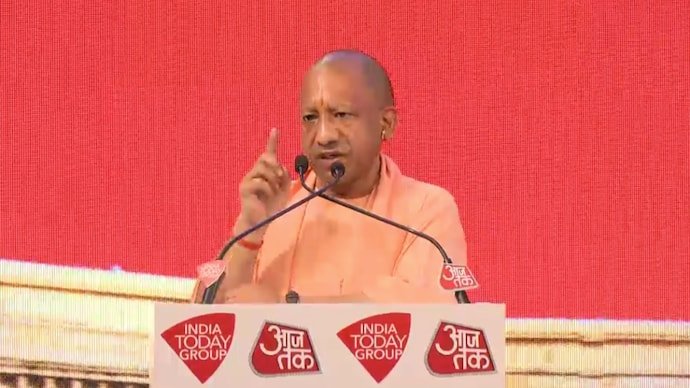
Uttar Pradesh Chief Minister Yogi Adityanath launched a sharp political attack on the Samajwadi Party (SP), accusing it of displaying double standards on matters of faith while responding to criticism over the alleged theft of donations at the Ram Mandir in Ayodhya. Speaking at the Panchayat Aaj Tak conclave, Yogi argued that parties which, according to him, had once taken action against Ram devotees were now attempting to portray themselves as protectors of religious sentiments.
The remarks come amid an ongoing political debate surrounding the alleged embezzlement of donations collected at the Ram Temple. The issue has triggered strong reactions across Uttar Pradesh, with opposition parties questioning accountability and transparency, while the state government maintains that swift legal action has already been taken against those responsible.
Beyond the immediate controversy, Yogi Adityanath’s comments revisited one of the most significant episodes in modern Indian political history—the 1990 police firing on karsevaks in Ayodhya—once again placing the Ram Janmabhoomi movement at the center of contemporary political discourse.
Key Highlights
| Topic | Details |
|---|---|
| Main Issue | Yogi Adityanath criticized the Samajwadi Party over the Ram Temple donation theft controversy. |
| Historical Reference | Chief Minister invoked the 1990 police firing on karsevaks in Ayodhya. |
| Government Action | SIT constituted, multiple arrests made in the alleged donation theft case. |
| Political Context | Religious issues continue to shape political narratives in Uttar Pradesh. |
| Key Focus | Faith, accountability, governance, and historical legacy. |
Yogi Adityanath’s Attack on the Samajwadi Party
Addressing the gathering, Yogi Adityanath questioned the opposition’s criticism of the alleged theft of offerings at the Ram Temple, arguing that political parties should also reflect on their own historical record regarding religious issues.
Referring to the Samajwadi Party, he said that those WHO had once ordered action against Ram devotees were now speaking about protecting faith. His remarks were aimed at highlighting what he described as a contradiction between the party’s past decisions and its current political position.
The Chief Minister maintained that while any wrongdoing involving temple donations is unacceptable, his government had acted immediately by initiating investigations and ensuring arrests.
The Ram Temple Donation Theft Case
The controversy began after allegations emerged regarding the misappropriation of donations made by devotees at the Ram Mandir in Ayodhya.
According to the Uttar Pradesh government:
- A Special Investigation Team (SIT) was constituted to probe the allegations.
- Six accused individuals were arrested during the initial phase of the investigation.
- Authorities also detained others allegedly involved in facilitating the crime.
- Additional administrative and moral accountability measures were initiated.
The government has emphasized that legal proceedings are continuing and that the investigation aims to ensure complete transparency.
Why the Issue Matters
The Ram Mandir is among India‘s most prominent religious sites, attracting thousands of pilgrims daily from across the country and abroad.
For many devotees, donations offered at temples represent acts of faith rather than ordinary financial transactions. Consequently, allegations involving misuse of such offerings tend to generate significant public concern and demand prompt institutional action.
The government’s rapid response reflects the broader expectation that religious institutions maintain high standards of financial accountability.
The Historical Reference: Ayodhya in 1990
A major part of Yogi Adityanath’s speech referred to events that occurred during the Ram Janmabhoomi movement in October and November 1990.
At the time, thousands of karsevaks had gathered in Ayodhya as part of the movement demanding the construction of a Ram temple.
The then Uttar Pradesh government ordered police action after large crowds attempted to move toward the disputed Babri Masjid site.
Official records indicate that police firing and subsequent clashes resulted in the deaths of several people during the unrest.
The episode remains one of the most debated moments in Uttar Pradesh’s political history and continues to influence political narratives more than three decades later.
Understanding the Political Significance
The Ram Janmabhoomi movement has played a defining role in Indian Politics for several decades.
Political parties continue to interpret the events of the movement differently, often drawing contrasting conclusions regarding governance, law and order, secularism, and religious rights.
Yogi Adityanath’s remarks demonstrate how historical events remain closely connected to present-day political messaging, particularly in Uttar Pradesh.
Government’s Response to the Alleged Embezzlement
While acknowledging that the alleged theft had hurt the sentiments of devotees, the Chief Minister emphasized that accountability remained the government’s priority.
According to the administration, the investigation includes:
- Criminal investigation by specialized agencies.
- Identification of individuals directly involved.
- Action against alleged collaborators.
- Administrative review of internal procedures.
- Measures aimed at preventing similar incidents in the future.
The state government has indicated that further action will depend on the findings of the ongoing investigation.
Religious Institutions and Financial Transparency
The controversy has also renewed discussion about governance standards at religious institutions across India.
Large temples receive substantial donations from devotees every year, making transparent financial management essential for maintaining public trust.
Many experts believe that stronger internal auditing systems, digital accounting, surveillance infrastructure, and periodic financial reviews can significantly reduce the risk of fraud while improving accountability.
Political Debate Over Faith and Governance
The exchange between the ruling BJP and opposition parties reflects a broader political contest over issues of religion, governance, and public trust.
While the opposition has questioned how the alleged theft could occur, the government argues that the speed of its response demonstrates institutional accountability rather than administrative failure.
Such debates often become prominent during politically significant periods, especially in states where religious issues have considerable electoral importance.
How Ayodhya Continues to Shape Politics
| Issue | Political Relevance |
|---|---|
| Ram Temple | Symbol of religious faith and national political discourse. |
| 1990 Karsevak Firing | Frequently referenced in debates involving Ayodhya and governance. |
| Temple Administration | Focus on accountability and financial transparency. |
| Religious Sentiment | Influences public opinion and political narratives. |
| Law Enforcement | Scrutiny over government response during sensitive incidents. |
The Broader Electoral Context
Religious identity, historical memory, and governance continue to remain central themes in Uttar Pradesh Politics.
Statements referring to Ayodhya often resonate beyond immediate political controversies because they invoke events that have shaped public discourse for decades.
As a result, debates surrounding the Ram Temple frequently extend beyond administrative questions and become broader discussions about ideology, governance, and historical legacy.
What Happens Next?
The investigation into the alleged theft of temple donations is expected to continue, with authorities likely to examine financial records, identify any additional accused, and determine whether institutional reforms are necessary.
Meanwhile, political exchanges between the ruling BJP and opposition parties are likely to intensify as both sides seek to frame the issue in terms of governance, accountability, and public trust.
The case may also prompt broader discussions about improving financial oversight mechanisms for major religious institutions across India.
Conclusion
Yogi Adityanath’s remarks at the Panchayat Aaj Tak conclave transformed a discussion about alleged theft at the Ram Temple into a wider political debate involving history, governance, and religious identity. By invoking the 1990 Ayodhya police firing, the Chief Minister sought to challenge the Samajwadi Party’s criticism while reinforcing the BJP’s long-standing narrative on faith and public accountability.
As investigations into the alleged embezzlement continue, the issue is expected to remain both a legal matter and a political flashpoint. Beyond partisan debate, the controversy underscores the importance of maintaining transparency, accountability, and public confidence in the administration of India’s most significant religious institutions.
For breaking news and live news updates, like us on Facebook or follow us on Twitter and Instagram. Read more on Latest India on thefoxdaily.com.





COMMENTS 0