Bangladesh has renewed its call for India to resolve the long-pending Teesta water-sharing dispute without allowing the issue to damage bilateral relations. Water Resources Minister Shahiduddin Chowdhury Anee said Dhaka wants India to consider Bangladesh’s water needs while pursuing its own interests.
The renewed push comes as Bangladesh moves forward with plans for the Teesta River Comprehensive Management and Restoration Project, a major initiative intended to address flooding, river erosion and dry-season water shortages in the country’s northern districts. china has offered support for the project, adding a strategic dimension to a dispute that has already complicated India-Bangladesh water cooperation for decades.
Speaking at a seminar in Dhaka on Sunday, Anee stressed that Bangladesh does not want the Teesta question to undermine its friendly relationship with India. His remarks underline the delicate balance Dhaka is attempting to maintain: securing greater water security for communities dependent on the Teesta while avoiding a deterioration in ties with a key neighbour.
Why Bangladesh is pressing India on the Teesta
The Teesta is particularly important to northern Bangladesh, where communities depend on the river for Agriculture and livelihoods. The river’s seasonal flow creates two contrasting problems. During periods of heavy rainfall, communities face flooding and river erosion, while reduced flows during the dry season can create shortages for agriculture and other local needs.
Bangladesh says the problems have persisted for years and that people in several northern districts have high expectations from the proposed restoration project.
Anee described implementation of the project as a major challenge and warned that failing to address the river’s problems would leave affected families exposed to continuing damage and hardship.
That makes the Teesta dispute more than a diplomatic disagreement over water allocation. For Bangladesh, it is closely linked to agricultural planning, river management, erosion control and the economic security of communities in the north.
The Teesta river connects India and Bangladesh
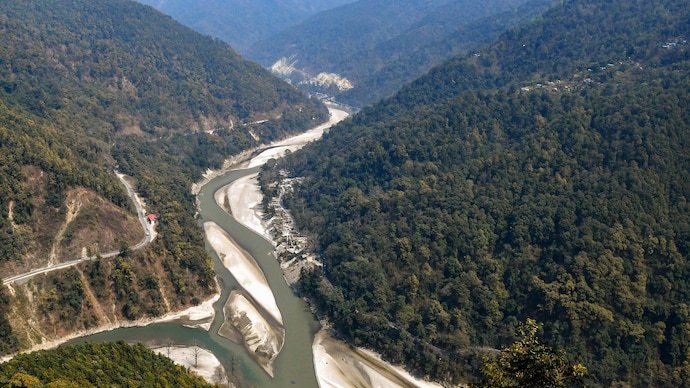
The Teesta originates in the Himalayas and flows through India’s Sikkim and West Bengal before entering Bangladesh. It eventually joins the Jamuna, the name used in Bangladesh for the Brahmaputra.
The river is important on both sides of the border, although the priorities are not identical. Northern Bangladesh depends heavily on the Teesta for agriculture and local livelihoods, while the river is also important in West Bengal for irrigation and power generation.
Several hydropower projects are located in the river’s upper catchment areas, while nearly half a dozen districts in North Bengal depend on its waters. These competing demands help explain why reaching an agreement has proved politically difficult.
The central challenge is therefore not simply deciding how much water each country should receive. Any long-term arrangement has to account for seasonal availability, agricultural requirements, river management and the interests of communities on both sides of the border.
Teesta water-sharing talks have continued for decades
India and Bangladesh have discussed sharing the Teesta’s waters since the 1980s. An interim arrangement reached in 1983 allocated 39% of the water to India and 36% to Bangladesh, leaving 25% unallocated.
That arrangement did not develop into a comprehensive long-term settlement. Negotiations continued over subsequent decades, eventually producing a draft interim agreement in 2011 covering the dry season.
However, the proposed agreement could not be signed after the government of West Bengal objected, citing concerns about water availability in the state.
The episode illustrates one of the central difficulties surrounding the Teesta negotiations. Although the issue is handled between the national governments of India and Bangladesh, water availability and regional interests inside India, particularly in West Bengal, remain critical to any workable settlement.
West Bengal remains central to the dispute
The role of West Bengal is one reason the Teesta issue has remained unresolved despite years of negotiations between New Delhi and Dhaka.
Bangladesh needs predictable water flows, particularly during the dry season. West Bengal, meanwhile, has its own agricultural, irrigation and water-supply requirements. Any agreement that changes the distribution of available water therefore has consequences for communities and economic activity in the state.
This creates a political and practical constraint on India’s negotiating position. A bilateral agreement with Bangladesh cannot be viewed solely through the lens of India’s national government because water availability in West Bengal is directly affected.
For Bangladesh, however, the continued absence of a comprehensive agreement means uncertainty over a river that is vital to northern districts. That tension has kept the Teesta near the centre of India-Bangladesh water Diplomacy.
Bangladesh moves ahead with China-backed Teesta project
While the water-sharing dispute remains unresolved, Bangladesh has been developing a separate but closely connected initiative to manage and restore the Teesta river system.
The proposed Teesta River Comprehensive Management and Restoration Project is designed to address recurring flooding, erosion and dry-season water shortages. Dhaka has sought Chinese support for the initiative, giving the project significance beyond its immediate environmental and water-management objectives.
Bangladesh’s interest in the project reflects the scale of the problems faced by communities along the river. The government has held seminars and consultations since the February election to gather expert views before moving toward a detailed study.
Anee said recommendations from these consultations would help the government determine concrete steps for the project. The seminar, titled Sustainable Management of the Teesta River, was jointly organised by Bangladesh’s Ministry of Water Resources and the Bangladesh University of Engineering and Technology.
The project therefore remains at a stage where technical assessment and planning are important, rather than being presented simply as an already completed Infrastructure programme.
China’s involvement adds a strategic dimension
Bangladesh’s decision to seek Chinese involvement has made the Teesta question more strategically sensitive for India.
During Prime Minister Tarique Rahman’s official visit to Beijing in June, he held high-level discussions with Chinese leaders and secured Beijing’s commitment to accelerate the technical feasibility study for the proposed Teesta restoration project.
For Bangladesh, Chinese participation offers a potential route toward addressing longstanding river-management problems. For India, however, increased Chinese involvement in a major river project close to its northeastern frontier carries wider strategic significance.
That does not necessarily mean the water-sharing dispute and the restoration project are identical issues. They address different aspects of the Teesta’s management. But because both involve the same river and affect water flows, infrastructure and regional interests, developments surrounding one can influence perceptions of the other.
India says its views have already been conveyed
India has indicated that it is aware of Bangladesh’s plans for the Teesta project and has communicated its position to Dhaka.
External Affairs Ministry spokesperson Randhir Jaiswal said in July that India’s views on the proposed project had already been conveyed to Bangladesh. He also indicated that New Delhi would take all related developments into account in its overall approach to the Teesta issue.
The position points toward India’s preference for continued discussions involving the relevant stakeholders rather than treating the project as an issue separate from existing water-management concerns.
For Dhaka, the challenge is to move forward with a project it sees as necessary for northern communities while ensuring that doing so does not further complicate its relationship with New Delhi.
Dhaka wants a treaty but is also focused on implementation
Anee’s comments suggest that Bangladesh is increasingly focused on obtaining a practical mechanism that can allow the restoration project to move forward.
He said a treaty was urgently needed and indicated that Bangladesh would pursue whatever legal or institutional arrangement was necessary to implement the project, whether that ultimately involved a Teesta treaty, a master plan or another framework.
That approach reflects the pressure facing the Bangladeshi government from communities living along the river. The longer the dispute remains unresolved, the longer northern districts face uncertainty over water availability and river-related damage.
At the same time, Bangladesh’s emphasis on preserving friendly relations with India indicates that Dhaka does not want the Teesta issue to become a broader diplomatic confrontation.
The Teesta dispute is separate from the Ganges treaty
The Teesta negotiations should not be confused with the Ganges Water Sharing Treaty between India and Bangladesh.
The two countries signed the Ganges treaty in 1996 for a period of 30 years. That agreement is due to expire in December 2026, creating a separate water-diplomacy issue for the two neighbours.
India and Bangladesh share 54 transboundary rivers, and water-related matters are addressed through the Joint Rivers Commission. The Teesta remains one of the most prominent unresolved questions within that wider relationship.
The distinction matters because progress on one river does not automatically resolve the other. The Teesta requires its own agreement and negotiations because its geography, seasonal flows and local political interests differ from those surrounding the Ganges.
Why the Teesta matters beyond water
The dispute has implications that extend beyond the technical allocation of river water.
For Bangladesh, predictable water supplies can influence agricultural production and the livelihoods of northern communities. Better river management could also help address erosion and flood damage. For India, the river is linked to irrigation, power generation and the interests of communities in West Bengal and Sikkim.
That means any durable arrangement must balance multiple interests rather than focusing exclusively on the preferences of the two national governments.
The involvement of China adds another layer. Bangladesh’s search for external technical and financial support reflects its desire to address an urgent domestic development problem, but India’s strategic concerns mean the project is being watched through a broader regional lens.
What happens next for the Teesta dispute
The immediate next step for Bangladesh is further technical assessment of the proposed restoration project. The consultations already conducted are intended to feed into a detailed study, which could help determine how the project should proceed.
At the diplomatic level, the central question remains whether India and Bangladesh can find a formula for managing the Teesta that addresses Bangladesh’s need for predictable water supplies while protecting the interests of West Bengal.
The outcome could depend on the availability of water during critical periods, the technical design of the proposed restoration programme, India’s discussions with Bangladesh and the role of stakeholders within India.
China’s involvement is also likely to remain an important part of the regional conversation, particularly as Bangladesh seeks to accelerate work on the river project.
A delicate test for India-Bangladesh relations
Bangladesh’s latest message is notable for its careful tone. Dhaka is pressing India to address a dispute it considers urgent, but it is simultaneously stressing that the issue should not damage the countries’ broader relationship.
That balance may become increasingly important as Bangladesh advances its Teesta restoration plans and seeks Chinese support. The river’s importance to northern Bangladesh means there is strong domestic pressure to act, while India’s concerns and West Bengal’s interests make a simple bilateral solution difficult.
The Teesta dispute has already survived decades of negotiations without a final settlement. The current push is taking place under different circumstances, with Bangladesh seeking a comprehensive river-management project and China becoming more directly involved in the technical process.
For India and Bangladesh, the central test will be whether those changing circumstances create enough room for compromise rather than another source of friction. Bangladesh’s latest appeal suggests Dhaka wants both: progress on the Teesta and the preservation of its friendly relationship with India.
For breaking news and live news updates, like us on Facebook or follow us on Twitter and Instagram. Read more on Latest World on thefoxdaily.com.






COMMENTS 0