China‘s Foreign Minister Urges Stronger Governance of Deep Sea and Outer Space
China’s Foreign Minister Urges Stronger Governance of Deep Sea and Outer Space
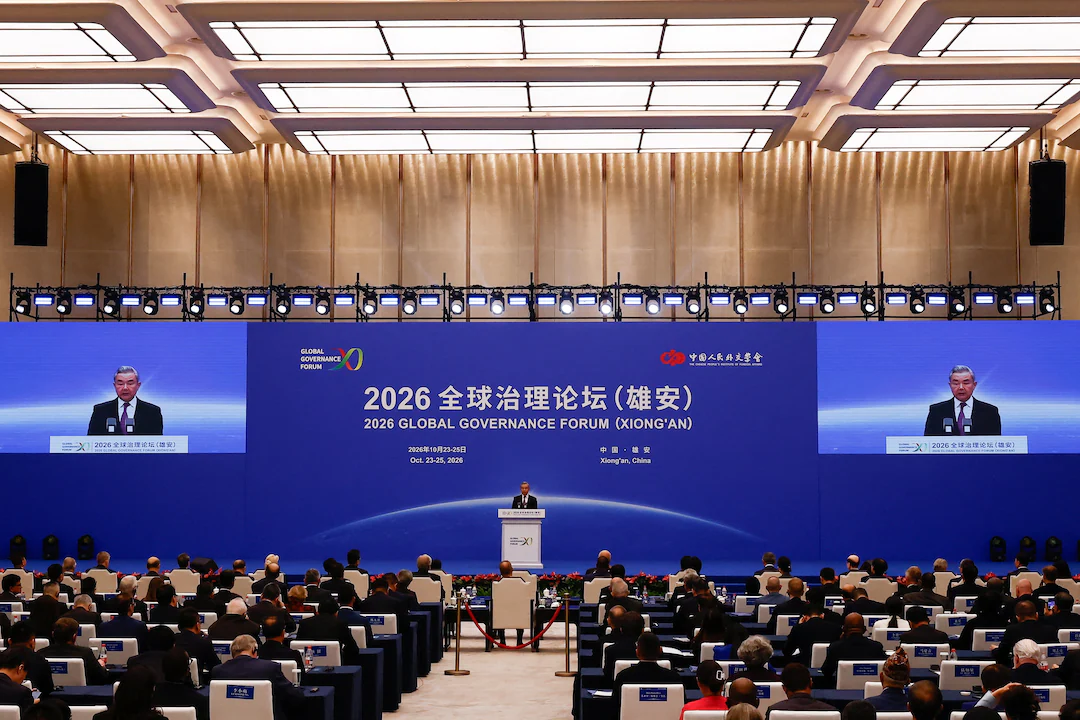
China’s Foreign Minister Wang Yi has called for stronger Global Governance of the deep sea, polar regions and outer space, highlighting Beijing’s push for greater international cooperation and reforms to the existing global governance system. Wang made the remarks on Friday, October 23, while addressing the opening of China’s Global Governance Forum in Xiongan.
The three-day forum brings together China’s efforts to promote multilateralism and advocate a more equitable international system. Introduced last year by Chinese President Xi Jinping, the gathering reflects Beijing’s view that the current global governance framework has shortcomings that need to be addressed.
During his address, Wang also discussed the role of artificial intelligence, the growing influence of the Global South and the importance of safeguarding the multilateral trading system. His remarks placed emerging global challenges and international representation at the centre of discussions about the future of global governance.
China Calls for Stronger Governance of Deep Sea, Polar Regions and Outer Space
Wang Yi urged the international community to strengthen governance arrangements for the deep sea, polar regions and outer space. These areas featured prominently in his address at the opening of the Global Governance Forum in Xiongan on Friday.
His call comes as China promotes discussions about how global affairs should be managed and how international cooperation can respond to issues that extend beyond individual countries’ borders.
By highlighting the deep sea, polar regions and outer space together, Wang brought attention to areas that form part of wider discussions about international governance. His remarks presented stronger governance in these domains as an important issue for the international community.
However, the statement did not specify particular proposals, agreements or regulatory measures that China wants countries to adopt for these areas. The central message was a call for stronger governance and greater attention to global challenges.
Global Governance Forum Reflects Beijing’s Push for Multilateralism
The Global Governance Forum in Xiongan is a three-day event introduced in 2025 by Chinese President Xi Jinping. The forum serves as a platform for Beijing to advance its position on multilateralism and the need for a more equitable global governance system.
China views the current international governance framework as deficient and has called for changes that would make it more representative and responsive to the interests of countries around the world.
Multilateralism involves countries working together through international institutions, agreements and collective decision-making. The approach provides a framework for addressing challenges that cannot easily be managed by individual countries acting alone.
Through the forum, Beijing is seeking to promote discussion about how international governance can be strengthened and how countries can participate more effectively in shaping global decisions.
Wang’s remarks on the deep sea, polar regions and outer space formed part of this broader agenda. His address also touched on artificial intelligence, international trade and the representation of developing countries in global affairs.
Wang Yi Says Artificial Intelligence Should Remain Under Human Control
Artificial intelligence was another major subject in Wang’s address. The Chinese foreign minister said AI should remain under human control and be used for the benefit of humanity.
His remarks highlighted the importance of ensuring that the development and use of artificial intelligence serve people rather than operate without meaningful human oversight.
AI has become an increasingly prominent subject in international discussions about technology governance, cooperation and the management of emerging risks. Wang’s statement placed the technology within the wider conversation about how global governance should respond to new challenges.
He did not outline specific AI regulations or an international enforcement mechanism in the reported remarks. Instead, he emphasised two central principles: maintaining human control over artificial intelligence and ensuring that its use benefits humanity.
The comments also reflected the forum’s broader focus on international coordination. As governments consider the implications of emerging technologies, questions about oversight and the distribution of benefits have become part of discussions about global cooperation.
China Highlights the Growing Role of the Global South
Wang Yi described the rise of the Global South as the most momentous shift the world has experienced since the Second World War. He called for greater representation of the Global South in international affairs.
The term Global South is commonly used to refer broadly to developing countries and emerging economies across regions of Africa, Asia, Latin America and elsewhere. These countries differ widely in their economic circumstances and political systems, but discussions about the Global South often focus on their role in international institutions and global decision-making.
Wang’s remarks placed the growing influence of these countries at the centre of China’s position on global governance reform. His call for greater representation suggests that Beijing wants international affairs to reflect a wider range of countries and interests.
The issue of representation is closely connected to debates about how international institutions operate, whose interests are reflected in their decisions and how countries participate in setting global priorities.
Wang did not identify specific institutional changes in the reported statement. He did, however, make clear that China considers greater representation for the Global South an important part of discussions about the future of international governance.
Wang Reiterates Support for the Multilateral Trading System
International trade was another issue addressed by Wang Yi, who reiterated that the multilateral trading system should be safeguarded.
A multilateral trading system provides a framework through which countries conduct trade under shared rules and arrangements. Its operation depends on international cooperation and participation by countries with different economic interests.
Wang’s comments placed the protection of this system alongside China’s calls for stronger global governance and more equitable international representation.
Trade is an important part of international economic relations, and the rules governing cross-border commerce affect countries at different stages of economic development. Wang’s statement indicated that Beijing wants the multilateral trading framework to remain an important part of global cooperation.
The reported remarks did not detail specific trade disputes or propose individual policy changes. Instead, Wang reiterated the need to safeguard the multilateral system as part of the broader agenda discussed at the forum.
Why the Xiongan Forum Matters to China’s Global Governance Agenda
The three-day Global Governance Forum provides a platform for China to present its views on international cooperation, representation and the management of emerging global challenges.
Its introduction by President Xi Jinping last year reflects Beijing’s effort to make global governance reform a prominent part of its diplomatic agenda. China argues that the current system has deficiencies and advocates a more equitable framework.
Wang’s address brought together several themes associated with that position:
- Global governance: Stronger governance of the deep sea, polar regions and outer space.
- Artificial intelligence: Human control over AI and the use of the technology for humanity’s benefit.
- Global South representation: Greater participation by developing countries and emerging economies in international affairs.
- International trade: Safeguarding the multilateral trading system.
- Multilateralism: Promoting international cooperation and a more equitable global governance framework.
These themes illustrate the range of issues Beijing is bringing into discussions about the future of international governance. They span technological development, economic cooperation, representation and areas beyond national borders.
The forum’s broader significance lies in providing a setting for China to communicate its priorities and advocate changes to international governance. The reported opening remarks, however, do not establish whether specific proposals will be adopted or what practical outcomes the three-day event will produce.
Key Takeaways From Wang Yi’s Address
Wang Yi’s speech at the opening of the Global Governance Forum in Xiongan focused on several interconnected priorities for international cooperation.
First, he called for stronger governance of the deep sea, polar regions and outer space. Second, he emphasised that artificial intelligence should remain under human control and be used for humanity’s benefit. Third, he described the rise of the Global South as a major global shift since World War Two and called for greater representation of these countries in international affairs.
He also reiterated China’s position that the multilateral trading system should be safeguarded. Together, these messages reflect Beijing’s push for multilateralism and a more equitable global governance framework.
Conclusion
China’s Foreign Minister Wang Yi has used the opening of the Global Governance Forum to call for stronger international governance of the deep sea, polar regions and outer space. His address in Xiongan on October 23 also highlighted human oversight of artificial intelligence, greater representation for the Global South and the protection of the multilateral trading system.
The three-day forum, introduced by President Xi Jinping in 2025, forms part of Beijing’s diplomatic effort to promote multilateralism and reform what it considers an inadequate global governance system. While Wang’s remarks set out China’s broad priorities, the reported statement did not detail specific regulatory proposals or agreements expected from the gathering.
Tighten repetitive sections and paragraphs Clarify the forum date and timeline Strengthen the Reuters-style news structure
For breaking news and live news updates, like us on Facebook or follow us on Twitter and Instagram. Read more on Latest World on thefoxdaily.com.




COMMENTS 0