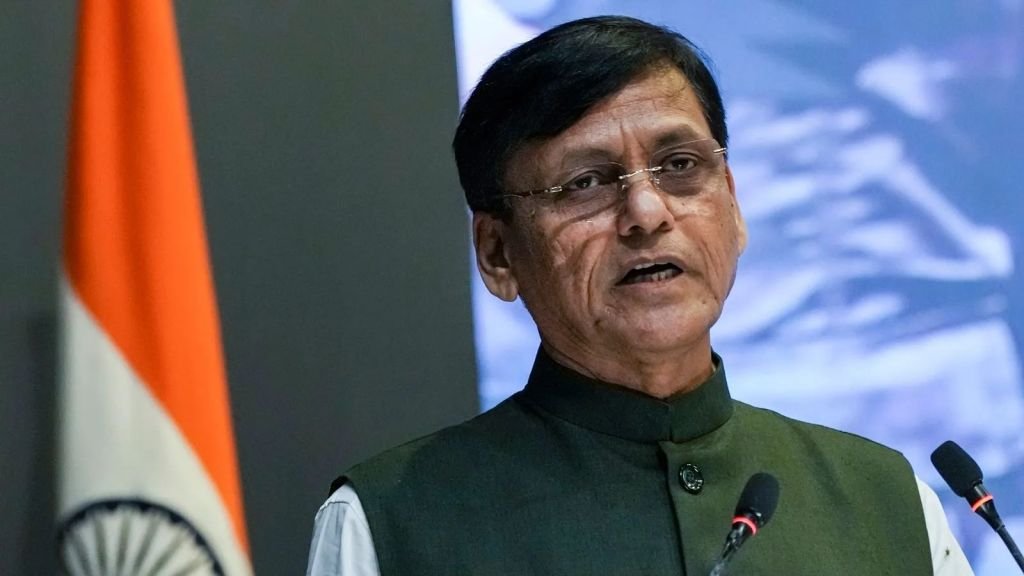
The Rajya Sabha has passed the Registration of Births and Deaths (Amendment) Bill, 2026, clearing another legislative hurdle for proposed changes to India‘s civil registration system. The Bill, which introduces stricter rules for delayed birth and death registrations, was approved by a voice vote despite Protests from Opposition members, who also questioned the absence of the Union Home Minister during the debate.
The legislation seeks to amend the Registration of Births and Deaths Act, 1969, with its most significant change being the requirement of an order from a Judicial Magistrate (First Class) for registrations made more than two years after a birth or death. The government argues that the amendment is intended to curb misuse of delayed registrations and strengthen the integrity of official records, while several Opposition and regional party members expressed concerns that the new requirement could make the registration process more cumbersome.
The Bill had already been passed by the Lok Sabha last week. With its approval in the Rajya Sabha, it moves another step forward in the legislative process.
What Is the Registration of Births and Deaths (Amendment) Bill, 2026?
The Registration of Births and Deaths (Amendment) Bill, 2026, proposes changes to the Registration of Births and Deaths Act, 1969, which governs the recording of births and deaths across India.
The principal objective of the amendment is to tighten the rules governing delayed registrations. The government says the revised framework is aimed at reducing misuse while ensuring that official records remain accurate and reliable.
Birth and death registration forms the basis of many legal and administrative processes, including identity documentation, inheritance matters, demographic data collection and the issuance of various government certificates. Because of its importance, any changes to the registration process can have wide-ranging administrative implications.
Key Change: Judicial Magistrate’s Approval for Registrations After Two Years
The most notable provision in the Bill concerns registrations that are significantly delayed.
Under the proposed amendment:
- Birth or death registrations delayed by more than two years will require an order from a Judicial Magistrate (First Class).
- Registrations delayed by more than one year but up to two years will continue to require approval from a district magistrate, sub-divisional magistrate or another authorised executive magistrate, as under the existing legal framework.
According to the government, introducing judicial oversight for very late registrations is intended to provide an additional layer of scrutiny where records are sought to be created long after the event occurred.
| Delayed Registration Period | Authority Required |
|---|---|
| More than one year and up to two years | District Magistrate, Sub-Divisional Magistrate or authorised Executive Magistrate |
| More than two years | Judicial Magistrate (First Class) |
How the Bill Was Passed in the Rajya Sabha
The Rajya Sabha considered the Bill during a relatively brief afternoon sitting that lasted for less than an hour before being adjourned for the day.
The legislation was introduced by Minister of State for Home Affairs Nityanand Rai and was passed through a voice vote amid continuous sloganeering by Opposition members.
The debate featured support for the proposed changes from members of the ruling Bharatiya Janata Party (BJP), while several Opposition parties and some regional party members raised procedural and practical concerns regarding specific provisions.
Opposition Raises Political and Procedural Objections
Before discussion on the Bill progressed, Leader of the Opposition Mallikarjun Kharge remarked that normal functioning of the House depended on the presence of the Prime Minister. His comments were cut short by Deputy Chairperson Harivansh.
Several Opposition members also questioned why Union Home Minister Amit Shah was not present to introduce or respond to the legislation.
congress member Phoolan Devi Netam and DMK member Tiruchi Siva argued that the Home Minister himself should have presented such an important Bill rather than the Minister of State.
These objections related to parliamentary proceedings rather than the substance of the amendment itself.
Concerns Over the Judicial Magistrate Requirement
Not all reservations came from Opposition parties.
Members from several regional parties expressed concerns about the practical impact of requiring approval from a Judicial Magistrate for registrations delayed by more than two years.
Santrupt Misra of the Biju Janata Dal (BJD), Pramod Boro of the United People’s Party Liberal (UPPL), and Jyoti Nagnath Waghmare of the Shiv Sena questioned whether the new requirement could create unnecessary administrative hurdles.
Boro argued that judicial magistrates already carry heavy workloads and that assigning them additional responsibilities for delayed registrations could increase processing times.
He also pointed to differences in the availability of judicial magistrates across states, suggesting that implementation could vary depending on local judicial capacity.
Waghmare proposed making birth and death registration easier through outreach initiatives such as registration camps and door-to-door services. She also suggested that penalties associated with delayed registration should be removed.
Government’s Justification for the Amendment
Responding to the debate, Minister of State for Home Affairs Nityanand Rai defended the proposed changes.
He said members should understand the intent of the legislation and argued that delayed registrations, particularly those occurring more than two years after an event, had been vulnerable to misuse.
According to Rai, requiring an order from a Judicial Magistrate would help strengthen oversight in such cases.
During his reply, Rai stated that the amendment was intended to prevent misuse of delayed registrations, including situations in which inaccurate or fraudulent records might be created.
These remarks reflected the government’s rationale for introducing stricter verification procedures for registrations made long after the actual birth or death.
Discussion on Documentation and Public Records
Communist Party of India (Marxist) member V. Sivadasan emphasized the broader importance of maintaining accurate public records.
He said proper documentation of births and deaths serves an important public purpose and argued that causes of death should also be recorded accurately, citing examples such as malnutrition and paper leaks during his remarks.
Although these observations extended beyond the specific amendment under discussion, they highlighted the wider role of civil registration systems in public administration and policy planning.
Political Exchanges During the Debate
The discussion also witnessed sharp political exchanges between treasury and Opposition benches.
BJP member Biswajit Sinha, making his maiden speech in the Rajya Sabha, alleged that Congress opposed the Bill because it had allowed Pakistani and Bangladeshi citizens to register in India.
The remarks formed part of the political debate surrounding the legislation. The Bill itself focuses on procedures for delayed registration rather than broader questions relating to citizenship.
Such exchanges reflected the highly charged atmosphere in which the legislation was debated.
Why Birth and Death Registration Matters
Birth and death registration is a fundamental component of public administration. Official registration creates legal records that support numerous administrative and legal processes throughout an individual’s life.
Birth certificates are commonly required for school admissions, identity documents, passports and various government services. Death registration, meanwhile, is important for inheritance matters, insurance claims, pension processing and updating public records.
Governments also rely on birth and death data for demographic planning, Healthcare policy and statistical analysis. As a result, ensuring the accuracy and reliability of these records is considered an important administrative objective.
Potential Impact of the New Rules
If implemented as enacted, the amended framework could affect individuals seeking to register births or deaths several years after the event occurred.
Supporters argue that judicial oversight may discourage fraudulent or inaccurate registrations and improve confidence in official records.
Critics, however, believe that additional judicial involvement could increase procedural complexity, particularly in regions where judicial resources are already stretched.
How efficiently the new system operates may ultimately depend on implementation by state authorities and the capacity of the judicial system to process such applications.
Timeline of the Legislation
| Stage | Development |
|---|---|
| Introduction | Bill introduced in Parliament by Minister of State for Home Affairs Nityanand Rai. |
| Lok Sabha | Bill passed by the Lok Sabha last week. |
| Rajya Sabha debate | Members debated the Bill amid Opposition protests. |
| Rajya Sabha approval | Bill passed by voice vote. |
What Happens Next?
Following its passage in both Houses of Parliament, the Bill has completed the parliamentary approval stage described in the available information.
The focus will now shift toward implementation of the amended provisions once the legislative process is completed in accordance with constitutional procedures.
Administrative authorities and state governments will eventually be responsible for applying the revised framework governing delayed birth and death registrations.
The effectiveness of the amendment will likely depend on how efficiently the new judicial approval requirement operates in practice and whether it succeeds in preventing misuse without creating unnecessary delays for genuine applicants.
For now, the Registration of Births and Deaths (Amendment) Bill, 2026, represents the government’s latest effort to strengthen the integrity of India’s civil registration system, even as concerns over accessibility, administrative burden and implementation continue to be debated both inside and outside Parliament.
For breaking news and live news updates, like us on Facebook or follow us on Twitter and Instagram. Read more on Latest India on thefoxdaily.com.






COMMENTS 0