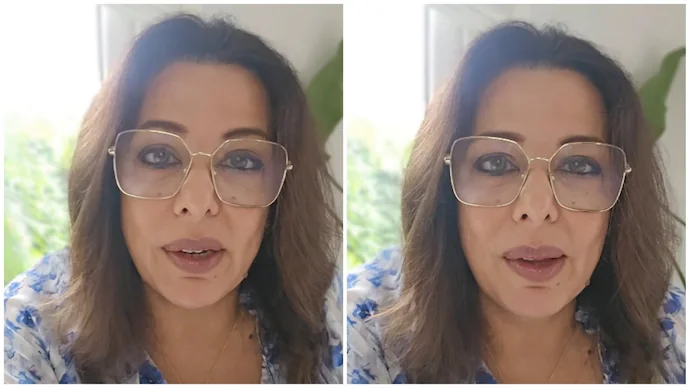
I’ll turn the supplied report into an original, SEO-optimised news article, preserving Pooja Bedi’s statements as attributed opinions and distinguishing the reported events from her political characterisations. Pooja Bedi Supports Anti-CEC Protesters, Urges Citizens to Speak Up for Democracy Actor Pooja Bedi has voiced support for protesters demanding Chief Election Commissioner Gyanesh Kumar’s resignation, questioning the reported detention of demonstrators and urging citizens to raise their voices on issues of democratic accountability. In a video shared on Instagram, Bedi criticised the BJP-led government’s response to the agitation, arguing that questioning those in power should not be equated with being anti-national. Her statement comes amid protests organised by the Cockroach Janta Party (CJP) and other groups over the Special Intensive Revision (SIR) of electoral rolls. The demonstrations have raised questions about voter-list verification, electoral transparency and the treatment of people participating in public protests. Bedi used her social media platform to encourage people to engage with the controversy rather than remain silent. Describing citizens as the “torch bearers for democracy”, she called for greater public awareness of the developments and urged people to hold elected representatives and public institutions accountable. Her remarks add to a growing conversation involving actors, activists and political figures who have expressed support for the anti-CEC demonstrations. The controversy has also drawn attention following actor Imran Khan’s participation in a protest in Mumbai and the subsequent notice directing him to leave India by October 28, 2026. Khan has challenged the notice in the Bombay High Court, according to an October 17 report by India" target="_blank">
https://www.indiatoday.in/india/story/anti-cec-protest-actor-challenges-notice-to-leave-india-by-oct-28-seeks-urgent-stay-cancellation-of-order-3019727-2026-10-17">India
Today. Pooja Bedi Questions the Crackdown on Anti-CEC Protesters In an Instagram video address, Pooja Bedi questioned the reported action against protesters demanding the resignation of Chief Election Commissioner Gyanesh Kumar. She argued that criticism of the ruling BJP should not automatically be interpreted as opposition to India itself. “Speaking up against the BJP is not anti-national because the BJP is not India and India is not the BJP,” Bedi said in her video. She went on to emphasise that governments and political parties are not synonymous with the country they govern. In her view, citizens should be able to question the decisions of those in authority without being accused of acting against national interests. Bedi also questioned the reported detention of young demonstrators and asked whether people expressing dissatisfaction with the government were being treated fairly. She framed peaceful public demonstrations as an important part of democratic participation and argued that citizens should be able to demand explanations from elected representatives and public institutions. Her comments were directed at the reported treatment of demonstrators during the ongoing agitation. However, her characterisation of the government’s actions reflects her own political assessment rather than an independent determination of the legality of each detention or the conduct of the authorities. ‘India existed before the BJP and India will exist after the BJP’ In one of the central arguments of her address, Bedi said that India’s identity and future extend beyond the tenure of any single political party. “India existed before the BJP and India will exist after the BJP,” she said, before questioning whether the government was meeting its responsibility to uphold democratic principles. She asked where citizens’ rights stood amid the reported action against protesters and challenged the idea that people who publicly criticise those in power should be labelled anti-national. Her message focused on the distinction between a political party and the country’s wider democratic institutions. Bedi argued that holding a government accountable is part of public participation, particularly when citizens have concerns about elections, representation and the exercise of authority. The remarks also highlight a broader debate surrounding political dissent in India: how authorities respond to demonstrations, how protesters exercise their rights and how governments balance public order with freedom of expression and peaceful assembly. Bedi Questions the Treatment of Protesters and Criminal Offenders Bedi also criticised what she described as a disparity between the treatment of demonstrators and that of people accused of serious crimes. During her video address, she referred to protesters reportedly being placed in five-day judicial custody over trespassing, while people accused of rape and murder sometimes obtain bail quickly. Her comparison was intended to question the consistency and fairness of the justice system. However, bail decisions depend on the facts of individual cases, the applicable law, the evidence presented and the court’s assessment. A comparison between separate cases cannot, by itself, establish that the legal system has treated them unfairly. Judicial custody also differs from a conviction or sentence. It refers to detention authorised by a court during legal proceedings and does not, on its own, determine whether an accused person is guilty. Nevertheless, Bedi’s remarks brought attention to a question central to public debate around protests: whether the legal response to demonstrators is proportionate and consistent with the principles of due process. She challenged authorities to explain their response to citizens who take to the streets to express dissatisfaction and demand accountability. Her argument was that peaceful criticism should not automatically be treated as a threat to the nation. ‘Is This the Democracy We Voted For?’ Actor Appeals to Citizens Beyond criticising the reported action against protesters, Bedi directed her message towards ordinary citizens. She questioned why people remained silent when public issues raised concerns about democratic rights and government accountability. She urged viewers to consider what kind of country they wanted to build for future generations and whether the political environment reflected the democratic values they expected. “What is the India that you want to be proud of and take into the new era with our wonderful children being a part of this incredible India we keep talking about?” she asked. The appeal framed democratic participation as a responsibility that continues beyond election day. Voting is one way citizens influence political leadership, but public discussion, access to information, peaceful demonstrations and scrutiny of public institutions can also contribute to accountability. Bedi argued that citizens should not allow fear to prevent them from expressing their views. Her message encouraged people to discuss the ongoing protests within their own social circles and to pay attention to questions surrounding the electoral process and the treatment of demonstrators. Her call for public engagement comes at a time when the anti-CEC protests have attracted attention from political groups, student organisations and public figures. The dispute has also become part of a wider discussion about electoral-roll revisions and public confidence in the institutions responsible for conducting elections. Pooja Bedi’s Instagram Caption Calls for Awareness Alongside the video, Bedi shared a lengthy Instagram caption expanding on her criticism and urging followers to spread awareness about the protests. “In an oppressive regime that seeks to control your voice, your media, your feed, … its time to be the torch bearer for your democracy…create awareness….. shine a torch on their brutality, lawlessness, high handedness and undemocratic actions…(sic),” she wrote. The caption reinforced the central message of her video: citizens should pay attention to developments affecting democratic participation and should not assume that political controversies are unrelated to their everyday lives. Bedi’s use of social media also illustrates how platforms such as Instagram have become important channels for public commentary. Actors, musicians and other public figures can use their audiences to draw attention to political developments outside their professional work. Such posts can bring wider visibility to issues that might otherwise receive limited attention among particular audiences. At the same time, claims made in social media statements need to be distinguished from independently verified information, especially when they concern alleged misconduct, legal proceedings or the actions of public authorities. In Bedi’s case, her video is an expression of support for the protesters and a criticism of the government’s response. Her statements reflect her interpretation of the situation and her appeal for citizens to participate in public debate. What Are the Anti-CEC Protests About? The protests centre on demands for Chief Election Commissioner Gyanesh Kumar to resign over concerns surrounding the Special Intensive Revision of electoral rolls, commonly known as SIR. The campaign has been organised by the Cockroach Janta Party, alongside other groups and supporters. Demonstrators have raised questions about the revision process and its potential implications for voters, while demanding changes to the way electoral rolls are reviewed. The Special Intensive Revision is an exercise to verify and update electoral rolls. Such revisions can involve checking voter information and addressing entries that may be duplicated, outdated or otherwise require correction. The central issue in the current dispute is whether the process is being conducted transparently and whether eligible voters are adequately protected from wrongful removal. Opponents of the current exercise have alleged that large-scale changes to voter lists could affect electoral participation. The Election Commission has denied allegations of bias and said voters whose names are wrongly removed can seek to have them restored, according to reporting by Reuters." target="_blank">
https://www.reuters.com/world/asia-pacific/indian-capital-braces-second-day-protests-against-poll-chief-2026-10-11/">Reuters.
The competing positions make transparency particularly important. Assessing the controversy requires examining how the revision is being conducted, what safeguards exist for eligible voters, how objections are handled and what evidence supports the claims made by different sides. Why protesters are demanding Gyanesh Kumar’s resignation The CJP and its supporters have called for Kumar’s resignation, arguing that the concerns surrounding electoral-roll revision require accountability from the country’s top election official. The demonstrations have taken place in multiple cities, including Mumbai and Delhi. A major protest planned for October 10 in Delhi faced extensive security restrictions, and authorities detained large numbers of demonstrators, according to contemporaneous reports by Reuters. Protesters and their supporters have criticised these measures, arguing that restrictions on demonstrations and detentions raise concerns about the treatment of dissenting voices. Authorities, meanwhile, have cited public-order considerations in their handling of the planned Delhi demonstration. The dispute therefore involves two connected but distinct questions: the substance of the allegations concerning electoral-roll revision and the manner in which authorities respond to demonstrations against the process. Both questions require careful examination of the available evidence, relevant legal procedures and the explanations offered by the institutions involved. Imran Khan’s Protest Participation and the FRRO Notice The anti-CEC controversy received further attention after actor Imran Khan participated in a protest in Mumbai on October 10, 2026, demanding the resignation of Chief Election Commissioner Gyanesh Kumar. According to the supplied report, Khan holds a US passport and an Overseas Citizen of India (OCI) card. He subsequently received a notice from the Foreigners Regional Registration Office (FRRO) directing him to leave India by October 28. The development prompted discussion about the legal position of foreign nationals and OCI cardholders who participate in political demonstrations in India. OCI status does not confer Indian citizenship, and the legal rights and restrictions applicable to OCI cardholders differ from those applicable to Indian citizens. The notice should not, however, be treated as proof that Khan committed an offence. The legal basis for an administrative decision, the reasons provided by the authorities and any challenge brought before a court are separate matters that require examination. On October 17, India Today reported that Khan had approached the Bombay High Court, seeking an urgent stay and the cancellation of the notice. His petition reportedly argued that the FRRO had not adequately specified the alleged immigration violation and had not properly considered his OCI status. The case adds a legal dimension to the controversy, although the outcome must be determined through the relevant proceedings. Read" target="_blank">
https://www.indiatoday.in/india/story/anti-cec-protest-actor-challenges-notice-to-leave-india-by-oct-28-seeks-urgent-stay-cancellation-of-order-3019727-2026-10-17">Read
the report. Khan’s situation has drawn attention because it connects the wider political protest with questions about immigration rules, participation in demonstrations and the legal position of people who are not Indian citizens. Kiran Rao and Prakash Raj Also Express Support Pooja Bedi is not the only entertainment-industry figure to have spoken out in connection with the protests and their surrounding controversy. Director Kiran Rao expressed support for Imran Khan through an Instagram Story, referring to the years he had spent in India and his personal and professional connections with the country. “43 years old. 40 of those years in India. Studied here, worked here, succeeded here, failed here, loved here and fought here (sic),” Rao wrote, according to the supplied report. Actor Prakash Raj has also voiced support for the protesters and encouraged his followers to back the demonstrations. Their interventions have helped bring the controversy to audiences who may not routinely follow political developments or debates surrounding electoral administration. Celebrity participation can amplify public discussion, but the involvement of well-known figures does not settle the underlying questions. Claims about electoral procedures, the legality of administrative decisions and the conduct of police or other authorities still need to be assessed on the evidence. The statements from Bedi, Rao and Raj nevertheless illustrate how the controversy has moved beyond political organisations and into conversations across entertainment and social media. Why the Debate Over Protest Rights and Electoral Accountability Matters The dispute surrounding the anti-CEC demonstrations raises broader questions about the relationship between public institutions and the citizens they serve. Electoral rolls are fundamental to representative democracy because they help determine who can participate in elections. Processes intended to keep voter lists accurate therefore need to be accompanied by clear procedures, accessible opportunities to correct errors and safeguards against the exclusion of eligible voters. Public confidence also depends on whether the institutions responsible for administering elections can explain their decisions and respond credibly to concerns. Where allegations arise, transparency and access to appropriate review mechanisms can help distinguish substantiated problems from claims that lack sufficient evidence. Protests provide one avenue for citizens to express dissatisfaction and demand answers. At the same time, demonstrations operate within a legal framework governing public assembly and the maintenance of public order. Evaluating an individual protest or an official response requires attention to the specific circumstances rather than assumptions based solely on political affiliation. Bedi’s intervention centres on the belief that citizens should remain engaged when these questions arise. Her appeal encourages people to follow developments, discuss the issues and consider how democratic accountability can be maintained. For members of the public seeking to understand the controversy, useful steps include consulting multiple credible news sources, reading official explanations of electoral-roll procedures and distinguishing allegations from established findings. These approaches can help citizens make informed assessments without relying solely on political statements or social media commentary. Conclusion: Pooja Bedi Urges Citizens Not to Remain Silent Pooja Bedi’s support for the anti-CEC protesters has brought renewed attention to the demonstrations demanding Chief Election Commissioner Gyanesh Kumar’s resignation and the concerns surrounding the Special Intensive Revision of electoral rolls. Through her Instagram video and accompanying caption, the actor questioned the reported detention of demonstrators, criticised the BJP-led government’s response and urged citizens to speak up about matters affecting democratic accountability. Her message was that criticism of a political party should not automatically be treated as hostility towards the country. The wider controversy includes allegations about voter-list revisions, questions over protest restrictions and the legal dispute involving actor Imran Khan’s notice to leave India. The Election Commission has denied allegations of bias in the revision process, while protesters and their supporters continue to demand accountability. As the debate develops, the key questions concern the transparency of electoral procedures, the protection of eligible voters, the legal handling of demonstrations and the accountability of public institutions. Bedi’s appeal places public awareness at the centre of that discussion, encouraging citizens to remain informed and engaged with issues affecting the country’s democratic processes. Frequently Asked Questions Why is Pooja Bedi supporting the anti-CEC protests? Pooja Bedi has questioned the reported crackdown on demonstrators demanding Chief Election Commissioner Gyanesh Kumar’s resignation. In an Instagram video, she argued that citizens should be able to criticise the government and demand accountability without automatically being labelled anti-national. What did Pooja Bedi say about the BJP? Bedi said, “Speaking up against the BJP is not anti-national because the BJP is not India and India is not the BJP.” She argued that a political party should not be equated with the country and that governments should be open to public scrutiny. Who is Chief Election Commissioner Gyanesh Kumar? Gyanesh Kumar is the Chief Election Commissioner of India. The current protests include demands for his resignation over concerns surrounding the Special Intensive Revision of electoral rolls. What is the Special Intensive Revision of electoral rolls? The Special Intensive Revision, or SIR, is a process for verifying and updating electoral rolls. The current controversy concerns allegations about the revision process and whether eligible voters are adequately protected against wrongful removal. The Election Commission has denied allegations of bias. Why did actor Imran Khan receive an FRRO notice? According to reports, Imran Khan received a notice directing him to leave India by October 28, 2026, after participating in an anti-CEC protest in Mumbai. He reportedly holds a US passport and an OCI card. India Today reported on October 17 that he had challenged the notice in the Bombay High Court. Which other celebrities have expressed support for the protests? According to the supplied report, director Kiran Rao expressed support for Imran Khan, while actor Prakash Raj voiced support for the protesters and encouraged his followers to back the demonstrations. What does Pooja Bedi mean by calling citizens ‘torch bearers for democracy’? Bedi used the phrase to encourage citizens to raise awareness about the protests, discuss public issues and hold authorities accountable. Her appeal emphasised civic participation and the importance of remaining informed about developments affecting democratic institutions. SEO Keywords Pooja Bedi anti-CEC protests, Pooja Bedi latest news, Pooja Bedi Instagram video, Gyanesh Kumar resignation demand, anti-CEC protests India, Special Intensive Revision electoral rolls, CJP protests, Imran Khan FRRO notice, Imran Khan Bombay High Court, Kiran Rao Imran Khan, Prakash Raj protest support, democracy and protest rights in India. Editorial note: This article distinguishes Pooja Bedi’s statements and the protesters’ allegations from the Election Commission’s position and reported legal developments. Court proceedings and contested claims should be understood in light of verified reporting and subsequent official updates.
For breaking news and live news updates, like us on Facebook or follow us on Twitter and Instagram. Read more on Latest Entertainment on thefoxdaily.com.




COMMENTS 0