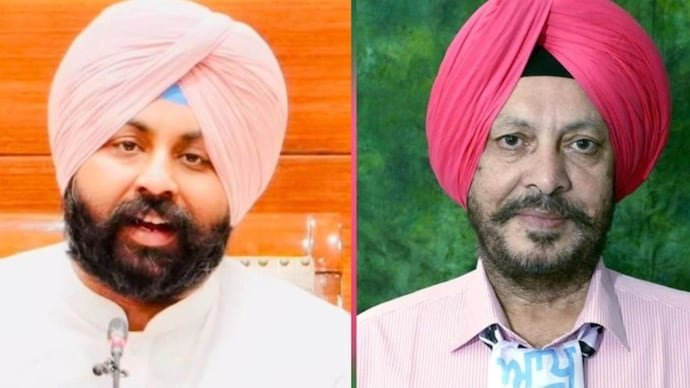
The resignation of Union Education Minister Dharmendra Pradhan over the NEET paper leak controversy has reignited the debate on examination integrity across India, with Punjab emerging as the latest political battleground. Opposition parties in the state including the Bharatiya Janata Party (BJP), the Indian National congress, and the Shiromani Akali Dal (SAD) have seized the moment to demand accountability from the Aam Aadmi Party (AAP) government, arguing that similar standards should apply to alleged examination paper leaks in Punjab.
At the center of the political confrontation are Punjab Education Minister Harjot Singh Bains and Health Minister Dr. Balbir Singh, whose resignations are being sought by Opposition leaders over claims of recruitment test leaks and board examination irregularities during the AAP government’s tenure. While the state government maintains that every verified case has been investigated and action has been taken against those responsible, the latest developments have transformed examination reforms into a major political issue ahead of the next Punjab Assembly elections.
What Triggered the Political Row?
The controversy gained momentum after Dharmendra Pradhan stepped down following the nationwide NEET paper leak controversy. Opposition parties in Punjab argue that his resignation establishes a benchmark for ministerial accountability whenever serious lapses occur in public examinations.
According to Opposition leaders, if responsibility was accepted at the Union level, similar accountability should be expected from state ministers wherever allegations of examination malpractice have surfaced.
The AAP government, however, has not issued a detailed response specifically addressing the latest resignation demands. It has consistently maintained that individual cases of examination misconduct have been investigated and that disciplinary and legal action has been initiated wherever evidence of wrongdoing was established.
At a Glance: The Punjab Paper Leak Controversy
| Issue | Current Status |
|---|---|
| Trigger | Resignation of Union Education Minister Dharmendra Pradhan |
| Opposition Demand | Resignation of Punjab Education and Health Ministers |
| Political Parties Raising Demand | BJP, Congress and Shiromani Akali Dal |
| AAP Position | Investigation and action taken where wrongdoing was found |
| Key Issue | Accountability for alleged examination paper leaks |
| Political Impact | Expected to influence Assembly election campaign |
Why Examination Integrity Has Become a Major Political Issue
Competitive examinations and recruitment tests play a critical role in India’s education and public employment system. Every year, millions of students appear for entrance examinations, Board Exams, and government recruitment tests that determine admission to universities and appointments to public-sector jobs.
When allegations of paper leaks or examination malpractice emerge, they can undermine public confidence in the fairness of the selection process. For students WHO spend months or even years preparing, any compromise in examination security raises concerns about equal opportunity and merit-based selection.
This is why allegations of paper leaks often become both administrative and political issues, prompting calls for stronger safeguards and greater accountability.
Opposition Parties Intensify Pressure on the Punjab Government
The Congress, BJP, and Shiromani Akali Dal have each argued that multiple examination-related controversies in Punjab warrant ministerial accountability.
Punjab Congress president Amarinder Singh Raja Warring welcomed Dharmendra Pradhan’s resignation, describing it as a victory for students who had protested against alleged irregularities in national examinations. He called on Chief Minister Bhagwant Mann and Education Minister Harjot Singh Bains to accept responsibility for alleged paper leaks involving recruitment examinations and board assessments during the current government’s tenure.
Warring also alleged that students protesting examination irregularities had faced police action and questioned whether the same standards of accountability advocated by AAP leaders in previous years should now apply within Punjab.
The BJP echoed similar concerns. Party leaders argued that if paper leaks are treated as serious governance failures elsewhere, allegations in Punjab should also receive equal scrutiny. They urged the state government to strengthen action against those responsible while renewing demands for the resignation of the Education Minister.
The Shiromani Akali Dal likewise accused the government of failing to adequately safeguard examination processes and sought the resignations of both the Education and Health Ministers, alleging repeated examination-related controversies under the present administration.
AAP’s Response So Far
Although the AAP government has not directly responded to the latest demands for ministerial resignations, it has consistently defended its handling of examination-related incidents.
The party has argued that:
- Every verified case of examination malpractice has been investigated.
- Officials found responsible have faced disciplinary or legal action.
- Administrative reforms have been introduced to strengthen examination security.
- Ministerial accountability should not automatically be inferred from every isolated incident unless direct responsibility is established.
The government has also maintained that improving transparency in recruitment processes and modernizing examination management remain ongoing priorities.
Understanding Ministerial Accountability in India
One of the central questions raised by the current political debate is whether ministers should resign whenever significant administrative failures occur.
Under India’s parliamentary system, ministerial accountability is both a constitutional convention and a political principle. While ministers oversee their respective departments, resignation is not automatically required whenever an administrative lapse occurs. Decisions regarding resignation often depend on several factors, including:
- The scale of the alleged irregularity.
- Evidence linking administrative failures to departmental oversight.
- Findings of official investigations.
- Political responsibility accepted by the government.
- Public confidence in the administration.
As a result, calls for resignation frequently become matters of political debate rather than legal obligation.
Why Examination Security Matters Beyond Politics
The broader issue extends well beyond political arguments. Examination integrity is fundamental to maintaining public trust in educational institutions and government recruitment systems.
When examination papers are compromised, the consequences may include:
- Loss of confidence among students.
- Delays in recruitment and admissions.
- Additional financial costs from conducting re-examinations.
- Legal disputes and administrative investigations.
- Emotional stress for candidates preparing for competitive examinations.
These impacts explain why governments across India have increasingly invested in technologies and procedures designed to reduce the risk of examination malpractice.
How Governments Are Strengthening Examination Systems
In recent years, examination authorities at both the national and state levels have introduced several measures aimed at improving the security of question papers and examination processes.
Common reforms include:
- Encrypted digital transmission of question papers.
- Restricted access to printing facilities.
- GPS tracking for transportation of examination materials.
- Biometric verification of candidates.
- AI-assisted monitoring during examinations.
- Expanded CCTV surveillance at examination centers.
- Dedicated cybercrime investigations into leak allegations.
Experts generally agree that technological improvements must be complemented by strict administrative oversight and swift enforcement against those found guilty of malpractice.
Comparison: National vs State-Level Accountability Debate
| Aspect | National Discussion | Punjab Political Debate |
|---|---|---|
| Primary Trigger | NEET paper leak controversy | Alleged recruitment and examination leaks |
| Main Focus | National examination administration | State-level examination management |
| Opposition Demand | Political accountability | Ministerial resignations |
| Government Position | Investigations and reforms | Action taken where wrongdoing established |
| Key Issue | Restoring public trust | Administrative responsibility |
Political Implications Ahead of Punjab Assembly Elections
The controversy arrives at a politically significant time, with Punjab preparing for its next Assembly elections. Opposition parties are expected to continue highlighting examination governance as part of their broader campaign on accountability and public administration.
For the ruling AAP government, the focus is likely to remain on demonstrating administrative reforms, ongoing investigations, and actions taken against individuals accused of examination misconduct.
Education, employment, and recruitment transparency are issues that directly affect students, job seekers, and their families, making them particularly influential topics during election campaigns.
Expert Insight: Public Confidence Is the Real Test
Regardless of political outcomes, the larger challenge is restoring public confidence in examination systems. Students invest significant time, financial resources, and effort preparing for competitive examinations. Even isolated allegations of paper leaks can create widespread uncertainty among candidates.
Experts often emphasize that transparency is just as important as enforcement. Prompt investigations, timely communication, independent oversight, and clear corrective measures can help reassure candidates that examination systems remain fair and merit-based.
In the long term, building resilient examination systems requires continuous Investment in Technology, stronger institutional safeguards, and accountability mechanisms that apply consistently across all levels of government.
What Happens Next?
The political debate is expected to continue as Opposition parties press for greater accountability while the Punjab government focuses on defending its administrative record. Any future developments are likely to depend on official investigations, government responses, and the broader political environment leading into the state elections.
At the administrative level, examination authorities are expected to continue reviewing security protocols and implementing additional safeguards aimed at preventing future irregularities.
Future Outlook
As education and public recruitment become increasingly digitized, governments across India are likely to place greater emphasis on secure examination technologies, stronger legal frameworks, and rapid investigative mechanisms. Public expectations regarding transparency and accountability are also expected to remain high, ensuring that examination governance continues to be a significant Public Policy issue.
For Punjab, the current controversy is likely to remain an important political talking point, with both the ruling party and the Opposition seeking to shape public opinion on their respective approaches to educational governance and institutional accountability.
Conclusion
Dharmendra Pradhan’s resignation has intensified political debate far beyond the national NEET controversy, prompting renewed scrutiny of examination governance in Punjab. Opposition parties argue that the same standards of accountability should apply to alleged paper leaks within the state, while the AAP government maintains that investigations and disciplinary action have been taken wherever evidence warranted.
As the discussion continues, the broader issue extends beyond political rivalry. Protecting the integrity of examinations remains essential for maintaining public trust, ensuring equal opportunity for students and job applicants, and preserving confidence in India’s education and recruitment systems. Whether through stronger technology, transparent investigations, or institutional reforms, safeguarding examination credibility is likely to remain a central priority in the years ahead.
For breaking news and live news updates, like us on Facebook or follow us on Twitter and Instagram. Read more on Latest India on thefoxdaily.com.






COMMENTS 0