What began as isolated complaints about unexpectedly low Class 12 board examination scores has transformed into one of the most significant Education controversies in recent years. The Central Board of Secondary Education’s ambitious shift toward digital evaluation through its On-Screen Marking (OSM) platform was intended to modernize the examination process, improve efficiency, and reduce human errors.
Instead, allegations of tender irregularities, Cybersecurity vulnerabilities, scanning quality issues, and answer-sheet discrepancies have triggered widespread concern among students, parents, educators, and policymakers.
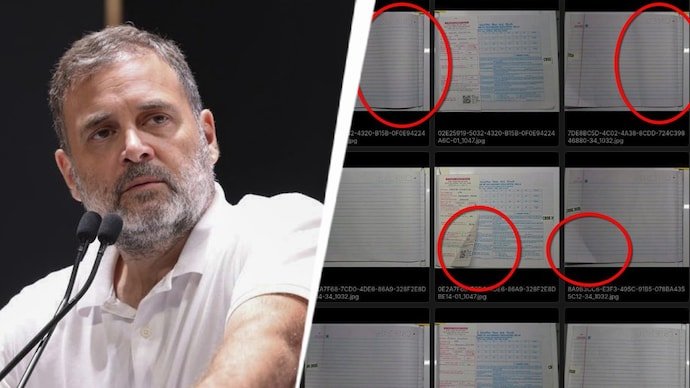
The issue gained further political attention after Congress leader Rahul Gandhi publicly accused CBSE of diluting technical requirements in the tender process and allowing answer sheets to be digitized using methods that allegedly compromised evaluation quality. The controversy has since expanded beyond politics, raising fundamental questions about how India manages large-scale digital education reforms affecting millions of students.
At its core, the debate is not merely about one examination cycle. It is about public trust in digital assessment systems at a time when education is increasingly dependent on technology.
What Is the CBSE On-Screen Marking (OSM) System?
The On-Screen Marking system represents one of the most significant technological transformations ever attempted by CBSE.
Traditionally, physical answer sheets were transported to evaluation centers where teachers manually reviewed and marked responses. The OSM model sought to replace this process with a digitized workflow in which answer books are scanned and uploaded to a secure digital platform.
Evaluators then assess responses online rather than handling physical copies.
The intended benefits included:
- Faster evaluation timelines
- Reduced logistical challenges
- Improved transparency
- Standardized marking processes
- Enhanced monitoring capabilities
- Lower risk of physical answer-sheet loss
For a board responsible for millions of answer scripts annually, the transition represented a major modernization initiative.
However, large-scale technological reforms also create new risks, particularly when implementation challenges emerge.
How the Controversy Began
The controversy did not initially begin with allegations of procurement irregularities.
Instead, many students reported receiving marks that they believed were significantly lower than expected. Soon after results were announced, Social Media platforms became filled with complaints regarding answer-sheet reviews, re-evaluation requests, and scoring anomalies.
Several students claimed that scanned answer books contained blurred images, missing pages, unchecked answers, or discrepancies that appeared inconsistent with their performance.
As more examples surfaced online, attention shifted from individual marks disputes to broader questions about the reliability of the digital evaluation system itself.
The situation intensified when researchers and cybersecurity enthusiasts began examining the platform’s technical infrastructure and procurement documents.
The Tender Process at the Center of the Debate
A key issue raised by critics involves changes allegedly made between different versions of the CBSE tender used to select technology vendors for the digitization process.
According to the allegations, certain technical specifications that appeared in earlier tender documents were later modified or removed.
These reported changes became a major point of contention because procurement requirements often determine the quality, Security, and reliability of services delivered under government contracts.
Rahul Gandhi and other critics have argued that reducing technical standards may have contributed to the problems reported by students during the evaluation process.
The allegations remain politically contested, but they have succeeded in placing procurement transparency under public scrutiny.
| Issue Raised | Why It Matters |
|---|---|
| Scanning standards | Impacts image quality and readability |
| Resolution requirements | Affects accuracy of digital evaluation |
| Vendor selection criteria | Determines technical capability |
| Data security protocols | Protects student information |
| Quality control systems | Reduces evaluation errors |
The debate highlights a broader reality: technical procurement decisions often have direct consequences for millions of end users.
Why Scanning Quality Matters in Digital Evaluation
For students, the controversy may seem focused on marks. However, the underlying issue is actually data quality.
In any digital evaluation system, the scanned answer sheet becomes the primary document used by evaluators. If the scan is unclear, incomplete, distorted, or improperly captured, the evaluator may not receive an accurate representation of the student’s work.
Even small quality issues can create significant consequences.
Potential risks include:
- Unreadable handwriting due to image degradation
- Missing pages during scanning
- Improper page sequencing
- Distorted diagrams and graphs
- Cropping errors
- Reduced image clarity
Because board examination scores influence university admissions, scholarships, and career opportunities, maintaining document integrity is critical.
The Cybersecurity Dimension of the Crisis
Beyond questions about scanning standards, the controversy has exposed concerns regarding cybersecurity.
Reports of vulnerabilities within associated portals have raised alarms about data protection and system resilience.
In today’s digital education environment, examination platforms store highly sensitive information, including student identities, academic records, answer scripts, and evaluation data.
Any weakness in such systems can create serious risks.
Potential consequences of cybersecurity failures include unauthorized access, data leaks, identity exposure, system manipulation, and public loss of confidence.
The fact that CBSE reportedly deployed cybersecurity experts and technical specialists to address vulnerabilities demonstrates the seriousness with which these concerns are being treated.
The Human Cost: Why Students Are Worried
While the Political Debate has captured headlines, the individuals most affected by the controversy are students.
Board examination results often determine future educational opportunities. For many students, even a small difference in marks can affect admissions prospects, scholarship eligibility, and career planning.
This explains why reports of answer-sheet discrepancies triggered such strong reactions.
When students lose confidence in the evaluation process, the issue extends beyond grades. It becomes a question of fairness and trust.
Educational systems function effectively only when students believe assessments are accurate, impartial, and transparent.
India’s Growing Dependence on Digital Education Systems
The CBSE controversy reflects a larger transformation taking place across India’s education sector.
Over the past decade, educational institutions have increasingly embraced technology-driven solutions, including:
- Online examinations
- Digital evaluation systems
- Virtual learning platforms
- AI-assisted assessment tools
- Cloud-based academic records
- Digital certification systems
This transition offers substantial benefits in terms of efficiency and scalability. However, it also introduces new challenges that traditional examination systems rarely faced.
Issues such as software reliability, cybersecurity, vendor accountability, and digital infrastructure quality are becoming central components of educational Governance.
The OSM controversy may therefore serve as an important learning experience for future reforms.
How Other Examination Systems Manage Digital Evaluation
Around the world, examination authorities have increasingly adopted digital assessment technologies.
Successful systems generally share several common characteristics:
| Best Practice | Purpose |
|---|---|
| Independent audits | Verify system integrity |
| High-resolution scanning | Preserve answer quality |
| Multiple quality checks | Detect missing pages |
| Cybersecurity testing | Prevent vulnerabilities |
| Transparent procurement | Maintain public trust |
The controversy has renewed discussion about whether additional safeguards should be incorporated into future digital evaluation frameworks in India.
The Politics Behind the Issue
Education has long been a politically sensitive subject because it affects millions of families directly.
Rahul Gandhi’s intervention has transformed the issue from a technical dispute into a national political conversation. By framing the controversy as a question of accountability and governance, opposition leaders have sought to increase pressure on educational authorities.
The government and CBSE, meanwhile, face the challenge of addressing concerns while defending the broader goals of digital modernization.
As a result, the controversy now exists at the intersection of education policy, technology governance, and political accountability.
An Overlooked Insight: Digital Trust Is Becoming More Important Than Digital Technology
Much of the public discussion has focused on scanners, answer sheets, vendors, and cybersecurity flaws. However, the deeper issue may be trust.
Governments around the world are investing heavily in digital transformation initiatives. Whether in education, healthcare, taxation, or public services, technology is increasingly becoming the foundation of administrative systems.
Yet technology alone cannot guarantee success.
A digital system only works when users trust it.
Students must trust that their answers are accurately captured. Teachers must trust that evaluation platforms function correctly. Parents must trust that scores are awarded fairly.
The CBSE controversy demonstrates that building digital trust may ultimately be more difficult and more important than building digital infrastructure.
What Reforms Could Emerge From the Controversy?
The ongoing debate could accelerate reforms in several areas:
- Stricter procurement transparency standards
- Independent technology audits
- Enhanced cybersecurity requirements
- Improved quality assurance systems
- Greater public disclosure of evaluation processes
- Student-friendly grievance mechanisms
If implemented effectively, these measures could strengthen confidence in future digital education initiatives.
In this sense, the controversy may ultimately contribute to long-term improvements rather than merely exposing weaknesses.
What Happens Next?
The immediate focus will remain on investigations into the allegations surrounding the OSM platform, tender process, and cybersecurity concerns.
Students seeking re-evaluation and clarification are likely to continue demanding greater transparency regarding their answer sheets and scores.
Educational authorities will also face pressure to demonstrate that any identified vulnerabilities or operational shortcomings have been addressed.
The response over the coming weeks could significantly influence public confidence in future digital examination reforms.
Conclusion
The CBSE OSM controversy has evolved far beyond a dispute over examination marks. What started as student complaints about evaluation outcomes has expanded into a broader conversation about digital governance, procurement practices, cybersecurity, transparency, and accountability.
Rahul Gandhi’s allegations have intensified scrutiny of the board’s first nationwide digital evaluation initiative, while students and researchers continue raising questions about system reliability and answer-sheet handling.
The larger lesson extends beyond CBSE. As India accelerates its digital transformation across public services, the success of future reforms will depend not only on technological innovation but also on transparency, oversight, and public trust.
Looking ahead, the controversy may become a defining case study in how educational institutions manage the opportunities and challenges of large-scale digital modernization. Whether it ultimately strengthens or weakens confidence in digital evaluation will depend on how effectively concerns are addressed in the months ahead.
For breaking news and live news updates, like us on Facebook or follow us on Twitter and Instagram. Read more on Latest India on thefoxdaily.com.






COMMENTS 0