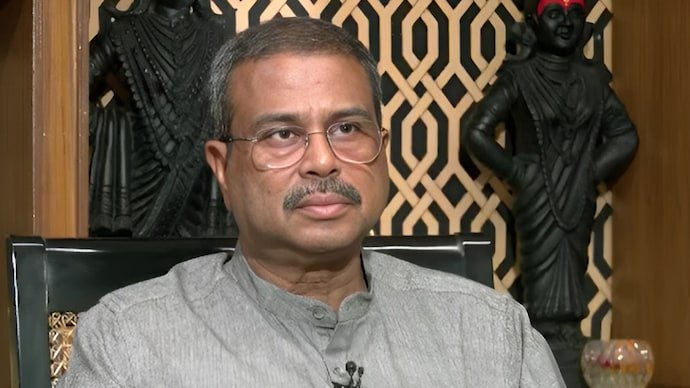
The resignation of Union Education Minister Dharmendra Pradhan marks a defining moment in India’s education and political landscape. Following weeks of nationwide debate over the NEET-UG 2026 controversy, Pradhan announced that he had stepped down from his post, stating that protecting students’ futures and maintaining public trust were more important than holding office. His resignation letter, addressed directly to India’s youth, reflects themes of responsibility, accountability, and educational reform while defending the government’s handling of the crisis.
The development comes after the cancellation and re-conduct of the NEET-UG 2026 examination, allegations of examination irregularities, and growing public demands for greater transparency in India’s competitive entrance examination system. Beyond the political headlines, the resignation raises larger questions about examination security, governance, institutional credibility, and the future of educational reforms.
What Happened? Understanding the NEET-UG 2026 Controversy
NEET-UG serves as India’s primary entrance examination for undergraduate medical and dental admissions. Every year, millions of students compete for a limited number of seats, making it one of the country’s most significant competitive examinations.
Following the May 3, 2026 examination, allegations of irregularities emerged, triggering concerns among students, parents, educators, and policymakers. As scrutiny intensified, the Government of India initiated an investigation, transferred the matter to the Central Bureau of Investigation (CBI), cancelled the examination, and announced a fresh test.
The decision affected more than 20 lakh aspirants, creating uncertainty while simultaneously increasing pressure on authorities to conduct a transparent and credible re-examination.
Timeline of Major Events
| Event | Development |
|---|---|
| May 3, 2026 | NEET-UG examination conducted nationwide. |
| Following weeks | Allegations of irregularities surface. |
| Government action | CBI investigation ordered and examination cancelled. |
| June 21, 2026 | Fresh NEET-UG examination conducted successfully. |
| July 16, 2026 | Revised examination results declared. |
| After results | Dharmendra Pradhan announces resignation. |
Key Highlights from Dharmendra Pradhan’s Resignation Letter
Rather than presenting his resignation as a political defeat, Pradhan framed it as a decision intended to protect students from prolonged uncertainty and legal complications.
- He reaffirmed his long-standing commitment to educational reform.
- He thanked Prime Minister Narendra Modi for the opportunity to serve.
- He defended the government’s swift response after irregularities emerged.
- He emphasized that students remained the government’s highest priority.
- He accepted responsibility for the crisis throughout the process.
- He highlighted successful completion of the re-examination involving over 20 lakh candidates.
- He argued that political conflict should not jeopardize students’ careers.
- He pledged to continue serving the nation outside ministerial office.
Government’s Response to the Examination Crisis
According to the resignation letter, authorities adopted a multi-agency strategy involving central ministries, state governments, district administrations, and law enforcement agencies. Their primary objective was to restore confidence in the examination process while ensuring that deserving students did not suffer because of alleged malpractice.
Among the most significant policy announcements was the decision to transition future NEET examinations to Computer-Based Test (CBT) mode. The move is expected to reduce opportunities for paper leaks, improve monitoring, strengthen security protocols, and modernize India’s examination infrastructure.
Why the Resignation Matters Beyond Politics
Ministerial resignations following administrative controversies are relatively uncommon in India’s education sector. Regardless of political interpretation, the resignation carries symbolic importance because it places ministerial accountability at the center of public debate.
The event demonstrates that competitive examinations are no longer viewed merely as administrative exercises. They influence public trust, institutional credibility, and the aspirations of millions of families who invest years preparing for these highly competitive tests.
For students, the episode reinforces the expectation that examination systems must remain transparent, secure, and fair regardless of political circumstances.
Impact on Students and Parents
The NEET controversy extended far beyond government offices. Students preparing for medical careers experienced months of emotional uncertainty while waiting for official decisions regarding examination validity, investigation outcomes, and revised schedules.
Parents also faced financial and psychological challenges as coaching schedules, travel plans, and academic calendars changed repeatedly.
The successful completion of the re-examination eventually restored admission timelines, but the episode highlighted how examination disruptions affect millions of households across the country.
The Bigger Challenge: Protecting India’s Examination System
The controversy has renewed attention on examination security nationwide. Competitive examinations today involve enormous logistical complexity, including secure question paper management, digital monitoring, transportation, invigilation, cybersecurity, and result processing.
Experts have increasingly argued that reforms should focus on multiple areas simultaneously rather than relying on a single technological solution.
- Improved digital security infrastructure.
- Advanced monitoring systems.
- Better coordination between central and state agencies.
- Stronger legal action against organized examination fraud.
- Regular independent audits of examination procedures.
- Greater transparency in investigation processes.
Computer-Based Testing: A Turning Point?
The government’s decision to introduce Computer-Based Testing for future NEET examinations could represent one of the most significant structural reforms in recent years.
CBT offers several potential advantages:
- Reduced dependence on printed question papers.
- Enhanced encryption and digital security.
- Real-time monitoring of examination centers.
- Faster evaluation and result processing.
- Improved audit trails for investigations.
However, successful implementation will require adequate testing infrastructure across urban and rural India, ensuring equal access for candidates regardless of location.
Comparison: Paper-Based vs Computer-Based Examinations
| Aspect | Paper-Based Test | Computer-Based Test |
|---|---|---|
| Question Distribution | Printed papers | Encrypted digital delivery |
| Security | Higher physical handling risk | Enhanced digital safeguards |
| Evaluation | Longer processing | Faster processing |
| Monitoring | Primarily manual | Technology-assisted supervision |
| Scalability | Logistically intensive | Potentially more efficient |
A Unique Perspective: Restoring Trust Is More Important Than Conducting Exams
One lesson emerging from the NEET-UG controversy is that conducting an examination successfully is no longer sufficient. Public confidence has become equally important.
Students invest years preparing for medical entrance examinations. Even isolated allegations of malpractice can undermine confidence in the entire system. Therefore, future reforms must focus not only on preventing irregularities but also on demonstrating transparency throughout every stage of the examination process.
Trust is ultimately built through consistent communication, swift investigations, institutional accountability, and visible reforms.
What Happens Next?
With the resignation accepted, attention will shift toward the appointment of new leadership within the Education Ministry and the implementation of promised reforms.
Key priorities are likely to include:
- Strengthening examination governance.
- Implementing Computer-Based Testing.
- Improving coordination with investigative agencies.
- Enhancing cybersecurity measures.
- Rebuilding public confidence before future entrance examinations.
Students and educational institutions will closely monitor whether these reforms translate into lasting structural improvements.
Why This Story Will Shape Future Education Policy
The resignation is more than a political development—it has become a case study in crisis management within India’s education system. It highlights the importance of institutional accountability, rapid government response, and the need to modernize examination processes in an era where millions of students depend on fair and transparent assessments.
As India’s higher education ecosystem continues to expand, ensuring examination integrity will remain a critical priority for policymakers, educators, and students alike.
Conclusion
Dharmendra Pradhan’s resignation concludes a major chapter in the NEET-UG 2026 controversy, but it also opens the door to broader discussions about educational governance and examination reforms. His letter emphasizes accountability, student welfare, and national interest while defending the government’s actions during the crisis.
The long-term significance of this episode will depend not on the resignation itself but on whether the promised reforms strengthen India’s examination system. If future measures improve transparency, security, and fairness, the controversy may ultimately become a catalyst for meaningful change that benefits millions of students in the years ahead.
For breaking news and live news updates, like us on Facebook or follow us on Twitter and Instagram. Read more on Latest India on thefoxdaily.com.






COMMENTS 0