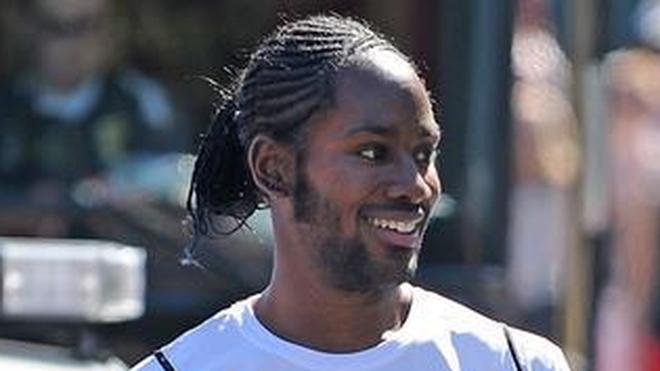
Jason Arday, the former University of Cambridge professor whose rapid rise through British academia made him one of the country’s most prominent Black scholars, has died at the age of 41. Arday was found unresponsive at a property in Battersea, south London, on August 14, 2026, and was pronounced dead at the scene. Police said the death was unexpected but was not being treated as suspicious.
His death came only days after he resigned from Cambridge following intense scrutiny of allegations concerning plagiarism in his 2015 doctoral thesis and questions surrounding parts of his wider academic record. Arday denied intentionally plagiarising material, while Cambridge had begun reviewing aspects of the circumstances surrounding his appointment and academic work.
The timing has placed an already complicated story under an even sharper spotlight. Arday’s death should not be presented as proof of any allegation made against him, nor should unverified claims surrounding his life or career be treated as established fact. At the same time, the controversy raises serious questions about how universities investigate academic misconduct, how institutions verify prestigious appointments and how public scrutiny can escalate when allegations become part of an online campaign.
Who was Jason Arday?
Jason Arday was a British sociologist and academic whose research focused heavily on race, inequality, education and social justice. His career took him through several British universities before he joined the University of Cambridge, where he became a professor in the Faculty of Education.
His appointment attracted considerable attention because he was described as Cambridge’s youngest Black professor when he took up the position in 2023. His personal story was also central to his public profile. Accounts of his childhood described significant developmental and educational challenges, followed by an academic journey that ultimately led to postgraduate study and a professorial career.
That background made Arday a particularly visible figure in conversations about representation in British higher education. His career was frequently discussed not simply in terms of academic achievement, but also as an example of how people from disadvantaged backgrounds could reach institutions historically associated with privilege and exclusivity.
His work also placed him in debates over racial inequality within universities and British society. That made the subsequent scrutiny unusually charged: questions about his scholarship quickly became intertwined with arguments about race, diversity, institutional standards and representation.
What happened to Jason Arday?
Arday was found unresponsive in Battersea, south London, on Friday, August 14. Emergency services attended the property, but he was pronounced dead at the scene.
The Metropolitan Police said his death was unexpected but was not being treated as suspicious. An investigation into the circumstances was continuing.
At the time of his death, Arday had recently stepped down from his position at Cambridge. His resignation followed weeks of increasingly intense public discussion about allegations concerning his academic work and aspects of his professional biography.
His family, through his publisher, described themselves as being in shock and said they believed he had been subjected to a prolonged campaign of misinformation, abuse and harassment. They have asked for privacy and for attacks against Arday and his family to stop.
Those claims are the family’s account and should not be confused with an official determination about the cause of Arday’s death. Police have not said that the academic controversy caused his death.
Why did the Jason Arday plagiarism controversy begin?
The controversy centred initially on Arday’s doctoral thesis, completed in 2015 at Liverpool John Moores University. In July 2026, comparisons circulated online showing passages in the thesis that critics alleged were copied from earlier academic work.
One prominent comparison involved the 2009 doctoral thesis of Paula Zwozdiak-Myers, an academic associated with Brunel University London. Critics identified numerous passages they said were identical or substantially similar.
The allegations subsequently expanded beyond the doctoral thesis. Critics and investigators examined other academic papers attributed to Arday, raising questions about text overlap, research methods and the provenance of some quotations.
It is important to distinguish between an allegation of plagiarism, an editorial correction and a formally established finding of academic misconduct. Similar-looking passages can require investigation, but the existence of textual overlap alone does not explain why it occurred, who was responsible for each part of a paper or what institutional rules applied when the work was produced.
That distinction became especially important in Arday’s case because different reports described different aspects of the allegations, while Cambridge and other institutions considered what fell within their respective investigative responsibilities.
What did the allegations involve?
The most serious claims concerned the scale and nature of similarities between Arday’s doctoral thesis and earlier research. Reports published during the controversy described more than 100 passages as matching or closely resembling material in another thesis.
Critics also scrutinised journal publications. One frequently discussed example involved a 2018 paper concerning the mental health experiences of Black and minority ethnic university students. Researchers who reviewed the paper alleged that portions of its language and some quotations closely resembled material from earlier research.
The paper was subsequently corrected. Changes reportedly included additional citations and alterations to parts of the methodology and quoted material.
These developments matter because academic integrity is not limited to avoiding direct copying. Research credibility also depends on accurately describing how evidence was collected, how participants were studied, how quotations were obtained and how conclusions were reached.
However, the existence of corrections does not automatically establish every allegation that was made against Arday. Each claim requires its own evidence and, where appropriate, an institutional determination.
Why Cambridge’s role became controversial
One of the most important unanswered questions in the wider affair concerns institutional oversight.
Arday’s disputed doctoral work predated his appointment at Cambridge by several years. That creates a complicated jurisdictional question: should Cambridge investigate research produced before an academic joined the university, or should the institution that awarded the doctorate take primary responsibility?
This is more than a technical administrative issue. Universities depend on academic credentials when hiring professors. A doctoral degree, publications, research grants and professional references can form part of a candidate’s academic record.
If serious questions later emerge about material produced before an appointment, responsibility can become fragmented between the university that awarded the degree, journals that published the research and the institution that subsequently hired the scholar.
That fragmentation can create a gap in accountability. Each institution may have legitimate reasons for limiting its investigation, while the public may reasonably ask who, ultimately, is responsible for establishing the facts.
Why the case is bigger than one professor
The Jason Arday controversy has become a test case for academic integrity because it sits at the intersection of several difficult issues: plagiarism detection, university hiring, research ethics, media scrutiny, online investigations and racial representation.
Universities have increasingly invested in diversity and inclusion initiatives, while simultaneously emphasising academic standards. Those goals are not inherently contradictory. In fact, a credible commitment to diversity requires institutions to maintain rigorous standards for everyone.
The danger arises when legitimate scrutiny becomes entangled with ideological campaigning.
Academic misconduct allegations should be investigated using evidence, transparent procedures and consistent standards. They should not be dismissed simply because the person being investigated belongs to a historically underrepresented group. Equally, accusations should not be presumed true because they fit a political narrative about diversity or institutional failure.
The strongest lesson from the Arday case is therefore procedural: evidence must be stronger than ideology.
A timeline of the Jason Arday controversy
| Date | Development |
|---|---|
| 2015 | Arday completed his doctoral thesis at Liverpool John Moores University. |
| 2023 | Arday joined Cambridge as a professor and attracted international attention as the university’s youngest Black professor. |
| 2023-2024 | Questions were raised about aspects of some published research, with corrections subsequently appearing in academic journals. |
| 2025 | Further scrutiny of Arday’s academic work reportedly developed behind the scenes, including examination of alleged plagiarism in his thesis and publications. |
| July 2026 | Detailed allegations about similarities between Arday’s doctoral thesis and earlier academic work became widely public. |
| August 2026 | Arday resigned from Cambridge amid the controversy while institutional reviews and public debate continued. |
| August 14, 2026 | Arday was found unresponsive in Battersea, south London, and was pronounced dead at 41. Police said the death was unexpected but not suspicious. |
The overlooked issue: how should universities verify academic credentials?
The controversy exposes a problem that extends well beyond Cambridge: elite universities often recruit scholars using information produced over many years and across multiple institutions.
Modern academic careers can involve dozens of journal articles, conference papers, grants, books, degrees and professional appointments. Hiring committees cannot realistically reproduce every piece of scholarship from scratch.
But that does not mean verification is impossible.
Universities can strengthen recruitment by using clearer declarations of research responsibility, systematic checks of doctoral credentials, publication-level integrity screening and stronger documentation when candidates have unusually prominent biographies.
There is also an important distinction between verification before appointment and investigation after allegations emerge. Once a scholar has joined an institution, the reputational and legal consequences of an investigation become much greater. Early verification can therefore be less damaging to everyone involved.
Plagiarism allegations are not all the same
Another lesson from the case is that the word “plagiarism” can conceal several different forms of academic misconduct.
Directly copying another person’s words without attribution is different from failing to cite an adapted idea. Inadequate citation is different again from fabricating research data or inventing quotations. Each category can have different consequences under university and journal policies.
Text-matching software can identify suspicious similarities, but it cannot determine intent. A similarity report is therefore a starting point for human investigation rather than a final verdict.
This distinction is particularly important in qualitative social science, where interviews, quotations and narrative analysis can make research integrity questions more complicated than simple text duplication.
What Arday’s death means for the academic community
Arday’s death has already shifted the tone of the conversation. The academic dispute is now inseparable from a human tragedy, but that does not eliminate the need for factual accountability.
Universities, journals and researchers still need to establish what happened with the disputed work. At the same time, public discussion should avoid turning an unresolved academic investigation into a posthumous trial conducted on social media.
The two principles can coexist: academic questions deserve answers, and a deceased person’s dignity deserves protection.
For universities, the case may encourage greater scrutiny of how allegations are handled before they reach the media. For publishers and journals, it highlights the importance of transparent correction notices and research-integrity procedures. For academics, it is another reminder that published work remains part of a permanent professional record.
The wider debate over race and representation in academia
Arday’s rise had symbolic significance because Black professors remain underrepresented in many parts of British higher education. His career was therefore frequently interpreted through the broader struggle for racial equality in universities.
That makes the controversy particularly sensitive. There is a risk that allegations against one individual could be used to discredit diversity initiatives generally. The opposite risk is equally serious: that concerns about academic standards could be dismissed automatically as racist because the scholar involved is Black.
Neither approach produces better universities.
A more durable model is one in which representation and academic integrity reinforce one another. Universities should want diverse faculties because intellectual communities benefit from a wider range of experiences and perspectives. They should also insist on transparent research standards because trust is essential to scholarship.
What happens next?
Because Arday has died, some questions surrounding his academic record may become more difficult to resolve. Institutions may still be able to examine published papers, doctoral material and administrative records, but the absence of the researcher limits opportunities to respond directly to individual allegations.
Cambridge and other institutions may also face pressure to explain how concerns about Arday’s work were handled, what reviews were undertaken and whether existing procedures were adequate.
That scrutiny should focus on verifiable processes rather than speculation about Arday’s death.
There is also likely to be a longer conversation about the role of online investigators in academic misconduct cases. Independent researchers can sometimes identify problems that formal systems overlook. But crowdsourced investigations can also spread errors quickly. The ideal outcome is not to eliminate independent scrutiny, but to create institutional mechanisms capable of responding to credible evidence promptly and fairly.
Conclusion: a tragedy that leaves difficult questions
Jason Arday’s death at 41 closes one chapter of a remarkable and deeply controversial academic career, but it does not resolve the questions raised during the final weeks of his life.
He rose from a challenging childhood to become a prominent sociologist and Cambridge professor, and his appointment carried considerable significance in Britain’s debate over race and higher education. In 2026, allegations about plagiarism and other aspects of his academic record transformed that success story into a major institutional controversy.
Those allegations must remain allegations unless and until the appropriate institutions establish findings. At the same time, corrections to academic publications, documented textual similarities and questions about research practices deserve careful examination rather than dismissal.
The most important lesson may ultimately concern the systems around individual scholars. Universities need rigorous recruitment checks. Journals need transparent correction and research-integrity procedures. Academic investigators need evidence-based methods. Media organisations need to distinguish established facts from allegations. And online audiences need to resist the temptation to turn complex investigations into instant verdicts.
Arday’s death is now a matter of police investigation, while the academic questions surrounding his career belong to institutions equipped to assess evidence. Keeping those two issues separate is essential.
The legacy of the Jason Arday controversy should not be a battle between diversity and academic standards. It should be a demand for both: broader representation in elite institutions, matched by standards that are transparent, rigorous and applied consistently to everyone.
For breaking news and live news updates, like us on Facebook or follow us on Twitter and Instagram. Read more on Latest Entertainment on thefoxdaily.com.






COMMENTS 0