
- Why Diamond Harbour Is at the Centre of Attention
- The “Lyari of Bengal” Tag: What Does It Mean?
- Election Day Controversies: What Happened This Time?
- The Numbers That Fuel Suspicion and Admiration
- The “Diamond Harbour Model”: Development or Control?
- A Constituency Shaped by Geography
- Fear vs Loyalty: Competing Narratives on the Ground
- Comparison: Stronghold Politics vs Competitive Constituencies
- Why Security Presence Is So High
- What Happens Next?
- Conclusion: More Than Just One Constituency
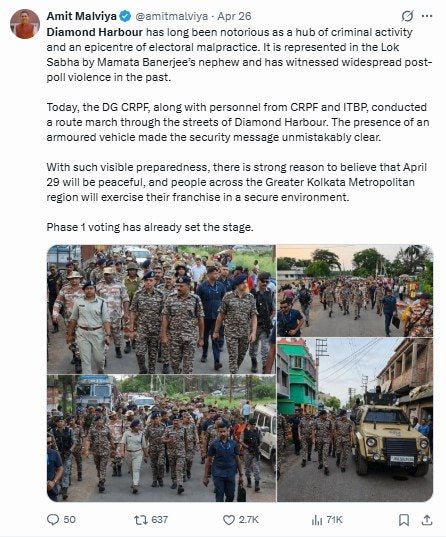
On polling day, Diamond Harbour didn’t look like an ordinary constituency. Streets were lined with central forces, surveillance tightened, and even anti-terror officials were deployed. For many voters, it felt less like an election and more like a high-stakes operation.
This intense focus is not accidental. Diamond Harbour represented by Abhishek Banerjee, a key figure in West Bengal politics has emerged as one of the most politically significant and controversial constituencies in the state. With allegations of electoral malpractice, counterclaims of development success, and comparisons to Crime-hit regions like Lyari, the seat has become a symbol of the larger political battle playing out in Bengal.
Why Diamond Harbour Is at the Centre of Attention
Diamond Harbour’s importance has grown rapidly over the past decade. Once just another constituency in South 24 Parganas, it is now seen as the political nerve centre of the ruling establishment’s second-in-command.
Its prominence comes from three key factors:
- Political Leadership: It is the stronghold of Abhishek Banerjee, a central figure in the ruling party
- Electoral dominance: The constituency has recorded massive victory margins in recent Elections
- Strategic location: Its proximity to international borders and sensitive regions adds to its complexity
In simple terms, if Bengal politics were a chessboard, Diamond Harbour would be one of its most critical squares.
The “Lyari of Bengal” Tag: What Does It Mean?
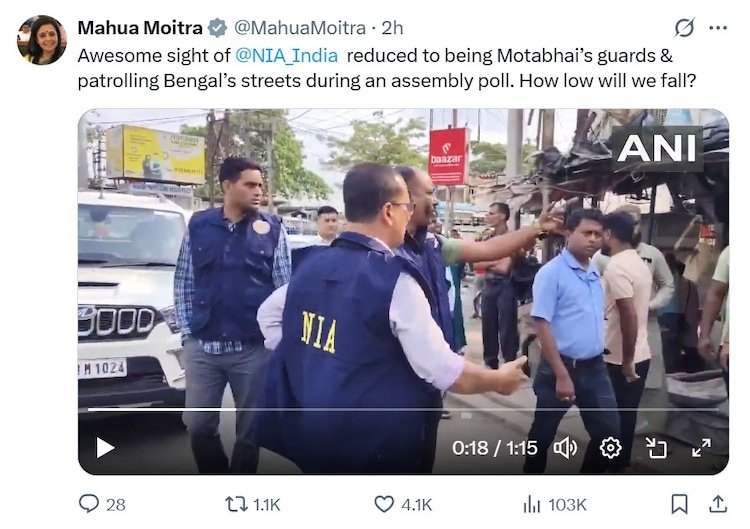
The comparison of Diamond Harbour to “Lyari” is politically loaded and not without Controversy.
Lyari, a locality in Karachi, has long been associated with gang violence and criminal networks. By using this label, critics are attempting to paint Diamond Harbour as an area marked by intimidation, illegal activity, and strong-arm tactics.
Opposition parties argue that the region has seen:
- Alleged cross-border smuggling networks
- Past instances of human trafficking
- Claims of electoral manipulation and booth-level irregularities
However, it is important to note that these remain allegations in the political arena, strongly denied by the ruling party. The label itself is less about geography and more about narrative warfare in a highly competitive political Environment.
Election Day Controversies: What Happened This Time?
The latest round of polling brought fresh controversy.
Opposition leaders alleged that voting machines in certain booths were tampered with, specifically claiming that their party symbol was obstructed. Visual evidence circulated widely, triggering outrage and raising questions about the integrity of the process.
The response was swift:
- The Election Commission ordered an inquiry
- Officials indicated that repolling could be conducted if irregularities were confirmed
- The ruling party dismissed the allegations as baseless
This pattern allegation followed by denial has become almost routine in high-stakes constituencies. But in Diamond Harbour, the stakes feel unusually high.
The Numbers That Fuel Suspicion and Admiration
One of the biggest reasons Diamond Harbour remains under scrutiny is the scale of electoral victories.
| Election Year | Victory Margin |
|---|---|
| 2019 Lok Sabha | Approx. 3.2 lakh votes |
| 2024 Lok Sabha | Approx. 7.1 lakh votes |
Such margins are rare, even in strongholds. To supporters, they reflect deep public trust and effective Governance. To critics, they raise questions about how such dominance is sustained.
The truth likely lies somewhere in between shaped by both political organisation and local dynamics.
The “Diamond Harbour Model”: Development or Control?
Supporters of Abhishek Banerjee often point to what they call the “Diamond Harbour Model.” This approach combines welfare delivery with direct political engagement.
Key initiatives include:
- Direct grievance systems: Residents can reach out through dedicated helplines
- Community welfare: Localised food distribution and social support programs
- Healthcare and infrastructure: Focus on improving basic services
- Pension initiatives: Financial assistance schemes for senior citizens
During the pandemic, these systems reportedly played a crucial role in delivering relief at the grassroots level. This helped build a strong support base and reinforced the perception of accessibility.
But critics argue that such tightly controlled systems can also consolidate political power in ways that are difficult for opponents to challenge.
A Constituency Shaped by Geography
Diamond Harbour’s location adds another layer to its political story.
Situated near the Sundarbans and close to the Bangladesh border, the region has long been sensitive from both Security and economic perspectives.
This geography brings challenges:
- Monitoring cross-border movement
- Preventing illegal trade networks
- Ensuring law enforcement across difficult terrain
It also explains why security deployment during elections is significantly higher compared to many other constituencies.
Fear vs Loyalty: Competing Narratives on the Ground
Ask different stakeholders about Diamond Harbour, and you’ll hear very different stories.
Opposition voices often speak of:
- A climate of intimidation
- Pressure on political workers
- Administrative bias during elections
Meanwhile, supporters highlight:
- Strong grassroots connectivity
- Efficient delivery of schemes
- Consistent electoral performance as proof of public trust
This sharp divide is what makes Diamond Harbour so politically fascinating and so difficult to interpret from the outside.
Comparison: Stronghold Politics vs Competitive Constituencies
| Stronghold (Like Diamond Harbour) | Highly Competitive Seat |
|---|---|
| Large victory margins | Narrow electoral gaps |
| Centralised leadership influence | Distributed local leadership |
| Stable voter base | Frequent swings in voter preference |
| High political control | High unpredictability |
This comparison helps explain why Diamond Harbour attracts such intense scrutiny it represents the extreme end of political dominance.
Why Security Presence Is So High
The deployment of multiple security agencies including central forces and specialised units signals the perceived sensitivity of the constituency.
This level of security typically indicates:
- A history of electoral tensions
- High political stakes
- Concerns about maintaining order during voting
It also reflects how seriously authorities are taking any potential disruption in the electoral process.
What Happens Next?
With allegations under investigation and political rhetoric intensifying, the next steps will be crucial.
Key developments to watch include:
- Findings of the Election Commission probe
- Possibility of repolling in affected booths
- Final voting trends and turnout patterns
Beyond immediate outcomes, the results will shape narratives heading into future elections not just in Diamond Harbour, but across Bengal.
Conclusion: More Than Just One Constituency
Diamond Harbour is no longer just a parliamentary seat it is a political symbol.
For supporters, it represents effective leadership, strong organisation, and development-driven governance. For critics, it raises concerns about transparency, fairness, and the health of democratic competition.
The truth, as always, is layered.
As results approach, one thing is certain: what happens in Diamond Harbour will echo far beyond its borders, influencing not just electoral outcomes but the broader narrative of power and politics in West Bengal.
For breaking news and live news updates, like us on Facebook or follow us on Twitter and Instagram. Read more on Latest India on thefoxdaily.com.






COMMENTS 0