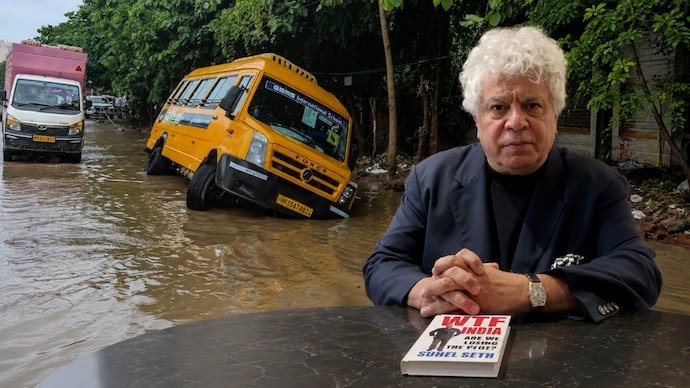
“I am angry, furious and raging over the miserable life we live in the cities across India. We live like rodents. Even worse.”
With those words, marketing expert and author Suhel Seth launched a citizens’ campaign targeting India’s deteriorating urban infrastructure, calling on people to document civic failures and send photographs and videos so they can be amplified publicly.
Seth’s 2.17-minute video was posted on his X account on Saturday morning, August 8, hours after heavy monsoon rain had submerged large parts of Delhi-NCR, including Gurugram, where he lives.
His appeal quickly attracted support from prominent personalities and hundreds of citizens across the country. Biocon founder Kiran Mazumdar-Shaw, senior advocate Sidharth Luthra and angel investor Lloyd Mathias were among those WHO backed the initiative.
The campaign comes after another episode of severe waterlogging in Gurugram, where roads were submerged, traffic was paralysed and commuters were stranded for hours.
‘We live like rodents’
Seth described India’s urban infrastructure as being in a state of collapse and expressed anger over the conditions residents face in major cities.
In his video, the 63-year-old criticised potholes, flooding and what he described as repeated failures by civic authorities to prepare cities for the monsoon.
He said potholes had become the size of “Mount Everest” and questioned why Indian cities continue to experience severe flooding every monsoon despite authorities having extensive experience with seasonal rainfall.
Gurugram received particular criticism from Seth, who accused the administration of repeatedly allowing the Millennium City to become “Venice every monsoon”.
But rather than presenting his initiative simply as another protest, Seth framed it as a citizens’ movement focused on evidence and accountability.
He asked people to send photographs and videos showing waterlogged roads, damaged infrastructure and other civic problems, along with the date and location of each incident.
His stated aim is to amplify verified complaints through Media and social platforms and increase public pressure on authorities.
“Let’s stop talking about the problems and work towards solutions,” Seth said.
He added that citizens deserved cities they could live in rather than cities they were forced to “swim in”.
Gurugram floods reignite civic anger
The campaign followed heavy rain on Friday, August 7, when large parts of Gurugram were once again affected by severe waterlogging.
Roads were submerged, vehicles became stranded and traffic movement was severely disrupted, reviving longstanding concerns about drainage and urban planning in the city.
Hours before the flooding, the Gurugram Metropolitan Development Authority had posted on X: “Every drain counts in building a flood-resilient Gurugram.”
After the rain, social-media users responded with photographs and videos showing the scale of the waterlogging and traffic disruption.
For Seth, the episode was another example of a problem he has been highlighting for years.
On August 4, he had sarcastically advised people travelling to or from Gurugram to carry a boat, criticising the administration for failing to anticipate the monsoon.
“Issued in the public interest: for all those coming to Gurugram today and/or leaving, kindly use a boat,” he wrote on X, while thanking Haryana Chief Minister Nayab Singh Saini and the Gurugram Deputy Commissioner sarcastically for the situation.
How Seth’s citizens’ campaign works
Seth’s appeal is built around a simple idea: citizens should document problems rather than merely complain about them.
People have been asked to send photographs and videos of civic failures, together with details identifying when and where the problem occurred.
The material can include waterlogged roads, potholes, broken infrastructure and other examples of urban neglect.
Seth has promised to amplify verified submissions, potentially turning individual complaints into a larger public record of recurring civic problems.
The campaign has also moved beyond Gurugram, with people from other cities responding with their own experiences and images of urban infrastructure failures.
That expansion is significant because Seth is attempting to turn a local response to flooding into a broader conversation about the quality of life in India’s cities.
Big names rally behind the campaign
The initiative received support from several prominent figures shortly after Seth’s video was posted.
Biocon founder Kiran Mazumdar-Shaw called for the campaign to become a national citizens’ movement and linked the issue to the need for sustained public participation in maintaining cleaner and better-planned cities.
She referred to Prime Minister Narendra Modi‘s Swachh Bharat campaign and argued that civic improvement requires citizens to change their own habits as well as governments to improve infrastructure.
“This must be a national movement,” Mazumdar-Shaw wrote on X.
She also pointed to efforts in Bengaluru aimed at improving cleanliness and said such action needed to continue rather than remain temporary.
Mazumdar-Shaw has previously criticised garbage, potholes, shrinking greenery and unplanned development in Bengaluru. In June, she said the city’s reputation as a garden city was being undermined by its worsening waste and environmental problems.
Senior lawyer and investors also back Seth
Senior advocate Sidharth Luthra also supported Seth’s initiative and recalled his role in amplifying public concerns during India’s Covid-19 oxygen crisis.
Angel investor Lloyd Mathias described the campaign as a “great initiative” and said it would require concerted citizen action to achieve meaningful results.
Chennai-based marketing professional KSV Kuppuswamy similarly backed the initiative, arguing that citizen participation and activism by prominent individuals were needed to address urban problems.
He stressed that the campaign should not simply be about blaming governments but about citizens taking responsibility while demanding meaningful improvements.
A ₹271 crore penthouse and a city struggling with basic infrastructure
The debate over Gurugram’s infrastructure has also intersected with discussion about the city’s extraordinary property prices.
Indian Army veteran Lieutenant Colonel Sushil Singh Sheoran (Retired) reacted to entrepreneur Manav Sardana’s reported ₹271 crore purchase of a penthouse at DLF’s The Dahlias in Gurugram.
Sheoran argued that there was something deeply wrong with a city where an apartment could command such a price while residents continued to face what he described as third-world civic amenities.
His comment highlighted the contrast between Gurugram’s image as one of India’s wealthiest and most modern urban centres and the persistent problems with drainage, roads and basic civic infrastructure.
Seth’s campaign draws thousands of online reactions
Seth’s original post had attracted significant engagement by Tuesday morning.
According to the figures provided in the source material, the post had received almost four lakh views, along with 728 comments, around 2,100 reposts, 7,100 likes and 874 bookmarks.
Hundreds of people also responded by sharing photographs and videos documenting civic problems in different parts of India.
Seth personally reposted some of the submissions, helping shift the campaign from a single video into a stream of citizen-generated evidence.
The post also featured a copy of Seth’s book WTF India, which was listed on Amazon as having been published on July 13, 2026.
Why the campaign is bigger than Gurugram
Although Gurugram’s flooding provided the immediate trigger, Seth’s appeal is aimed at a much broader problem.
Major Indian cities have experienced recurring complaints about potholes, flooding, garbage collection, traffic congestion, broken roads, inadequate drainage and unplanned construction.
These problems are particularly visible during the monsoon, when heavy rainfall can quickly expose weaknesses in drainage and road infrastructure.
Seth’s strategy is to turn those recurring complaints into documented evidence. Instead of relying solely on individual grievances, the campaign seeks to build a large collection of photographs, videos, dates and locations that can be used to pressure authorities.
The approach also gives citizens a direct role in highlighting problems in their neighbourhoods.
From online outrage to organised citizen action
Seth’s initiative comes at a time when social-media campaigns have increasingly become a tool for public mobilisation.
Online campaigns can spread rapidly because citizens can document events in real time and share evidence directly with large audiences.
However, the challenge is turning online attention into sustained action and measurable improvements.
That is precisely what Seth appears to be attempting by asking people to provide specific evidence rather than simply expressing anger.
The campaign’s success could ultimately depend on whether documented complaints lead to responses from civic agencies and whether citizens continue participating after the immediate outrage surrounding the Gurugram flooding fades.
Can citizen pressure force civic change?
For years, complaints about India’s urban infrastructure have generated headlines, social-media outrage and political debate. Yet many of the same problems return every monsoon.
Seth is betting that a more organised form of citizen participation can produce a different result.
The distinction between a protest and a citizens’ campaign is central to his approach. Rather than simply demanding that authorities fix problems, he is asking citizens to collect evidence, identify locations and dates, and create a public record of failures.
Supporters argue that such documentation can make it harder for authorities to dismiss individual complaints as isolated incidents.
Critics could also ask whether online campaigns can deliver lasting improvements without institutional follow-up, funding and sustained pressure.
For now, the campaign has succeeded in generating attention well beyond Gurugram.
‘We deserve cities we can live in’
Seth’s campaign captures a frustration shared by many urban residents: the gap between India’s rapid economic development and the quality of basic infrastructure in its cities.
Gurugram has become a major corporate and Technology hub, yet recurring flooding has repeatedly exposed weaknesses in its civic systems.
The same contradiction can be seen in other major cities, where expensive real estate, modern office towers and ambitious infrastructure projects coexist with potholes, garbage, flooding and inadequate pedestrian facilities.
Whether Seth’s initiative develops into a nationwide movement remains to be seen.
But the early response from Business leaders, lawyers, investors, veterans and ordinary citizens suggests that the frustration is widespread.
The real test will now be whether the campaign can turn photographs, videos and online engagement into sustained citizen pressure and tangible improvements on the ground.
For Seth, the message is simple: India’s citizens should not merely learn to live with failing urban infrastructure. They should document it, demand accountability and push for cities that work.
For breaking news and live news updates, like us on Facebook or follow us on Twitter and Instagram. Read more on Latest India on thefoxdaily.com.


COMMENTS 0