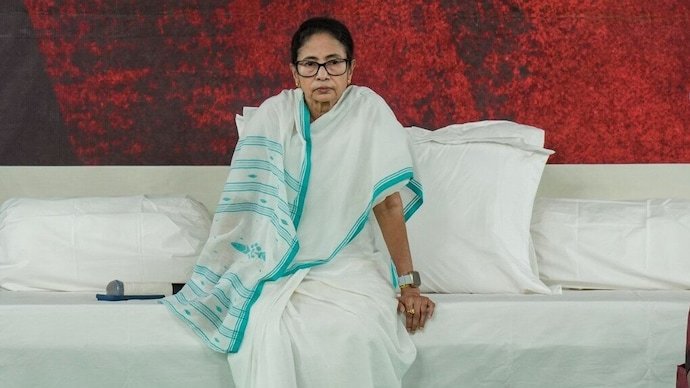
A scheduled meeting of Trinamool Congress legislators at Mamata Banerjee’s Kalighat residence took an unexpected turn when only around 20 of the party’s 80 newly elected MLAs reportedly attended. The low turnout forced the party to postpone the meeting, a move that immediately attracted political attention across West Bengal.
The development came amid heightened political tensions following the alleged attack on Trinamool Congress General Secretary Abhishek Banerjee and claims of assaults on other party leaders and workers. While opposition parties may view the absence of nearly three-fourths of the legislators as a sign of organizational concerns, the TMC insists that the missing MLAs were actively engaged in Protests and local political activities linked to recent incidents of alleged violence.
Beyond the immediate controversy, the episode highlights broader questions about political mobilisation, party discipline, leadership strategy, and the increasingly confrontational political climate in West Bengal.
What Happened at the Kalighat Meeting?
The meeting had been scheduled at Mamata Banerjee’s residence in Kalighat and was expected to bring together the party’s newly elected legislators for discussions on organizational priorities and political strategy.
However, when the meeting was due to begin, only about 20 MLAs were present. With a significant majority absent, the party decided to postpone the gathering and reschedule it for a later date.
According to party leaders, the absence was not due to internal disagreements but rather because many legislators were occupied with organizing protests and managing developments in their respective constituencies following recent political incidents.
The party maintained that those unable to attend had informed leadership about their circumstances and requested that the meeting be deferred.
The Trigger: Alleged Attack on Abhishek Banerjee
The meeting took place against the backdrop of an alleged attack on Abhishek Banerjee, one of the most influential leaders within the Trinamool Congress and widely regarded as a key figure in the party’s future leadership structure.
Abhishek Banerjee has emerged as one of the most prominent faces of the party over the past decade, playing a central role in election campaigns, organizational expansion, and youth mobilization efforts.
Any attack involving a senior leader naturally becomes a major political issue, particularly in a state where political rivalries frequently dominate public discourse.
The TMC has portrayed the incident as part of a larger pattern of political targeting, while opponents have disputed aspects of the party’s narrative, reflecting the deeply polarized political Environment in the state.
Why the Attendance Issue Matters Politically
Legislative party meetings are not merely administrative gatherings. They often serve as important platforms for leadership communication, strategic planning, and demonstrating political unity.
For any ruling or major opposition party, high attendance at such meetings sends a message of organizational cohesion. Conversely, low attendance can invite speculation, regardless of the actual reasons behind it.
In the case of the TMC, the party has strongly argued that the absence of many legislators reflected active participation in political protests rather than dissatisfaction or internal discord.
Nevertheless, the incident has generated headlines because optics play a significant role in modern politics.
| Political Interpretation | TMC’s Position | Opposition Narrative |
|---|---|---|
| Low attendance | MLAs engaged in protests | Questions about party coordination |
| Meeting cancellation | Practical postponement | Potential organizational concern |
| Street mobilization | Response to attacks on leaders | Political damage control |
| Future meeting | Will be rescheduled | Test of party unity |
West Bengal’s Long History of Street Politics
To understand the significance of the TMC’s response, it is important to recognize the unique political culture of West Bengal.
Unlike many states where political activity is concentrated within legislative institutions, West Bengal has a long tradition of street mobilization, public rallies, demonstrations, and grassroots campaigns.
Political protests have historically played a major role in shaping public opinion and influencing electoral outcomes in the state.
Whether under Left Front governments, Trinamool Congress administrations, or during opposition campaigns, street-level political engagement has remained central to West Bengal’s political identity.
In this context, the TMC’s decision to prioritize protest activities over an internal meeting can be viewed as consistent with the state’s broader political traditions.
The Growing Importance of Abhishek Banerjee Within TMC
One reason the alleged attack generated such a strong reaction is Abhishek Banerjee’s evolving role within the party.
Over recent years, he has increasingly become one of the key architects of the TMC’s electoral and organizational strategies. His leadership has been particularly visible during major election campaigns and efforts to strengthen the party’s grassroots network.
Many political observers view him as a central figure in shaping the future direction of the Trinamool Congress.
As a result, incidents involving him often carry significance beyond individual political disputes and are interpreted as broader challenges to the party’s leadership structure.
TMC’s Protest Strategy Explained
Following the alleged attacks on party leaders, the TMC announced a series of demonstrations designed to maintain political pressure and mobilize supporters.
The party outlined a multi-stage protest plan that includes:
- Block-level rallies in rural areas
- Ward-level protests in urban centers
- Public demonstrations against alleged Political Violence
- A symbolic sit-in led by Mamata Banerjee
- Future political programs to be announced after consultations
The strategy reflects a familiar political approach: shifting focus from organizational meetings to visible public mobilization.
Such campaigns allow parties to frame political narratives, energize supporters, and maintain media attention during periods of controversy.
The BJP-TMC Rivalry Continues to Intensify
The latest developments cannot be separated from the broader rivalry between the Trinamool Congress and the Bharatiya Janata Party.
Over the past decade, the BJP has emerged as the principal challenger to the TMC in West Bengal, transforming the state’s political landscape.
Election campaigns have become increasingly competitive, with both parties frequently accusing each other of political intimidation, violence, and administrative misuse.
This intense competition has contributed to an environment where even local incidents can quickly evolve into major political flashpoints.
The recent dispute is therefore part of a larger ongoing battle for political dominance in one of India’s most closely watched states.
The Role of Political Narratives in Modern Elections
One of the most overlooked aspects of contemporary politics is the importance of narrative construction.
Political parties increasingly compete not only through policies and campaigns but also through their ability to shape public interpretation of events.
In this case, the TMC is attempting to frame recent incidents as evidence of political targeting and post-poll intimidation. Meanwhile, rivals are questioning whether the cancellation of the meeting reflects organizational weaknesses.
Both narratives seek to influence public perception ahead of future political contests.
The battle for narrative control has become nearly as important as the battle for votes themselves.
How Political Violence Impacts Democratic Processes
Regardless of political affiliation, allegations of violence remain a serious concern in any democracy.
Political violence can have several consequences:
- Reduced public trust in institutions
- Increased political polarization
- Lower voter confidence
- Escalation of partisan tensions
- Disruptions to normal political activity
For governments and opposition parties alike, maintaining peaceful democratic engagement remains essential for long-term political stability.
The latest controversy once again highlights the importance of ensuring that political competition remains focused on ideas, Governance, and electoral processes rather than confrontation.
An Overlooked Insight: Why Street Mobilization Often Matters More Than Closed-Door Meetings
Much attention has focused on the cancellation of the legislators’ meeting, but a deeper political reality may be more significant.
In highly competitive political environments, parties often prioritize visible public engagement over internal administrative gatherings. From a strategic standpoint, leaders may view rallies, protests, and public demonstrations as more valuable than closed-door discussions during periods of Political Controversy.
Street mobilization serves multiple purposes simultaneously. It energizes supporters, generates media coverage, reinforces political narratives, and demonstrates organizational strength.
This suggests that the real story may not be the meeting that was postponed, but the political campaign that immediately replaced it.
What This Means for Mamata Banerjee’s Leadership
Mamata Banerjee remains one of India’s most influential regional leaders, known for her direct connection with grassroots workers and her ability to mobilize large-scale political movements.
The coming days will provide an important test of her party’s organizational effectiveness and ability to convert recent controversies into political momentum.
Her planned leadership of a major sit-in protest indicates that she intends to personally shape the party’s response rather than leave the issue solely to local leaders.
This hands-on approach has long been a hallmark of her political style.
What Happens Next?
The postponed legislators’ meeting is expected to be rescheduled, and its eventual attendance will likely be scrutinized closely by political observers.
Meanwhile, attention will shift to the TMC’s protest programs and how effectively the party can sustain public engagement around its allegations of political violence.
The response from rival parties, law enforcement agencies, and voters will also influence how the issue develops in the coming weeks.
Given the intensity of West Bengal’s political competition, further developments are likely to remain at the center of political discussion across the state.
Conclusion
The cancellation of the Trinamool Congress legislators’ meeting after only 20 of 80 MLAs attended has generated significant political attention, particularly because it occurred immediately after the alleged attack on Abhishek Banerjee. While critics may view the low attendance as a sign of organizational challenges, the party insists that legislators were actively engaged in protests and constituency-level activities.
Beyond the attendance figures, the episode highlights broader themes shaping West Bengal politics: intense party rivalry, the growing prominence of Abhishek Banerjee, the continued importance of street mobilization, and the battle to control political narratives.
Looking ahead, the success of the TMC’s protest campaign and the rescheduled legislative meeting will provide important indicators of the party’s organizational strength. In a state where political symbolism often matters as much as political strategy, the events of the coming days may prove more significant than the postponed meeting itself.
For breaking news and live news updates, like us on Facebook or follow us on Twitter and Instagram. Read more on Latest India on thefoxdaily.com.






COMMENTS 0