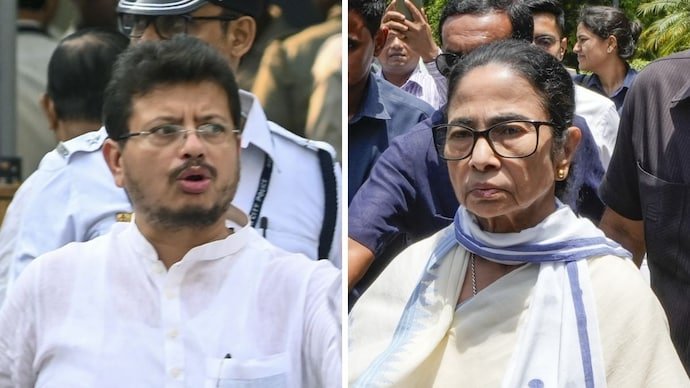
West Bengal Politics witnessed a dramatic escalation on Tuesday as the faction led by Ritabrata Banerjee formally approached the Election Commission of India (ECI), seeking recognition of its newly constituted leadership structure and claiming that it enjoys the support of a majority of the Trinamool Congress (TMC) legislators. The move has transformed what was initially viewed as an internal organisational disagreement into a potentially decisive legal and political battle that could reshape the future of one of India’s most influential regional parties.
At the heart of the dispute lies a familiar but highly consequential question that has surfaced repeatedly in Indian Politics: WHO represents the “real” party when rival factions claim legitimacy? The answer, which now rests with the Election Commission, could determine not only the future leadership of the Trinamool Congress but also control over the party’s identity, organisational structure and electoral symbol.
Election Commission Becomes the Key Arbiter
Representatives from the Ritabrata Banerjee faction submitted documents to the Election Commission’s regional office in Kolkata, following what they described as a special organisational session that resulted in the formation of a new National Working Committee.
According to Banerjee, the submission is part of a standard legal and procedural process that political parties must undertake whenever significant organisational changes are made. However, the broader political implications go far beyond routine paperwork.
The Election Commission now finds itself in the position of assessing competing claims regarding leadership, organisational legitimacy and internal support. Similar disputes in the past have often required detailed examination of party constitutions, membership records, legislative support and organisational resolutions.
For the Banerjee-led camp, the strategy is clear: demonstrate that it commands sufficient support within the party’s elected representatives and organisational units to justify recognition as the legitimate continuation of the Trinamool Congress.
Why the Majority Claim Matters
The faction’s strongest argument revolves around its assertion that it has the backing of a majority of the party’s MLAs and senior leaders.
In political party disputes, numerical strength often becomes a decisive factor. While legislative support alone may not determine legitimacy, it carries substantial weight when election authorities evaluate competing claims.
The faction argues that democratic representation within the party should be reflected through the support of elected legislators and organisational members rather than through individual leadership authority alone.
This approach mirrors several major political battles witnessed across India over the past decade, where rival groups sought recognition based on claims of majority backing among lawmakers and office bearers.
The High Stakes of Party Recognition
The dispute is not merely about leadership positions. Recognition by the Election Commission carries significant political and practical consequences.
If a faction is recognised as the legitimate continuation of a party, it may gain control over:
- The party’s official organisational structure
- Its election symbol
- Financial assets and resources
- Official party records
- Electoral branding and identity
- Future candidate selection mechanisms
For political parties, symbols are particularly valuable assets. In a country where millions of voters identify parties through visual symbols rather than written names, control over a recognised symbol can provide a major electoral advantage.
Understanding the Election Commission’s Process
When rival factions claim ownership of a political party, the Election Commission typically follows a structured evaluation process.
The Commission may examine:
- Support among elected legislators
- Backing from organisational office bearers
- Party constitution provisions
- Internal election procedures
- Official membership records
- Resolutions passed by authorised bodies
The objective is not merely to determine who is more popular but to establish which faction represents the party’s legitimate organisational continuity under constitutional and legal guidelines.
This often involves extensive scrutiny of documents submitted by all sides.
A Growing Trend in Indian Politics
The Trinamool Congress dispute highlights a broader trend visible across India’s political landscape. As regional parties grow larger and more influential, internal leadership struggles increasingly become matters requiring institutional intervention.
Political scientists note that leadership transitions are among the most challenging moments for any party. When organisational authority, electoral success and personal influence intersect, disagreements can quickly evolve into full-scale factional battles.
The current TMC dispute demonstrates how internal political contests are no longer confined to party headquarters. They increasingly move into legal and regulatory arenas where institutions such as the Election Commission play a central role.
The Symbol Battle Could Become Critical
One of the most closely watched aspects of the dispute involves the party symbol.
Leaders from the Ritabrata Banerjee faction have argued that they represent the original Trinamool Congress and therefore do not require separate recognition or a new symbol.
This position reflects confidence that their claim is not about creating a breakaway organisation but about establishing continuity with the existing party structure.
Historically, symbol disputes have often become defining moments in political factional battles. Losing access to an established symbol can force a faction to rebuild voter recognition from scratch, while retaining it can provide a substantial electoral advantage.
Social Media Narratives Add Complexity
The faction also dismissed a series of Social Media reports concerning suspensions, expulsions and internal disciplinary actions.
This reflects another reality of modern political conflicts: battles are now fought simultaneously in legal institutions, traditional media and digital platforms.
Competing narratives often emerge rapidly online, creating confusion among supporters and observers. Political factions increasingly view control of public messaging as almost as important as control of organisational structures.
The Banerjee camp’s effort to challenge online reports suggests a broader attempt to shape perceptions while formal proceedings continue.
What This Means for West Bengal Politics
The implications of the dispute extend beyond internal party dynamics.
The Trinamool Congress remains one of the most influential political forces in West Bengal. Any prolonged uncertainty regarding leadership, organisational control or party identity could have wider consequences for Governance, opposition politics and electoral strategies in the state.
Political stability often depends on organisational clarity. When major parties experience internal turbulence, it can affect legislative functioning, alliance-building efforts and long-term electoral planning.
Rival political parties are likely to watch developments closely, as any weakening of organisational cohesion could create opportunities in future Elections.
Possible Scenarios Going Forward
Several outcomes remain possible as the Election Commission begins examining submissions from rival factions.
| Scenario | Potential Outcome |
|---|---|
| Recognition of one faction | Single group gains official control of party structure and symbol |
| Further verification process | Extended review involving additional evidence and hearings |
| Negotiated settlement | Internal compromise before final regulatory decision |
| Legal challenge | Dispute moves beyond the Election Commission into courts |
Given the significance of the claims involved, the process is likely to attract considerable political attention regardless of which path emerges.
The Larger Question of Party Democracy
Beyond the immediate Controversy, the episode raises broader questions about internal democracy within political parties.
Experts have long argued that strong internal institutions, transparent leadership transitions and clearly defined constitutional mechanisms are essential for political stability. Disputes such as the current one often highlight weaknesses in organisational processes that may have remained hidden during periods of unity.
The outcome could therefore influence not only the future structure of the Trinamool Congress but also wider discussions about political party governance in India.
Conclusion: A Defining Test for TMC and the Election Commission
The Ritabrata Banerjee faction’s decision to approach the Election Commission marks a pivotal moment in the ongoing Trinamool Congress leadership dispute. By claiming majority support among legislators and asserting that it represents the original TMC, the faction has placed the issue squarely before India’s electoral authorities.
The Election Commission’s eventual assessment will carry consequences far beyond procedural recognition. It could determine control over the party’s organisational framework, leadership structure, electoral symbol and political future.
As rival camps continue to submit competing claims and evidence, the dispute is evolving into one of the most closely watched political developments in West Bengal. The coming weeks are likely to reveal whether the conflict results in organisational reconciliation, regulatory intervention or a prolonged battle for control of one of India’s most influential regional political parties.
For breaking news and live news updates, like us on Facebook or follow us on Twitter and Instagram. Read more on Latest India on thefoxdaily.com.






COMMENTS 0