For decades, Kashmir was one of Indian cinema’s most recognisable locations. Its snow-covered mountains, flowering gardens, lakes and valleys provided the backdrop for countless Hindi films and helped create an enduring image of romance and beauty on the big screen.
Then the cinemas went dark.
The arrival of militancy in the early 1990s brought an abrupt end to much of Kashmir’s relationship with commercial cinema. Movie theatres across the Valley closed, audiences disappeared and film production largely moved away from the region.
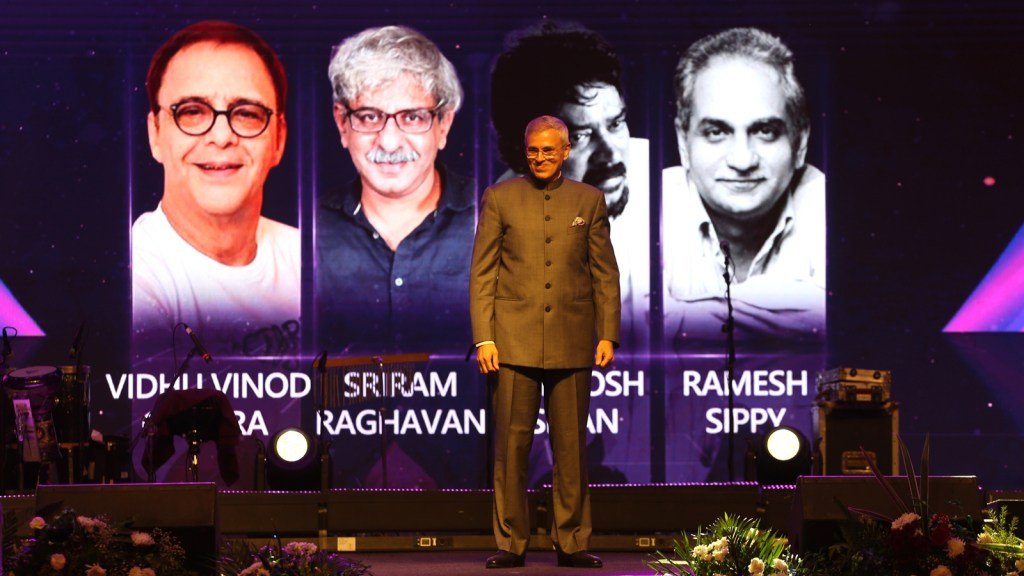
That history made Monday evening’s opening of Rang-e-Cinema, the first International Film Festival of Jammu and Kashmir, much more than another addition to India’s festival calendar.
When Jammu and Kashmir Chief Minister Omar Abdullah lit the ceremonial lamp to inaugurate the four-day event, he was marking what the organisers hope will become a new chapter in Kashmir’s relationship with cinema.
The symbolism was particularly strong because the festival’s opening film, Lebanese drama “Dead Dog”, was screened at INOX Srinagar, currently the Valley’s only functional cinema.
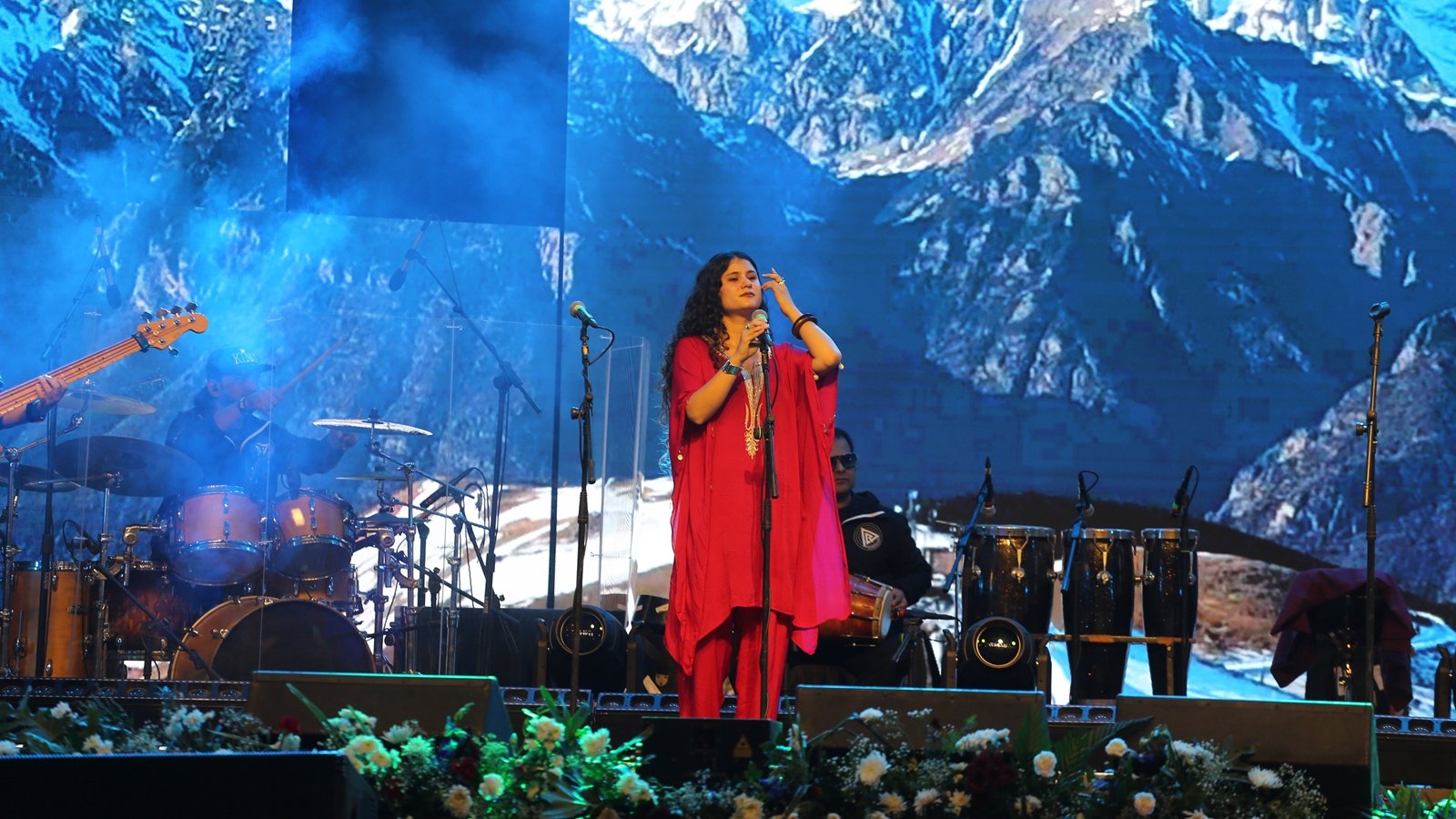
Rang-e-Cinema marks a symbolic return
The festival, running from September 7 to September 10, is designed to bring international and Indian filmmaking back into the cultural life of Jammu and Kashmir.
More than 1,100 films were submitted for consideration, from which 135 films have been shortlisted for screening during the festival.
Of those films, 60 have been produced outside India, representing filmmakers and cinematic traditions from 41 countries, including France and Iran.
The scale of the programme is significant for a first edition because it positions Kashmir not only as a location where films can be made but also as a place where films from around the world can be exhibited, discussed and celebrated.
The organisers are using venues across both Jammu and Kashmir, giving the festival a footprint that extends beyond a single cinema hall.
Omar Abdullah links cinema to Kashmir’s identity
At the inauguration, Omar Abdullah emphasised that Kashmir’s relationship with cinema has always been about more than its spectacular scenery.
He said Jammu and Kashmir had a special place in the world of cinema because its landscapes could become an integral part of a story rather than serving merely as a picturesque background.
The Chief Minister also highlighted the Valley’s culture, traditions, people, hospitality and artistic heritage.
Music, poetry, handicrafts and oral traditions, he said, have preserved the region’s stories across generations.
That broader argument is important to the festival’s identity. Rang-e-Cinema is not simply attempting to bring film crews back to Kashmir. It is also presenting the region as a cultural subject in its own right.
Why Kashmir once mattered so much to Bollywood
Few places in India have had a stronger visual relationship with Hindi cinema than Kashmir.
The Valley offered filmmakers an extraordinary combination of mountains, water, forests, gardens and changing seasons. Spring brought blossoms, autumn created striking golden landscapes and winter transformed the region into a snow-covered cinematic setting.
For generations of Indian moviegoers, these images became closely associated with romance, music and escapism.
Films set or shot in Kashmir helped turn locations such as Srinagar, Gulmarg and Pahalgam into familiar names for audiences who had never travelled there.
That relationship weakened dramatically when militancy transformed the security Environment in the early 1990s.
How militancy silenced Kashmir’s cinemas
When militancy intensified in the Valley, cinemas became among the first visible casualties of the changing environment.
Movie theatres were shut across Kashmir, ending a major part of the region’s public entertainment culture.
The closures were not simply an economic problem for cinema owners. They changed how residents experienced films and sharply reduced opportunities for collective cultural activity around movie-going.
Attempts to reopen theatres later faced their own challenges, including security concerns and low attendance.
The gap between Kashmir and cinema consequently lasted for decades.
Neelan cinema’s brief reopening did not last
There were efforts to revive theatre culture before the arrival of INOX Srinagar.
Neelan cinema briefly reopened in Srinagar, but the experiment struggled to attract enough viewers.
Part of the difficulty was the security environment surrounding public entertainment venues. Audiences had to pass through multiple layers of security, making a trip to the cinema considerably more complicated than it was in other parts of India.
The result was a weak commercial environment that ultimately prevented the theatre from becoming a sustainable part of Srinagar’s entertainment landscape.
That history makes the existence of a functioning multiplex in Srinagar particularly meaningful today.
INOX Srinagar became the Valley’s cinema comeback
In 2022, INOX opened a cinema in Srinagar’s high-security Shivpora area, providing the Valley with a modern commercial theatre after years of limited access to cinema halls.
The reopening did not immediately erase the decades-long gap, but it created a physical space where residents could return to watching movies on the big screen.
Four years later, that same cinema has become the venue for the opening of Kashmir’s first international film festival.
The symbolism is striking. A place that once represented the absence of cinema is now being used to showcase films from countries around the world.
‘Dead Dog’ opens the international festival
The opening film of Rang-e-Cinema is “Dead Dog”, a Lebanese drama directed by Beirut-based filmmaker Sarah Francis.
Released in 2025, the 92-minute film follows an estranged middle-aged couple, Aida and Walid, during a tense four-day reunion that also involves their dog, Punto.
The film was shot in a mountain village near Beirut, giving its setting a visual and emotional dimension that fits naturally into a festival taking place in a mountain region with its own long association with landscape-driven cinema.
“Dead Dog” premiered at the International Film Festival Rotterdam and later won the Saad Eldin Wahba Award for Best Arabic Film at the Cairo International Film Festival.
Its selection sends an immediate message about the ambitions of Rang-e-Cinema: the festival is not intended to be limited to mainstream Indian cinema.
More than 130 films will be screened
Over the festival’s remaining three days, audiences will have access to a wide range of films selected from more than 1,100 submissions.
The programme includes 134 additional films, bringing the total festival slate to 135.
The international component is particularly substantial. Sixty selected films have been produced outside India, representing 41 countries.
Among the countries represented are France and Iran, giving audiences in Jammu and Kashmir an opportunity to encounter filmmaking traditions that are rarely available through conventional theatrical releases in the region.
The festival therefore functions not only as a celebration of local cinema but also as a window into international film culture.
Films will be shown across Jammu and Kashmir
Rang-e-Cinema is using multiple venues to host screenings.
In Srinagar, films will be shown at the INOX cinema and the Sher-i-Kashmir International Convention Centre (SKICC).
The programme also extends to Gulmarg, the popular mountain resort, as well as the Wave Cinema in Jammu.
This distribution is significant because it ensures that the festival is not confined to one urban location.
Gulmarg, with its strong tourism identity and mountain landscape, also provides an especially natural setting for an event designed to reconnect Kashmir with the international world of cinema.
Bollywood veterans attend the launch
The festival’s opening audience included prominent Indian filmmakers, including Vidhu Vinod Chopra and Ramesh Sippy.
Their presence added another layer of symbolism because both filmmakers belong to generations of Indian cinema that helped establish the industry’s relationship with Kashmir and its landscapes.
For a region that was once deeply embedded in Hindi film imagery, bringing established filmmakers back into a festival setting is an important part of reclaiming that cultural association.
The festival can potentially serve as a meeting point between Kashmir’s past relationship with commercial cinema and a newer generation of independent and international filmmakers.
The festival’s jury brings an international perspective
Rang-e-Cinema has assembled an experienced jury drawn from India and abroad.
The panel includes acclaimed cinematographer and director Santosh Sivan, Academy Award-winning Indian sound designer and audio mixer Resul Pookutty, German film curator and journalist Dorothee Wenner, Japanese entrepreneur and documentary filmmaker Keiko Bang, and filmmaker Himansu Sekhar Khatua, known for the 1997 Odia film “Sunya Swaroopa.”
The combination of filmmakers, sound professionals, curators and international cultural practitioners reflects an attempt to give the event a broad cinematic perspective.
It also helps move the festival beyond a government-sponsored cultural programme toward a more credible film-industry platform.
Rs 96 lakh prize pool adds competitive weight
The Jammu and Kashmir government has announced nine award categories with total prize money of Rs 96 lakh.
The biggest prize, the Best Film Award, carries Rs 25 lakh.
Best Director and Best Debut Director will each receive Rs 15 lakh, giving first-time filmmakers an incentive to compete alongside more established directors.
The festival will also award Rs 10 lakh for Best Film-J&K Select, creating a specific category connected to the region.
The acting categories offer Rs 8 lakh each for Best Actor male and female.
Additional prizes of Rs 5 lakh each have been announced for Best Cinematography, Best Sound Design and Best Editing.
Why the J&K Select award matters
The Best Film-J&K Select category is particularly important because it gives the region a dedicated place within the festival’s competitive structure.
A festival focused only on bringing international films into Kashmir could still leave local filmmakers in the background.
A separate J&K category creates room for regional storytelling and could encourage filmmakers from the Union Territory to develop projects that engage directly with local culture, people and landscapes.
That could become one of the most lasting benefits of the event if future editions maintain or expand the category.
Can Kashmir become a filming destination again?
The revival of cinema halls and the launch of an international festival raise a larger question: can Kashmir once again become a significant filming location?
The answer will depend on much more than scenery.
Modern film productions require predictable security conditions, reliable logistics, accommodation, transport, technical crews, permissions and production Infrastructure.
Kashmir’s landscapes remain one of its biggest advantages, but filmmakers increasingly need efficient production environments as much as visual beauty.
A successful film festival can help by bringing filmmakers into the region and allowing them to experience its locations, hospitality and production possibilities directly.
In that sense, Rang-e-Cinema could eventually function as a bridge between cultural tourism and the commercial film industry.
Cinema can influence how Kashmir is seen
The return of cinema to Kashmir also carries a representational dimension.
For years, the Valley was frequently viewed through the narrow lens of conflict and security. Film offers a different way of telling stories, allowing culture, family life, landscapes, music, art and everyday experiences to become part of how a place is represented.
That does not mean cinema can replace journalism or erase the complexity of Kashmir’s history. It means that film can contribute additional narratives to the way audiences understand the region.
Omar Abdullah’s emphasis on Kashmiri culture, poetry, handicrafts and oral traditions suggests that the government wants cinema to become part of that broader cultural storytelling.
The economic potential of a revived film ecosystem
A stronger film sector could also have economic implications.
Film productions generate demand for hotels, transport, catering, local technicians, set construction, security, equipment and other services.
A sustained flow of productions could therefore benefit businesses beyond the entertainment sector.
Film festivals create another layer of economic activity by bringing filmmakers, tourists, journalists and delegates into the region.
If Rang-e-Cinema develops into an annual event, it could gradually create a recurring cultural and tourism calendar around cinema.
That would turn filmmaking from a purely creative activity into part of a wider local economic ecosystem.
Why international films matter for Kashmiri audiences
Bringing films from dozens of countries to Kashmir offers audiences exposure to cinematic cultures that may otherwise be difficult to access through conventional commercial distribution.
Films from France, Iran and other countries can introduce different storytelling traditions, production styles and social themes.
For aspiring local filmmakers, that exposure can be particularly valuable.
Film Education does not happen only in classrooms. Watching work from different countries can broaden a filmmaker’s understanding of cinematography, sound, editing, screenwriting and documentary storytelling.
The presence of an expert jury and industry figures further increases the possibility of informal exchanges between established professionals and emerging talent.
A festival can rebuild a cinema-going culture
The decades-long absence of cinemas changed audience habits in the Valley.
A festival alone cannot restore an entire theatrical culture, but repeated public screenings can help normalise cinema-going as a shared social experience again.
That is especially important for younger audiences who grew up without the kind of cinema-hall culture that existed in Kashmir before the 1990s.
Events that combine screenings, discussions, workshops and filmmaker interactions can make cinema about more than simply watching a movie.
Over time, that could help create a new audience base for both mainstream and independent films.
What makes Kashmir different from other film festivals?
India already hosts major film festivals in cities such as Goa, Mumbai and Kolkata. Rang-e-Cinema therefore needs a distinct identity to establish itself within the country’s crowded film calendar.
Its strongest advantage may be the combination of place and history.
This is a festival taking place in a region with a decades-long relationship with cinema, a dramatic interruption to that relationship and an ongoing attempt to rebuild it.
The story of the festival is therefore inseparable from the story of Kashmir’s cinemas.
That gives Rang-e-Cinema a cultural significance that goes beyond the number of films it screens.
The contrast between 1990s Kashmir and 2026 is striking
| Period | Kashmir’s relationship with cinema |
|---|---|
| Before the 1990s | Kashmir was a major filming destination and Bollywood regularly used its landscapes |
| Early 1990s onward | Militancy led to the closure of cinemas across the Valley and sharply reduced film activity |
| Later reopening attempts | Some theatres briefly reopened but struggled with security-related difficulties and weak attendance |
| 2022 | INOX opened a modern cinema in Srinagar’s Shivpora area |
| September 2026 | Rang-e-Cinema launched as Jammu and Kashmir’s first international film festival |
| Festival programme | 135 films selected from more than 1,100 submissions, including 60 international films from 41 countries |
The road back to cinema will not be automatic
The launch of an international festival is a major cultural milestone, but it does not guarantee a permanent revival of the film industry in Kashmir.
For the comeback to become sustainable, the region will need continuing audiences, regular screenings, local filmmakers, private investment and an environment in which producers feel confident bringing full-scale projects.
The government can help create infrastructure and policy support, but long-term success will depend on whether the film industry itself sees Kashmir as a commercially practical destination again.
The festival can begin that process by building relationships.
Local storytelling could become the festival’s biggest legacy
The most meaningful measure of Rang-e-Cinema may eventually be whether it encourages Kashmiri filmmakers to tell their own stories.
A thriving film ecosystem needs more than visiting productions. It needs local writers, directors, actors, editors, cinematographers, sound designers and producers.
The festival’s awards and international exposure could help create opportunities for emerging regional filmmakers.
Over time, a stronger local industry could ensure that Kashmir is not merely used as a backdrop by outside filmmakers but becomes a source of stories that travel beyond the Valley.
Kashmir’s landscapes still have cinematic power
The visual qualities that first attracted Bollywood to Kashmir have not disappeared.
The Valley still offers striking seasonal changes, dramatic mountains, historic architecture, lakes, gardens and villages that can support an enormous range of cinematic stories.
What has changed is the context in which filmmakers operate.
Today, the ambition is not simply to recreate the romantic Kashmir of older Hindi films. It is to create space for different genres, languages, cultures and stories, including international cinema.
That broader approach could give the region a more contemporary place within the global film industry.
Rang-e-Cinema could become a new cultural landmark
The first edition of Rang-e-Cinema arrives with unusually strong symbolism.
The festival is taking place in a region where movie theatres once disappeared because of conflict, at a venue that represents the return of commercial cinema, and with a programme that includes films from more than 40 countries.
Its opening film comes from Lebanon rather than Bollywood. Its jury includes international voices. Its screenings extend from Srinagar to Gulmarg and Jammu.
All of those choices suggest an attempt to define Kashmir not simply as a destination for shooting films but as an active participant in the global cinema conversation.
What comes next for cinema in Kashmir?
The immediate success of the festival will be measured through attendance, critical response and participation from filmmakers. Its longer-term significance will depend on whether those connections continue after September 10.
Future editions could expand workshops, local film development programmes, production markets and opportunities for Kashmiri artists.
More importantly, a successful festival could encourage producers who once viewed Kashmir only as a historical filming destination to reconsider it as a contemporary production environment.
The revival will take time. Cinema needs audiences, infrastructure and economic confidence, not simply picturesque locations.
But the opening of Rang-e-Cinema suggests that one of the Valley’s most visible cultural doors is open again.
From silent theatres to an international film festival
For Kashmir, the significance of Rang-e-Cinema lies as much in its history as in its programme.
The Valley was once one of Bollywood’s favourite backdrops. Then militancy silenced its cinema halls and pushed the film industry away for decades. The reopening of INOX Srinagar in 2022 provided the first major sign that public cinema could return, and the launch of an international festival now represents a much more ambitious step.
Over four days, audiences will watch 135 films selected from more than 1,100 submissions, including 60 international productions from 41 countries. Filmmakers, sound artists, curators and directors have gathered in Srinagar, while screenings are taking place across Kashmir and Jammu.
The choice to open with the Lebanese film “Dead Dog” is itself symbolic. Kashmir is no longer being presented solely as a beautiful backdrop for someone else’s story. It is becoming a place where stories from around the world can meet local audiences.
Whether this becomes the beginning of a lasting film renaissance will depend on what follows after the festival ends. But the transformation from shuttered theatres to an international cinematic gathering is already significant.
For a region whose relationship with the silver screen was interrupted for more than three decades, Rang-e-Cinema offers the possibility that Kashmir is not simply returning to cinema it is beginning to find a new role in it.
For breaking news and live news updates, like us on Facebook or follow us on Twitter and Instagram. Read more on Latest India on thefoxdaily.com.






COMMENTS 0