- Trump’s Position: Strong Warning on Iran’s Nuclear Ambitions
- Pope Leo’s Criticism: A Moral Stand Against War
- Rising Tensions Between Political and Religious Leadership
- Backlash From US Christians and Public Reaction
- Context: The Ongoing Iran Conflict
- Trump’s Criticism of the Pope: A Pattern?
- Diplomatic and Global Implications
- Balancing Security and Morality: An Ongoing Debate
- Conclusion: A Clash of Perspectives in a Time of Crisis
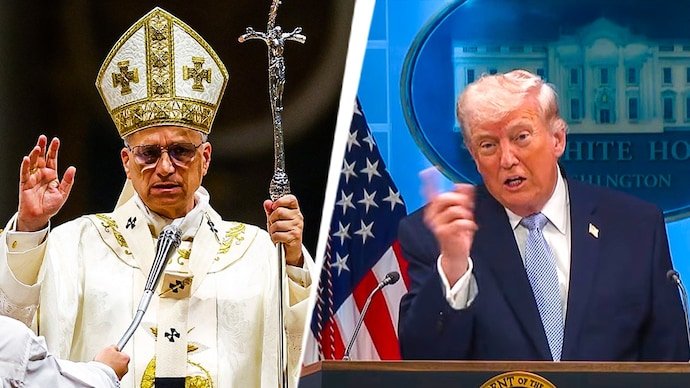
Introduction: US President Donald Trump on Thursday addressed rising tensions with Pope Leo, stating that while the religious leader is free to express his views, he must understand the global risks posed by Iran acquiring nuclear weapons. The remarks come amid escalating criticism from the Pope over the ongoing US-Israeli war on Iran, which began on February 28. Speaking at the White House, Trump emphasized that preventing Iran from obtaining nuclear capability remains a top priority. The exchange highlights a growing divide between political leadership and religious voices on the issue of war, peace, and Global Security.
Trump’s Position: Strong Warning on Iran’s Nuclear Ambitions
President Trump made it clear that his disagreement with Pope Leo centers on one key issue: Iran’s nuclear potential. While acknowledging the Pope’s right to speak freely, Trump stressed that the stakes are too high for ambiguity.
“The Pope can say what he wants… but Iran cannot have a nuclear weapon. The world would be in great danger,” Trump said.
This statement reflects a consistent position held by the US administration, which views Iran’s nuclear ambitions as a direct threat to global stability. Trump framed the issue in stark terms, suggesting that failure to act decisively could have far-reaching consequences.
At the same time, his remarks attempted to strike a balance defending his stance without directly attacking the Pope’s authority.
Pope Leo’s Criticism: A Moral Stand Against War
Pope Leo, who has emerged as a vocal critic of the ongoing Conflict, has taken a fundamentally different approach. In recent weeks, he has repeatedly condemned the war, calling it a manifestation of what he described as the “madness of war.”
The Pope’s position is rooted in long-standing religious and humanitarian principles that prioritize peace, dialogue, and the protection of civilian lives.
Despite facing criticism from political leaders, he has remained firm in his stance.
“I will continue to speak out,” Pope Leo indicated, signaling that his views are unlikely to change.
This unwavering position has resonated with many who are concerned about the humanitarian impact of the conflict.
Rising Tensions Between Political and Religious Leadership
The exchange between Trump and Pope Leo reflects a broader tension between political decision-making and moral authority. While governments often focus on strategic and security considerations, religious leaders tend to emphasize ethical and humanitarian concerns.
In this case:
- Trump’s focus: National Security and preventing nuclear proliferation
- Pope Leo’s focus: Peace, humanitarian impact, and moral responsibility
These differing priorities have created a visible divide, with both sides addressing the same issue from fundamentally different perspectives.
Such tensions are not new, but they become more pronounced during times of conflict, when decisions carry both political and human consequences.
Backlash From US Christians and Public Reaction
Trump’s criticism of Pope Leo has sparked backlash from various Christian groups across the United States. Many view the Pope as a moral voice whose opinions should be respected, even when they challenge political narratives.
The reaction highlights the complexity of public opinion:
- Some support Trump’s strong stance on Iran
- Others align with the Pope’s call for peace and restraint
- Many are caught between security concerns and humanitarian values
This divide reflects broader debates within society about how to balance national security with ethical considerations.
Context: The Ongoing Iran Conflict
The tensions between Trump and Pope Leo are unfolding against the backdrop of a wider conflict involving the United States, Israel, and Iran.
The conflict escalated on February 28, when US and Israeli forces launched strikes on Iran. In response, Iran carried out retaliatory attacks targeting Israel and Gulf states hosting US bases.
The consequences have been severe:
- Thousands of casualties reported
- Millions displaced across affected regions
- Rising instability in the Middle East
The scale of the conflict has intensified global concern, making statements from both political and religious leaders more influential and more scrutinized.
Trump’s Criticism of the Pope: A Pattern?
This is not the first time President Trump has publicly criticized Pope Leo. He has previously described the religious leader as “weak” on foreign policy and claimed credit for his appointment remarks that have drawn criticism and skepticism.
Such comments have added a personal dimension to what might otherwise be a purely policy-driven disagreement.
However, in his latest remarks, Trump appeared to adopt a slightly more measured tone, emphasizing disagreement rather than direct confrontation.
Diplomatic and Global Implications
The disagreement between Trump and Pope Leo carries implications beyond personal or ideological differences. It reflects how global narratives are shaped during times of conflict.
Key implications include:
- Influence on public opinion: Statements from both leaders shape how people view the conflict
- Diplomatic messaging: Differences in tone can affect international perceptions
- Moral vs strategic framing: Competing narratives influence policy debates
In a globally connected world, such exchanges are not confined to one country they resonate across borders.
Balancing Security and Morality: An Ongoing Debate
At its core, the disagreement highlights a fundamental question: how should the world respond to threats while upholding ethical values?
For policymakers, the priority is often preventing future risks such as nuclear proliferation. For religious leaders, the focus is on minimizing harm and promoting peace.
Both perspectives carry weight, but reconciling them is rarely straightforward.
This tension is likely to persist as long as the conflict continues, shaping both political decisions and public discourse.
Conclusion: A Clash of Perspectives in a Time of Crisis
The exchange between President Donald Trump and Pope Leo underscores the complex interplay between Politics, religion, and global security. While Trump remains firm in his stance that Iran must never acquire nuclear weapons, Pope Leo continues to emphasize the moral urgency of ending war.
Neither position is likely to shift easily, reflecting deeper differences in worldview and priorities.
As the conflict unfolds, these contrasting voices will continue to influence how the world understands and responds to the crisis. Whether through policy or moral appeal, both leaders are shaping a debate that goes far beyond their own disagreement.
In the end, the challenge lies not just in choosing sides, but in finding a path that addresses both security concerns and the human cost of conflict.
For breaking news and live news updates, like us on Facebook or follow us on Twitter and Instagram. Read more on Latest World on thefoxdaily.com.


COMMENTS 0