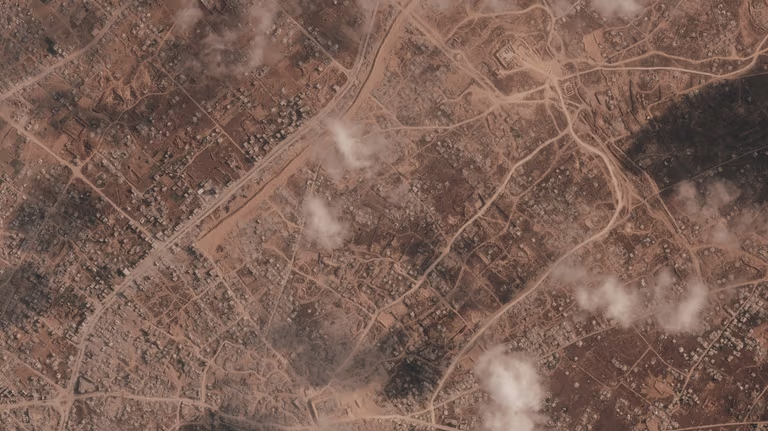
New satellite imagery showing the construction of an extensive Israeli earthen barrier along Gaza‘s “yellow line” has intensified international attention on the future of the Israel–Hamas Ceasefire and the possibility that a temporary military separation could evolve into a more permanent security boundary.
According to publicly available satellite images, Israel has expanded a network of berms and military infrastructure across large sections of Gaza in areas currently under Israeli military control. Israeli officials have confirmed the existence of defensive works along the security line, describing them as measures intended to prevent infiltration, protect Israeli troops and improve operational security.
For Palestinians, however, the expanding barrier has generated concerns that land expected to be vacated under ceasefire arrangements could remain under long-term military control. The differing interpretations of the barrier illustrate one of the central challenges facing ongoing diplomatic efforts to stabilize Gaza after nearly two years of conflict.
What Is the “Yellow Line” in Gaza?
The “yellow line” refers to the temporary military boundary established during ceasefire arrangements following intense fighting between Israel and Hamas. The line was intended to mark areas of military deployment while negotiations continued over broader security arrangements and eventual troop withdrawals.
Unlike internationally recognized borders, the yellow line is not a permanent political boundary. Instead, it functions as an operational military separation line designed to reduce direct confrontation during the implementation of ceasefire measures.
However, because negotiations have progressed slowly, uncertainty surrounding the line’s future has become a major source of concern for both Israeli and Palestinian stakeholders.
Satellite Images Show Rapid Construction
Commercial satellite imagery indicates that construction activity has accelerated in recent months, with earthworks extending across multiple sectors of Gaza.
The images show:
- More than 23 kilometres of interconnected earthen barriers.
- Expansion of defensive berms in southern Gaza.
- Construction of military access roads.
- Additional defensive positions near existing Israeli military facilities.
- Security infrastructure linking several operational zones.
The pace of construction has drawn attention because sections of the barrier expanded significantly within just a few weeks, suggesting sustained engineering operations on the ground.
Why Israel Says the Barrier Is Necessary
Israeli military officials describe the barrier as a defensive security measure rather than a political border.
According to official statements, the objectives include:
- Preventing infiltration into Israeli-controlled areas.
- Protecting military personnel deployed near the ceasefire line.
- Enhancing surveillance capabilities.
- Reducing operational risks during ongoing security operations.
- Protecting Israeli communities located near Gaza.
Security barriers have long formed part of Israel’s broader border management strategy in areas experiencing persistent security threats. Officials argue that physical obstacles, surveillance systems and controlled access points reduce opportunities for cross-border attacks.
Why Palestinians Are Concerned
Many Palestinians view the expanding barrier differently.
The primary concern is that infrastructure initially presented as temporary could eventually become permanent if political negotiations remain stalled. Residents fear that continued construction may alter access to land, agricultural areas and future reconstruction efforts.
Large sections of Gaza’s civilian population have already experienced repeated displacement during the conflict, making questions surrounding future territorial arrangements especially significant.
The uncertainty has contributed to wider concerns regarding freedom of movement, housing reconstruction and long-term economic recovery.
How the War Changed Gaza’s Landscape
The conflict has dramatically transformed Gaza’s physical geography.
Extensive military operations have damaged or destroyed residential neighbourhoods, commercial districts, transportation infrastructure and public facilities across multiple governorates.
Satellite imagery and international assessments indicate widespread destruction affecting:
- Residential housing.
- Road networks.
- Schools and educational facilities.
- Healthcare infrastructure.
- Agricultural land.
- Municipal services.
Rebuilding these areas will require substantial international financial assistance, engineering resources and long-term political stability.
Understanding Security Zones in Modern Conflicts
Security zones are not unique to Gaza.
Many countries establish temporary buffer zones during armed conflicts to reduce direct military contact, protect civilian populations or monitor ceasefire agreements.
Such arrangements may include:
- Restricted civilian access.
- Military observation posts.
- Surveillance systems.
- Engineering barriers.
- International monitoring missions.
Whether these zones remain temporary often depends on subsequent political negotiations and peace agreements.
Humanitarian Impact Remains Severe
The humanitarian situation inside Gaza continues to be one of the world’s most closely monitored crises.
Many displaced families remain dependent on humanitarian assistance while access to housing, healthcare, electricity, clean water and essential services remains limited in numerous areas.
International humanitarian organizations have consistently emphasized the importance of:
- Safe civilian access.
- Humanitarian aid delivery.
- Infrastructure reconstruction.
- Protection of civilians under international humanitarian law.
- Long-term recovery planning.
Continued uncertainty regarding territorial control may complicate reconstruction efforts in heavily affected communities.
International Diplomacy Faces Major Challenges
The barrier is emerging as another complicated issue within already difficult ceasefire negotiations.
Diplomatic discussions continue to focus on several interconnected questions:
- Future Israeli troop deployment.
- Release of remaining hostages.
- Security guarantees for Israel.
- Governance arrangements inside Gaza.
- Reconstruction funding.
- Role of international peacekeeping or monitoring forces.
Without broader political agreements, infrastructure created during military operations can become increasingly difficult to reverse.
Comparison: Temporary Security Line vs Permanent Border
| Temporary Security Line | Permanent International Border |
|---|---|
| Established for military operations | Created through political agreements |
| May change as security conditions evolve | Generally internationally recognized |
| Can be removed after ceasefire implementation | Forms long-term territorial boundary |
| Focused on operational security | Defines sovereign jurisdiction |
| Often monitored during conflict | Managed under bilateral or international law |
Expert Analysis: Why Physical Infrastructure Can Influence Peace Negotiations
One of the most overlooked aspects of modern conflict resolution is the role of physical infrastructure.
Roads, checkpoints, military bases and defensive barriers constructed during conflicts often shape future diplomatic negotiations because they alter facts on the ground. Even when initially intended as temporary security measures, such infrastructure can influence later discussions regarding borders, governance and civilian movement.
Peace negotiations therefore frequently involve not only political agreements but also decisions about whether wartime infrastructure should remain, be modified or be dismantled.
Legal and Diplomatic Questions Remain
The future status of areas along the yellow line is likely to remain a central issue in any comprehensive settlement.
Key questions include:
- Will Israeli forces complete previously envisioned withdrawals?
- Who will provide long-term security?
- Will international monitoring mechanisms be introduced?
- How will displaced civilians return safely?
- What arrangements will govern reconstruction activities?
Answers to these questions will depend on future negotiations involving regional actors, international mediators and the parties directly involved in the conflict.
What Happens Next?
Several developments will shape the coming months:
- Progress in ceasefire negotiations.
- Implementation of humanitarian agreements.
- Future military deployments.
- International reconstruction initiatives.
- Political discussions regarding Gaza’s governance.
If diplomatic momentum increases, temporary security arrangements may gradually evolve into internationally supervised implementation mechanisms. Conversely, prolonged deadlock could further complicate prospects for a lasting settlement.
Conclusion
The expansion of Israel’s earthen barrier along Gaza’s yellow line illustrates how developments on the ground can influence the trajectory of broader diplomatic negotiations. While Israeli authorities describe the construction as a necessary security measure designed to protect troops and nearby communities, many Palestinians fear that temporary military arrangements could become more permanent if ceasefire implementation remains stalled.
Ultimately, the barrier represents more than an engineering project it has become a symbol of the broader uncertainty surrounding Gaza’s future. Whether it remains a temporary wartime security measure or becomes part of a longer-term territorial reality will depend on the success of ongoing ceasefire negotiations, regional Diplomacy and internationally supported efforts to achieve a sustainable political solution that addresses both security concerns and humanitarian needs.
For breaking news and live news updates, like us on Facebook or follow us on Twitter and Instagram. Read more on Latest World on thefoxdaily.com.





COMMENTS 0