The United States and Iran have exchanged direct military strikes again, ending weeks of relative calm and raising fresh fears that the conflict could widen across the Middle East.
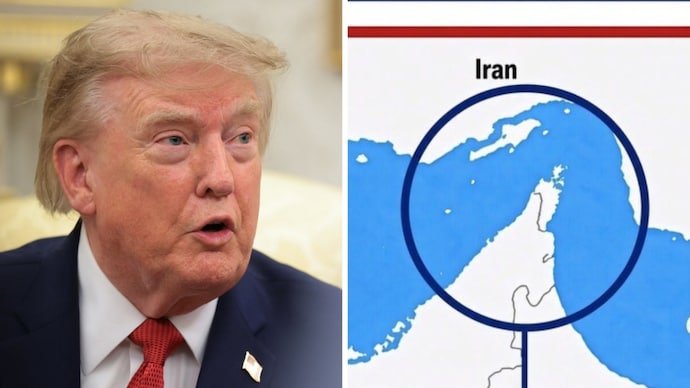
US forces struck two Iranian launchers on Larak Island in the Strait of Hormuz on Sunday, August 30, after American officials said Iran’s Islamic Revolutionary Guard Corps was preparing to use rockets capable of deploying sea mines into the strategic waterway. The operation was the first publicly acknowledged US strike against Iranian forces since late July.
Iran responded by launching ballistic missiles toward US military facilities in Jordan. The Islamic Revolutionary Guard Corps said it targeted the King Hussein and Al Azraq bases, while Jordan’s military said eight missiles that entered its airspace were intercepted.
The exchange has immediately revived concerns over the future of the Strait of Hormuz, through which a significant share of global oil and liquefied natural gas normally passes. Commercial shipping through the waterway is already operating at sharply reduced levels, and renewed military activity could push energy prices higher if vessel operators become even more reluctant to transit the route.
The latest escalation is also significant because Washington had recently shifted its emphasis from military strikes toward economic pressure and sanctions against Tehran. Sunday’s attack shows that despite that strategy, the United States remains prepared to use force when it believes Iranian activity poses an immediate threat to American forces or international shipping.
Why the US struck Iranian launchers on Larak Island
The United States said the immediate reason for the operation was the threat of sea mines in the Strait of Hormuz.
Tim Hawkins, a spokesperson for US Central Command, said Iranian Revolutionary Guard forces had been observed preparing to launch rockets carrying sea mines into the waterway.
The allegation was especially serious because American forces had recently completed an operation to clear mines from international shipping routes in the strait. A new mining operation could therefore have quickly reversed those efforts and created another major obstacle for commercial vessels.
The US military described the action as limited and precise, presenting it as an effort to prevent an imminent threat to shipping rather than the opening of a new broad bombing campaign against Iran.
Two launchers were struck on Larak Island, a strategically located Iranian island in the Strait of Hormuz. Iranian media reported explosions in the area, while the Revolutionary Guard acknowledged casualties among its personnel and civilians without immediately providing a precise death toll.
The incident marks a notable return to direct US military action after several weeks in which Washington had largely signalled greater reliance on sanctions and economic pressure.
Iran retaliates with ballistic missiles in Jordan
Iran’s response came in a different part of the region.
The Islamic Revolutionary Guard Corps said it launched ballistic missiles at two US military bases in Jordan in retaliation for the American attack on Larak Island. Iranian state television broadcast footage it said showed missiles being launched during the operation.
The IRGC identified the King Hussein and Al Azraq facilities as targets and said the attack was intended to strike American military infrastructure, including technical and operational facilities.
Jordanian authorities gave a different picture of the outcome. The country’s armed forces said eight missiles entered Jordanian airspace and were intercepted by its air-defence systems.
Jordan’s position is particularly sensitive. The country is a close US Security partner, but it is also geographically exposed to conflicts involving Iran, Israel and other regional powers. Even when Iranian missiles are aimed at American facilities, their flight paths can place Jordanian territory and civilians at risk.
The reported interceptions helped prevent a larger immediate impact, but the attack demonstrated that Iran can respond to US operations in one part of the region by targeting American forces elsewhere.
The Strait of Hormuz is the key pressure point
The military exchange matters far beyond the immediate targets because of the location of the US strike.
The Strait of Hormuz is a narrow maritime passage connecting the Persian Gulf with the Gulf of Oman and the wider Arabian Sea. Major energy exporters in the Gulf depend on it to reach international markets.
Before the conflict, roughly one-fifth of the world’s oil normally passed through the waterway. Large quantities of liquefied natural gas also move through the route.
That makes the strait one of the world’s most important energy chokepoints.
Iran’s ability to threaten shipping gives Tehran a form of leverage even when its conventional military forces are under sustained pressure. Missiles, drones, small boats and sea mines can create risks for commercial vessels without requiring Iran to completely close the waterway.
For shipping companies, the possibility of an attack can be enough to make a route commercially unattractive. Higher insurance costs, delays and security requirements can increase the cost of transporting energy even when no major tanker is destroyed.
Commercial traffic remains far below normal levels
The latest US-Iran exchange comes as commercial shipping through Hormuz is already severely reduced.
President Donald Trump has repeatedly said that the strait remains open and has pointed to vessels continuing to transit the waterway. He recently said 24 vessels had passed through during the previous week.
That figure remains dramatically below the approximately 130 vessels that used the route daily before the conflict began, according to the figures provided in the original report.
A multinational coalition overseen by the US Navy also said commercial traffic remained at reduced levels.
Recent reporting has indicated that vessel crossings have fallen to only a handful per day during periods of heightened tension. That does not necessarily mean the waterway is physically closed. It means the practical flow of commercial shipping has been heavily disrupted.
For global energy markets, that distinction is important. A waterway does not need to be completely blocked for prices to rise. If ships take longer routes, wait offshore or require significantly higher insurance premiums, the cost of moving oil and gas increases.
Oil prices rise after renewed fighting
Energy markets reacted quickly to the US strike.
US crude rose 1.8% to $84.94 a barrel, while Brent crude gained 1.9% to $89.79 after the attack, according to the figures in the supplied report.
The reaction reflects concern over potential future supply disruptions rather than an immediate loss of all Gulf oil exports.
Markets price in risk. If traders believe a military confrontation could interfere with tanker traffic, they can push crude prices higher before a physical shortage actually occurs.
A prolonged disruption would have broader consequences. Higher crude prices can increase the cost of gasoline, diesel, aviation fuel, shipping and industrial production. Countries heavily dependent on imported energy can be particularly vulnerable to sudden increases in global prices.
That is why developments in the Strait of Hormuz are closely watched by governments and financial markets far beyond the Middle East.
Sea mines could create a longer-lasting shipping problem
The alleged Iranian preparations to deploy sea mines are particularly significant because mines can remain dangerous long after the initial military confrontation.
Unlike a missile strike, which occurs at a specific moment, a sea mine can remain hidden beneath the water and threaten vessels until it is detected and removed.
Clearing mines is a specialized and potentially slow process. It requires dedicated naval assets and careful surveys to establish that a route is safe for commercial traffic.
This creates an important strategic advantage for any actor capable of deploying mines in a major shipping lane. Even a relatively small number of mines could force commercial operators to avoid the affected area while naval forces conduct clearance operations.
From Washington’s perspective, striking the launchers before they could allegedly deploy mines was therefore intended to prevent a much more difficult maritime security problem.
For Iran, however, the ability to threaten shipping remains one of its most significant sources of leverage in negotiations over the future of the conflict.
A tanker incident adds to shipping concerns
The latest military exchange followed another incident involving commercial shipping in the region.
The United Kingdom Maritime trade Organization said an unidentified projectile struck a tanker north of Khasab in Oman, within the broader Strait of Hormuz area. The organization said there were no casualties and no environmental impact.
No group immediately claimed responsibility for that incident.
That qualification matters. An unidentified projectile should not automatically be attributed to Iran without evidence.
Nevertheless, incidents involving commercial vessels become more consequential when they occur alongside military confrontations and threats to shipping. Tanker operators must assess not only the probability of an attack but also the consequences if a vessel is damaged, delayed or forced to change course.
The cumulative effect can be significant even when individual attacks cause limited physical damage.
US pressure strategy is now facing a military test
The latest strike comes just days after the Trump administration emphasized a stronger economic campaign against Iran.
The strategy includes threats of secondary sanctions against countries, companies and other entities that continue doing business with Tehran.
The shift reflected concerns about the cost and sustainability of prolonged military operations, including pressure on US munitions stocks and broader questions about American military readiness.
Trump had also said that he was not in a hurry to bring Iran back to negotiations. Gulf allies including Qatar, Saudi Arabia and the United Arab Emirates had previously urged restraint after major US strikes against Revolutionary Guard targets in July.
That period of relative calm has now been broken.
The Larak operation demonstrates the limits of relying exclusively on economic pressure when Washington believes an immediate military threat is developing around American forces or international shipping.
Iran has retained important military leverage
Despite months of fighting and significant damage to Iranian military capabilities, Tehran retains the ability to threaten US interests across the region.
Its missile and drone arsenal gives it options for retaliatory attacks, while its geographic position along the Strait of Hormuz provides another source of leverage.
The missile attack on Jordan illustrates how Iran can widen the geographical scope of retaliation. A US strike against an Iranian target does not necessarily mean the next Iranian response will occur in Iran.
American military facilities are spread across the Middle East, and Iran has previously demonstrated its willingness to target bases hosting US personnel in neighboring countries.
That creates a difficult calculation for Washington’s regional partners. Countries hosting US forces can become exposed to retaliation even when they are not directly participating in American operations.
The conflict could become a cycle of retaliation
The most immediate concern is whether the latest exchange remains limited or becomes another escalation cycle.
The sequence is already clear: the United States struck Iranian launchers after identifying an alleged threat to shipping; Iran retaliated with missiles against US military positions; and both sides are now presenting their actions as responses to the other.
Such cycles can become difficult to control because each side may view restraint as weakness while interpreting the other side’s defensive actions as preparation for another attack.
The presence of American forces in several regional countries increases the number of possible targets. The presence of commercial shipping around the Strait of Hormuz adds another layer of risk.
A future attack that causes significant American casualties, sinks a commercial tanker or damages critical energy infrastructure could generate pressure for a much larger response.
That is why the next few days may be more important than the initial exchange itself.
Iran’s position on access to Hormuz remains unchanged
Tehran has continued to challenge Washington’s claims that the Strait of Hormuz is effectively open.
Iran has argued that even if it reaches an arrangement with Oman to manage the waterway, the United States cannot use the route unless Washington meets its obligations under a memorandum of understanding signed in June.
The competing claims illustrate the wider dispute over who has control and who can determine the conditions under which commercial and military vessels operate through the strait.
Washington says it is protecting the free flow of commerce. Iran maintains that it retains significant control and leverage over the waterway.
For shipping companies, the practical reality is more important than either political claim: vessels must be able to transit safely and predictably before normal traffic can return.
Why the latest escalation matters for the global economy
The Strait of Hormuz is not simply a military flashpoint. It is part of the infrastructure of the global energy economy.
A prolonged reduction in tanker traffic could increase energy prices, raise transportation costs and add to inflationary pressure in countries far from the Gulf.
Oil is particularly important because it feeds into multiple parts of the economy. Higher crude prices can eventually affect fuel, logistics, manufacturing and consumer goods.
Liquefied natural gas shipments are also important because several major exporters rely on Gulf routes. Any disruption to those shipments can affect countries that use LNG for electricity generation and industrial production.
The effects would depend on how long the disruption lasts and how much alternative supply is available. A short-lived spike in risk is very different from a sustained interruption to physical exports.
What happens next in the US-Iran conflict
The next stage of the confrontation will depend heavily on whether Iran carries out additional attacks and whether the United States responds with further military operations.
Another critical indicator will be commercial traffic through Hormuz. If shipping companies continue to avoid the waterway, the economic impact of the conflict could grow even without a formal closure.
Markets will also watch for changes in crude prices, tanker insurance rates and the availability of alternative routes for Gulf energy exports.
Diplomatically, the central question is whether the two sides can establish enough communication to prevent another exchange from becoming a larger confrontation.
There is no evidence that a wider regional war is inevitable. Jordan reported that its air defences intercepted the missiles entering its airspace, and the immediate Iranian response did not result in the kind of large-scale casualties that could automatically force a dramatic escalation.
But the risk has clearly increased.
The Strait of Hormuz is now the clearest test of escalation
The US strike on Larak Island and Iran’s missile retaliation in Jordan have ended weeks of relative calm and returned direct military confrontation between Washington and Tehran to the headlines.
The United States says it acted to stop Iranian forces from deploying sea mines into one of the world’s most important shipping routes. Iran says the attack was a serious provocation and has demonstrated its willingness to retaliate against American military positions outside Iran.
Meanwhile, commercial shipping through the Strait of Hormuz remains far below normal levels, and Oil Markets are already responding to the renewed uncertainty.
The immediate issue is therefore not simply whether another missile is launched. It is whether the confrontation begins affecting commercial vessels, energy infrastructure and the countries surrounding the Gulf.
If the exchange remains limited, the latest attacks could eventually become another contained episode in a long-running conflict. If retaliation expands, the Strait of Hormuz could become the mechanism through which a regional military crisis develops into a global economic shock.
For now, the waterway remains the central pressure point. Its importance to global energy supplies means that every military move around Hormuz carries consequences far beyond the battlefield, making the next US and Iranian decisions critical not only for regional security but also for oil markets and international shipping.
For breaking news and live news updates, like us on Facebook or follow us on Twitter and Instagram. Read more on Latest World on thefoxdaily.com.





COMMENTS 0