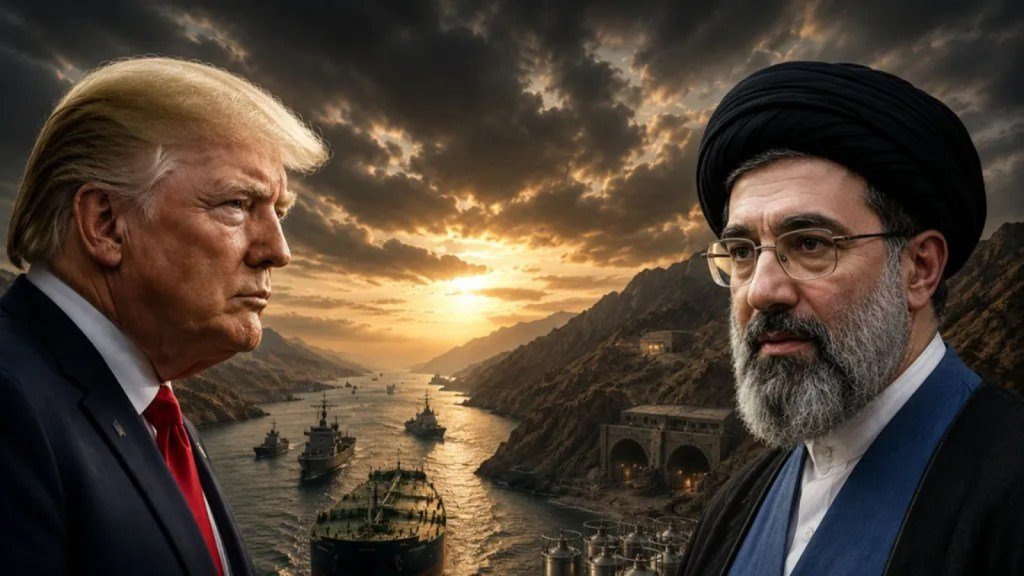
A senior adviser to Iran’s Supreme Leader Mojtaba Khamenei has warned that the ongoing regional conflict could spread as far as the Indian Ocean if the United States or Israel launches another attack against Iran.
Major-General Yahya Rahim Safavi said the Iranian military has prepared plans for a possible renewed offensive and that Tehran is considering a wider response if fighting resumes. His warning comes as Iranian President Masoud Pezeshkian and other members of the Iranian delegation were in New York for the United Nations General Assembly, where Tehran was simultaneously emphasizing its willingness to engage in diplomacy while rejecting negotiations conducted under military pressure.
Safavi’s remarks were released by Iran’s semi-official Fars news agency. He described the Persian Gulf, Strait of Hormuz and Red Sea as increasingly connected parts of the conflict and warned that another escalation could push the fighting into a much wider maritime area.
The statement adds another layer of uncertainty to an already volatile conflict involving Iran, the United States, Israel and Iran-aligned forces operating elsewhere in the region.
Iran warns of a possible Indian Ocean front
Safavi said that the conflict had already expanded from the Persian Gulf and Strait of Hormuz toward the Red Sea. In his assessment, a further escalation could push the front toward the Indian Ocean and potentially beyond.
The warning is significant because the Indian Ocean extends far beyond the immediate battlefield around Iran. Any military activity spreading into the broader maritime region could potentially involve important international shipping routes and countries located around the ocean’s northern and western approaches.
Safavi also specifically referred to the Red Sea and Bab al-Mandeb Strait, suggesting that Iran views developments in those areas as connected to the wider confrontation.
He warned that if the United States initiated another war, a new front centered on the Red Sea and Bab al-Mandeb could emerge. The comments were framed as a potential response to renewed attacks rather than an announcement that Iran had already opened an Indian Ocean front.
Iran says military plans are ready for another attack
Safavi also said Iran’s military had prepared plans for the possibility that the United States and Israel resume attacks against Tehran.
According to his remarks, Iranian planning is designed to account for a worst-case scenario. That language suggests that Tehran is preparing for multiple possible developments rather than relying on a single response.
The statement does not publicly detail what those military plans involve. It also does not establish that Iran has decided to expand the conflict to the Indian Ocean. Instead, the warning presents such an expansion as one possible consequence of another round of fighting.
That distinction is important as tensions remain high. A warning about a possible military response is different from confirmation that a particular operation has been ordered or is underway.
Safavi also praised Yemen-based Houthi forces, which Iran supports, as they fight Saudi-backed forces and maintain influence around the Red Sea. Recent developments around the Red Sea and Bab al-Mandeb have become an important part of the broader regional conflict.
Why the Red Sea and Bab al-Mandeb matter
The Red Sea provides a crucial maritime connection between the Indian Ocean and the Mediterranean through the Bab al-Mandeb Strait and the Suez Canal. Any sustained military disruption in that corridor can affect commercial shipping well beyond the countries directly involved in the conflict.
The Bab al-Mandeb is particularly important because it is a narrow maritime passage connecting the Red Sea with the Gulf of Aden. Ships traveling between Europe and Asia can use the route to avoid a much longer journey around the southern tip of Africa.
That makes Safavi’s warning about a possible new front more than a purely geographic statement. A significant escalation around the Red Sea or Bab al-Mandeb could have consequences for shipping, energy markets and regional security.
The situation is already complicated by the separate confrontation around the Strait of Hormuz. Iran has repeatedly used its influence over the strategic waterway as leverage during the wider dispute, while the United States has maintained military pressure on Tehran.
Recent reporting has also highlighted the connection between the Strait of Hormuz and the Red Sea as the conflict has expanded geographically.
Pezeshkian takes a defiant message to the UN
Safavi’s warning came shortly after Iranian President Masoud Pezeshkian addressed the United Nations General Assembly in New York.
Pezeshkian used the speech to strongly criticize Washington while also leaving the door open to diplomacy. He argued that Iran was prepared for dialogue and negotiations but would not accept what he described as the language of force.
He also insisted that increased sanctions and pressure would not make Iran surrender.
The combination of the two messages is notable. While Safavi warned about the possibility of a wider military front, Pezeshkian emphasized Iran’s willingness to negotiate under conditions that Tehran considers acceptable.
In his UN address, Pezeshkian said Iran was ready for dialogue, diplomacy and negotiations without accepting military coercion. He also said the resistance of the Iranian people would increase in response to sanctions and pressure.
The Iranian president’s speech therefore presented diplomacy and resistance as parallel elements of Tehran’s position rather than mutually exclusive choices.
Iran’s message to Trump
Pezeshkian directed part of his UN speech toward US President Donald Trump, arguing that Washington needed to understand Iran’s position.
His comments came one day after Trump delivered his own address to the General Assembly and issued strong warnings toward Iran while also discussing the possibility of diplomacy.
The two governments therefore appeared to be communicating two different messages at the same international forum. Washington has emphasized pressure and the possibility of military action, while Tehran has sought to present itself as willing to negotiate but unwilling to do so under threats.
That tension has left the possibility of renewed negotiations alongside the risk of further escalation.
Recent reporting indicates that Iranian Foreign Minister Abbas Araghchi and US representatives, including Steve Witkoff, held discussions in New York as the two sides considered the possibility of resolving the conflict.
A conflict already stretching across West Asia
The threat of an Indian Ocean front comes against the backdrop of a conflict that has already expanded beyond the immediate confrontation between Iran and Israel.
Iran’s regional partners and aligned armed groups have played roles in several theaters. Yemen’s Houthis have been involved in fighting and maritime activity around the Red Sea, while the Strait of Hormuz has remained a major point of tension between Iran and the United States.
This geographic spread has made it increasingly difficult to treat individual waterways as isolated flashpoints. Events in the Persian Gulf can affect the Red Sea, while developments around Yemen can influence international shipping and the broader regional security environment.
Safavi’s remarks reflect that interconnected nature of the conflict. His warning effectively suggests that another US or Israeli attack could produce responses across multiple geographic areas rather than remaining limited to Iranian territory.
What an expansion toward the Indian Ocean would mean
An actual expansion of hostilities into the Indian Ocean would represent a major geographic change in the conflict. The area contains some of the world’s busiest maritime routes and connects the Middle East with South Asia, East Africa and Southeast Asia.
However, Safavi’s comments should not be interpreted as evidence that fighting has already expanded into the Indian Ocean. His statement described a possible future scenario if further attacks occur.
The distinction is particularly important because military threats often serve multiple purposes. They can signal deterrence, communicate potential consequences to an opponent and influence diplomatic calculations without necessarily indicating that an operation is imminent.
For countries surrounding the Indian Ocean, the prospect of a wider conflict would nevertheless be significant. Any disruption affecting commercial shipping could have implications well beyond the immediate participants in the war.
Energy transportation would be another major concern. The Persian Gulf and surrounding waterways are central to Global energy Trade, while instability along alternative maritime routes can increase costs and complicate supply chains.
Diplomacy and military threats now exist side by side
The latest statements from Iranian officials illustrate the contradictory pressures surrounding the conflict.
On one side, Pezeshkian has publicly said Iran is ready for dialogue and negotiations. On the other, Safavi is warning that Iran has military plans for a renewed attack and that the conflict could expand into new maritime theaters.
Those positions do not necessarily mean Tehran has abandoned diplomacy. Instead, Iran is presenting negotiations as possible while simultaneously emphasizing that it believes it has military options if fighting resumes.
The United States has likewise continued to signal pressure while leaving room for negotiations. The result is an unstable balance in which diplomatic contacts can take place at the same time that military escalation remains a possibility.
The Strait of Hormuz remains a central flashpoint
The Strait of Hormuz remains one of the most important pieces of the wider confrontation.
The narrow waterway connects the Persian Gulf with the Gulf of Oman and the Arabian Sea. Its importance to energy shipments means that any sustained disruption can quickly become an international economic issue.
Iran has used the possibility of restricting maritime traffic as part of its pressure campaign, while the United States has maintained military forces in the region. The disagreement over the status of the waterway has therefore become intertwined with the larger conflict.
Pezeshkian has also addressed the issue diplomatically, presenting Tehran’s position on Hormuz as part of the negotiations over how the war could eventually be brought to an end.
Safavi’s warning about connecting the Persian Gulf and Red Sea fronts adds another dimension to that dispute.
What happens next remains uncertain
The immediate significance of Safavi’s warning depends heavily on whether the United States or Israel launches another major attack and how Iran chooses to respond.
For now, the reported statement describes a possible escalation rather than confirming a new battlefield in the Indian Ocean. Iran’s military preparations, according to Safavi, are intended to cover a worst-case scenario, while Pezeshkian continues to publicly advocate negotiations without military coercion.
That leaves diplomacy and escalation developing in parallel.
The latest warnings also show how quickly the geographic boundaries of the conflict could change. What began as a confrontation centered on Iran and Israel has already become connected to the Persian Gulf, Strait of Hormuz, Yemen and the Red Sea.
If another round of US or Israeli attacks occurs, Iranian officials have now publicly warned that the response could reach farther still.
Iran signals wider retaliation while keeping diplomacy open
Yahya Rahim Safavi’s warning that the conflict could reach the Indian Ocean represents one of the clearest indications yet that Tehran is considering a broader geographic response to any renewed attack.
His comments about military preparations and a possible Red Sea and Bab al-Mandeb front underline the importance Iran places on its regional Relationships and maritime geography.
At the same time, Pezeshkian’s UN speech shows that Iran is not publicly closing the door to diplomacy. He has said Tehran is prepared to negotiate, but without accepting military pressure as the basis for an agreement.
The combination of those messages leaves the region facing two competing possibilities: renewed diplomatic engagement or another escalation that could spread beyond the current battlefronts.
For now, the Indian Ocean remains a potential rather than confirmed new theater of war. But the warning itself demonstrates how the conflict’s geographic scope has become a central concern as Iran, the United States, Israel and their regional partners weigh their next moves.
For breaking news and live news updates, like us on Facebook or follow us on Twitter and Instagram. Read more on Latest World on thefoxdaily.com.






COMMENTS 0