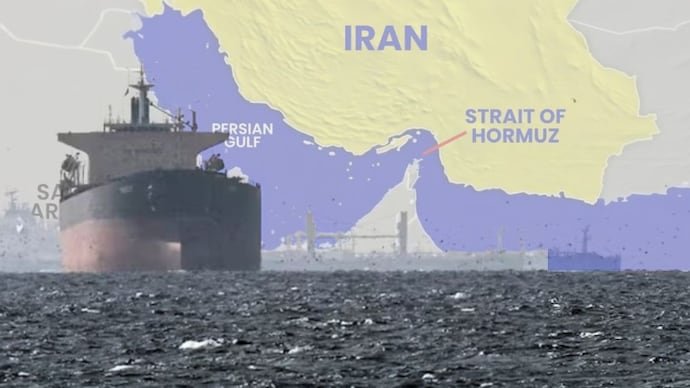
A reported explosion involving an Oil Tanker in the Strait of Hormuz has once again placed global attention on one of the world’s most critical maritime chokepoints. According to Iran‘s semi-official Tasnim News agency, the tanker struck a naval mine after allegedly deviating from a designated shipping route monitored by Iranian authorities, resulting in a powerful blast.
At the time of reporting, Iranian officials had not released an official statement confirming the incident, and independent verification of the reported explosion was not immediately available. Authorities also did not disclose the identity of the vessel, its flag, cargo, destination, or whether there were any casualties. Despite these uncertainties, the report has intensified concerns over the security of commercial shipping in a waterway that carries a substantial share of the world’s seaborne oil exports.
What Happened in the Strait of Hormuz?
According to the reported account, the oil tanker was navigating through the Strait of Hormuz when it allegedly left the shipping corridor designated by Iranian authorities. The vessel reportedly struck a naval mine, triggering an explosion.
Key details that remain unconfirmed include:
- The name and ownership of the tanker.
- The vessel’s flag state.
- The type and volume of cargo onboard.
- The destination of the shipment.
- The number of crew members.
- Whether injuries or fatalities occurred.
With official investigations yet to be announced, many aspects of the incident remain unclear, and additional information is expected only after maritime authorities complete preliminary assessments.
At a Glance: Reported Tanker Explosion
| Category | Details |
|---|---|
| Location | Strait of Hormuz |
| Reported Cause | Alleged collision with a naval mine |
| Source of Initial Report | Iran’s semi-official Tasnim News Agency |
| Official Confirmation | Not issued at the time of reporting |
| Vessel Identity | Not disclosed |
| Casualties | Not confirmed |
| Cargo Details | Not disclosed |
Why the Strait of Hormuz Is So Important
The Strait of Hormuz is widely regarded as one of the world’s most strategically significant maritime passages. Linking the Persian Gulf with the Gulf of Oman and the Arabian Sea, it serves as the primary export route for crude oil and liquefied natural gas produced by several Gulf nations.
Major energy exporters that rely on this corridor include:
- Saudi Arabia
- United Arab Emirates
- Kuwait
- Iraq
- Qatar
- Iran
Because of its narrow geography, even isolated security incidents can disrupt shipping schedules, increase insurance costs, alter tanker routes, and influence Global Energy Markets.
Why Shipping Through the Strait Has Become Increasingly Risky
The reported explosion comes after months of heightened military tensions involving Iran, the United States, and Israel. The region has experienced periods of military operations, missile exchanges, naval deployments, and heightened security alerts that have complicated commercial navigation.
Shipping companies operating in the Gulf have increasingly relied on:
- Enhanced naval escorts.
- Continuous satellite monitoring.
- Revised navigation protocols.
- Additional insurance coverage.
- Real-time security advisories.
These measures are intended to reduce operational risks, although maritime experts note that navigation through conflict-prone waters remains inherently challenging.
How Naval Mines Threaten Commercial Shipping
Naval mines remain one of the most dangerous hazards in maritime conflict zones because they are designed to damage or disable vessels with relatively little warning.
Modern naval mines may be triggered by:
- Direct physical contact.
- Magnetic signatures.
- Acoustic vibrations.
- Water pressure changes.
- Remote activation systems.
Even a single mine can significantly disrupt shipping operations, forcing authorities to conduct extensive clearance operations before commercial traffic can safely resume.
For commercial shipping companies, mine threats often result in slower transit speeds, route adjustments, and increased operational costs.
Regional Tensions Continue to Influence Maritime Security
The reported tanker explosion occurred against the backdrop of continuing geopolitical tensions in the Middle East. Recent months have seen heightened military activity involving Iran, the United States, and Israel, contributing to uncertainty across regional shipping lanes.
Military analysts generally note that commercial vessels often become indirect victims of geopolitical instability, even when they are not the intended targets of military operations.
As a result, international shipping companies closely monitor regional security developments before scheduling voyages through high-risk waters.
Iran Signals Readiness to Pause Military Operations
The reported maritime incident coincided with indications that Tehran could suspend military operations if the United States maintains its current pause in air strikes.
According to statements attributed to a senior Iranian source, Iran’s position remains based on reciprocal military restraint, indicating that further operations could be suspended if attacks against Iran do not resume.
At the same time, the source reportedly cautioned that there remains significant skepticism regarding the durability of the current pause, suggesting that many observers view it as potentially temporary rather than a lasting de-escalation.
United States Leaves Room for Diplomacy
American officials have also indicated that diplomatic engagement remains under consideration despite recent military tensions.
According to public remarks from senior US officials, the current pause in military operations is intended to provide an opportunity for negotiations. While no specific details regarding ongoing discussions have been publicly disclosed, the statements suggest that diplomatic channels remain open alongside military preparedness.
Whether these diplomatic efforts ultimately lead to broader de-escalation remains uncertain, particularly given the continued security risks affecting commercial shipping throughout the Gulf region.
Potential Impact on Global Oil Markets
Energy markets closely monitor every major development in the Strait of Hormuz because disruptions can influence both physical oil supplies and market expectations.
If Maritime Security deteriorates significantly, possible consequences could include:
- Higher shipping insurance premiums.
- Longer tanker transit times.
- Temporary rerouting of cargo.
- Greater volatility in global crude oil prices.
- Higher transportation costs for energy imports.
Even when physical supplies remain uninterrupted, uncertainty alone can contribute to increased price volatility as traders react to perceived supply risks.
Comparison: Normal Shipping vs High-Risk Navigation
| Aspect | Normal Conditions | Periods of Regional Tension |
|---|---|---|
| Navigation | Routine commercial transit | Restricted and closely monitored routes |
| Insurance Costs | Standard premiums | Higher war-risk insurance premiums |
| Security Measures | Regular maritime procedures | Enhanced surveillance and naval presence |
| Transit Time | Predictable schedules | Potential delays and rerouting |
| Market Impact | Stable supply expectations | Greater oil price volatility |
Expert Insight: Why Verification Matters in Maritime Incidents
Reports involving commercial vessels in conflict zones often emerge before official investigations are completed. Maritime experts emphasize that establishing the exact cause of an explosion requires detailed forensic analysis of the vessel, examination of voyage records, satellite imagery, underwater inspections, and crew testimony.
Until these investigations are concluded, initial reports should be viewed as preliminary. Official findings are essential for determining whether an incident resulted from a naval mine, mechanical failure, collision, sabotage, or another cause.
This cautious approach helps ensure that operational decisions by governments, shipping companies, insurers, and energy markets are based on verified evidence rather than early speculation.
Broader Implications for International Shipping
The reported explosion serves as another reminder of how geopolitical tensions can affect global trade far beyond the immediate conflict zone. The Strait of Hormuz remains a critical artery for international energy supplies, and sustained instability could have ripple effects across shipping, manufacturing, aviation, and consumer markets worldwide.
International maritime organizations and commercial operators are therefore likely to continue monitoring developments closely while reviewing navigation guidance and security procedures for vessels operating in the region.
Future Outlook
The coming days will likely determine whether the reported tanker explosion represents an isolated incident or signals a broader deterioration in maritime security. Official investigations, statements from regional authorities, and independent assessments will provide greater clarity regarding the cause of the explosion and any implications for commercial shipping.
Meanwhile, diplomatic efforts aimed at reducing regional tensions will remain closely watched. Any sustained reduction in military activity could improve confidence among shipping companies and energy markets, while renewed hostilities may increase operational risks throughout the Gulf.
Conclusion
The reported explosion of an oil tanker in the Strait of Hormuz has once again highlighted the vulnerability of one of the world’s most strategically important shipping corridors. Although many key details—including the vessel’s identity, cargo, casualties, and the precise cause of the explosion—remain unconfirmed, the incident underscores the continuing challenges facing commercial navigation amid heightened regional tensions.
As investigations continue and governments assess the evolving security situation, global energy markets, shipping companies, and policymakers will closely monitor developments. Regardless of the final findings, the event reinforces the critical importance of maritime security, international cooperation, and diplomatic engagement in safeguarding one of the world’s most vital trade routes.
For breaking news and live news updates, like us on Facebook or follow us on Twitter and Instagram. Read more on Latest World on thefoxdaily.com.




COMMENTS 0