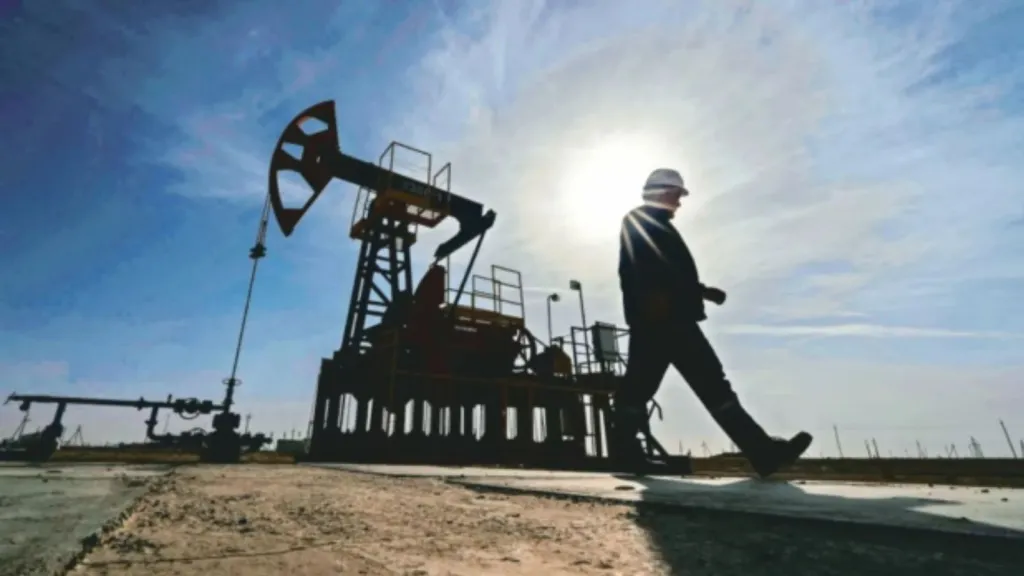
India’s diesel exports climbed to a 13-month high in October as disruptions linked to the West Asia conflict and the Russia-Ukraine war tightened global fuel supplies and pushed international diesel prices higher. Indian refiners have increased shipments to overseas markets to take advantage of stronger export margins, with industry experts expecting exports to remain robust in the coming months.
Preliminary vessel-tracking data shows that India’s diesel exports averaged 0.71 million barrels per day (bpd) between October 1 and October 29. This represents a 19.6% increase from September and an 8.1% rise compared with October last year, according to commodity market analytics firm Kpler.
The increase highlights India’s growing importance in the international petroleum products market. As a net exporter of petroleum fuels, the country has been able to use its large refining capacity and export infrastructure to respond to supply disruptions in other regions.
Global Diesel Supply Disruptions Boost Indian Exports
The global diesel market has faced mounting pressure from geopolitical conflicts affecting crude oil and refined fuel flows. The West Asia conflict, which began eight months ago, has disrupted energy supply routes and contributed to uncertainty in international oil and gas markets.
Supply constraints have been compounded by reduced Russian diesel exports. Russia, previously the world’s second-largest diesel exporter, has curtailed shipments after Ukrainian drone attacks damaged its refineries and affected production.
These disruptions have created an opportunity for Indian refiners to increase exports and strengthen the country’s position in the global diesel trade. India has now emerged as the world’s second-largest diesel exporter, according to the supplied industry data.
Diesel is particularly important to the global economy because it supports several essential sectors. Beyond passenger and commercial transportation, it powers long-haul trucks, agricultural machinery, construction equipment and heavy industrial operations. Any prolonged shortage can therefore increase operating costs for businesses and put additional pressure on supply chains.
With international diesel margins remaining unusually high, Indian refiners have been able to direct more production towards overseas buyers while benefiting from stronger export economics.
Reliance Industries Leads India’s Diesel Export Growth
Private-sector refining major Reliance Industries Ltd (RIL) accounted for the largest share of India’s diesel exports in October. The company shipped approximately 0.55 million bpd during the October 1-29 period, representing around 78% of the country’s total diesel exports.
RIL’s diesel shipments increased 12% compared with September and were 32.5% higher than in October last year. Its large refining operations and established export network have helped it respond quickly to changing international market conditions.
Public-sector refiners also increased exports as international diesel refining margins, commonly known as cracks, remained elevated.
- Mangalore Refinery and Petrochemicals Ltd: Diesel exports rose to approximately 38,000 bpd in October, compared with around 1,000 bpd in September.
- Indian Oil Corporation Ltd: Exports jumped 464% month-on-month to approximately 53,000 bpd.
- Hindustan Petroleum Corporation Ltd: Diesel shipments increased 16.3% to around 26,000 bpd.
- Nayara Energy: Exports declined 42.4% month-on-month to approximately 40,000 bpd.
The figures show that the export expansion has not been limited to one company. Both private and public-sector refiners have responded to stronger international margins, although the scale of their participation differs significantly.
India’s Refining Capacity Strengthens Its Global Position
India’s growing role in diesel exports is supported by its substantial refining capacity. The country produces more petroleum fuel than it consumes and is among the major economies continuing to expand refining infrastructure to meet rising domestic demand and increase exports.
India is the world’s third-largest crude oil consumer and imports more than 88% of its crude oil requirements. It is also the fourth-largest refining country globally. Exporting refined petroleum products helps generate foreign exchange and provides a partial cushion against the impact of a rising crude oil import bill.
The country’s ability to source crude from multiple suppliers has also supported refinery operations during periods of geopolitical disruption. Access to competitively priced crude, including Russian oil, has helped refiners maintain attractive processing margins.
During a recent two-day visit to India, US Secretary of State Marco Rubio described the country as a “refining superpower”. His visit included the Jamnagar refining complex operated by Reliance Industries in Gujarat, which is recognised as the world’s largest single-location refining facility.
The Jamnagar complex has a refining capacity of 68.2 million tonnes per annum (mtpa), including 35.2 mtpa dedicated to exports. Its scale makes it a significant supplier of refined fuels to international markets, particularly when disruptions reduce supplies from other major exporting regions.
Sumit Ritolia, modelling and refining manager at Kpler, said India’s large and complex refining infrastructure, diversified crude sourcing and established export facilities put it in a strong position to benefit from the global diesel supply crunch.
He noted that Indian refineries had been operating at more than 100% utilisation, allowing them to increase throughput and take advantage of higher diesel margins. Their export reach extends across Asia, Africa, Europe and the United States.
Rising Domestic Diesel Demand Could Limit Exports
Despite the strong export outlook, India’s ability to increase overseas shipments indefinitely is constrained by domestic fuel requirements. The government’s stated priority is to ensure sufficient fuel availability within the country before directing additional volumes towards international markets.
This helps explain why public-sector refiners account for a relatively smaller share of India’s fuel exports. Their operations are focused primarily on maintaining adequate supplies for domestic consumers and businesses.
Domestic diesel demand is supported by freight movement, industrial activity, agricultural consumption and transportation requirements. The festive season can also contribute to stronger economic activity and fuel consumption.
Retail diesel prices in India have remained largely unchanged despite elevated international prices, shielding domestic consumers from some of the volatility in global energy markets. This has also helped prevent a significant reduction in consumption due to higher prices.
Ritolia said stronger industrial activity, freight demand and agricultural consumption should continue supporting domestic diesel use. As a result, the additional volumes available for exports could remain limited even when international markets offer attractive margins.
This creates a balancing challenge for Indian refiners. They must take advantage of international demand and export opportunities while ensuring that domestic requirements are met at stable prices.
Public-Sector Refiners to Add 15 Million Tonnes of Capacity
India’s diesel export potential could increase further as additional refining capacity is scheduled to come online next year. The expansion is expected to come from public-sector refiners, strengthening the country’s ability to supply both domestic and international markets.
Petroleum Minister Hardeep Singh Puri reportedly said at an industry event in Goa earlier this week that government-owned refiners would add at least 15 mtpa of diesel production capacity next year.
The planned expansion could improve India’s ability to respond to global fuel shortages while supporting its growing domestic energy needs. Additional capacity would also give public-sector refiners more flexibility to participate in international markets without compromising domestic supply commitments.
The investment in refining infrastructure reflects India’s broader ambition to strengthen its position in the global energy trade. While the country remains heavily dependent on imported crude oil, its expanding refining industry allows it to export higher-value petroleum products to international buyers.
Outlook: India’s Diesel Exports Likely to Remain Strong
India’s record October diesel shipments underline how geopolitical disruptions can reshape global energy trade. Reduced Russian exports, supply uncertainty linked to the West Asia conflict and elevated international diesel margins have created favourable conditions for Indian refiners.
Large private-sector facilities, expanding public-sector capacity and access to diverse crude supplies are likely to support exports in the coming months. However, the extent of future growth will depend on international diesel prices, refinery operations, crude availability and the pace of domestic consumption.
For India, the opportunity goes beyond higher export volumes. Stronger petroleum product exports can help offset part of the country’s substantial crude import expenditure and reinforce its position as an important supplier to global energy markets.
With at least 15 mtpa of additional diesel production capacity expected from government-owned refiners next year, India could strengthen its export position further. The challenge will be to balance this opportunity with domestic energy security and the needs of its growing economy.
For breaking news and live news updates, like us on Facebook or follow us on Twitter and Instagram. Read more on Latest Business on thefoxdaily.com.






COMMENTS 0