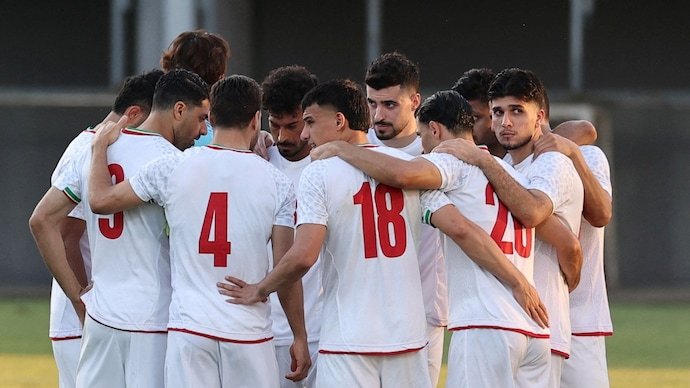
The FIFA World Cup 2026 has yet to kick off, but one of its most politically sensitive controversies is already unfolding. Iran has accused the United States of denying visas to several key members of its World Cup delegation, creating uncertainty around the team’s final preparations and sparking debate about the obligations of host nations during major international sporting events.
According to Iranian Football authorities and diplomatic officials, multiple senior administrators, technical advisers, and support staff members have been unable to secure entry into the United States despite the tournament being only days away. While Iranian players have reportedly received permission to travel and compete, the absence of important backroom personnel threatens to complicate preparations at the most critical stage of the competition.
The dispute has transformed what should have been a routine pre-tournament administrative process into a broader discussion about international Diplomacy, sporting neutrality, and FIFA’s role in ensuring equal treatment for participating nations.
What Triggered the Latest Visa Controversy?
The issue emerged shortly after Iran’s national team finally received approval to travel to the United States following weeks of uncertainty regarding entry permissions.
With their participation secured, Iranian players adjusted their preparations by conducting training camps in Turkey and Mexico before planning their arrival in California for the World Cup.
However, Iranian officials soon alleged that while players had been cleared, several members of the delegation responsible for managing and supporting the team remained without visas.
Among those reportedly affected are senior football federation officials and administrative personnel who play important roles in coordinating logistics, communications, operations, and tournament management.
Iran argues that a national team cannot function effectively if essential support structures are prevented from accompanying players.
Why Support Staff Matter During a World Cup
Modern international football teams rely on far more than players and coaches.
A World Cup delegation typically includes dozens of individuals responsible for ensuring the smooth operation of the team throughout the tournament.
These personnel often include:
- Football federation executives.
- Team administrators.
- Technical analysts.
- Medical specialists.
- Sports scientists.
- Media coordinators.
- Logistics managers.
- Security personnel.
- Performance support staff.
While fans focus primarily on players and coaches, these behind-the-scenes professionals help manage every aspect of tournament participation.
Missing personnel can create operational challenges, especially during a competition as complex as the FIFA World Cup.
The Host Nation Responsibility Debate
The Controversy has renewed attention on one of the most important principles in international sport: host nation obligations.
When countries host global sporting events, they generally commit to facilitating the participation of qualified athletes, officials, and accredited personnel regardless of diplomatic relationships or political disagreements.
This principle exists because international sports competitions are designed to transcend geopolitical disputes and provide a neutral platform for competition.
Major sporting organizations, including FIFA and the International Olympic Committee, typically require host nations to provide assurances regarding access and participation.
The current dispute raises questions about how those commitments are interpreted and implemented when relations between countries are particularly strained.
The Complex Relationship Between the United States and Iran
The visa dispute cannot be understood without considering the broader relationship between Washington and Tehran.
For decades, relations between the two countries have been marked by political disagreements, economic Sanctions, security concerns, and diplomatic tensions.
These challenges have periodically affected cultural exchanges, travel arrangements, and sporting interactions.
However, major international sporting events have often served as rare opportunities for engagement between nations with difficult political relationships.
Football, in particular, has historically provided moments of symbolic diplomacy that transcend government disputes.
The current situation highlights the difficulty of separating sport from politics when broader geopolitical tensions remain unresolved.
Iran’s Argument: Politics Should Not Interfere With Sport
Iranian officials have framed the issue as a violation of sporting principles.
They argue that all accredited members of a participating delegation should receive equal treatment and that political disagreements should not affect tournament participation.
According to Iranian authorities, denying entry to key support staff undermines the team’s ability to compete on equal terms with other nations.
Officials have also indicated that they may seek FIFA’s intervention if the matter remains unresolved.
The federation’s position reflects a long-standing belief within international sport that competition should remain independent from political conflicts whenever possible.
The United States Perspective
While American authorities have not publicly addressed every specific allegation, reports indicate that players, coaches, and several support staff members have already received visas.
Some reports suggest that certain applications may have encountered issues related to eligibility requirements or documentation.
Visa decisions are typically influenced by multiple factors, including immigration regulations, security reviews, and administrative procedures.
Without detailed public information regarding individual cases, it remains difficult to determine the precise reasons behind the reported delays or denials.
This lack of transparency has contributed to growing speculation and controversy.
FIFA’s Difficult Position
The governing body of world football now faces a sensitive challenge.
FIFA’s credibility depends in part on its ability to ensure that all participating nations are treated fairly.
At the same time, FIFA has limited authority over national immigration systems and sovereign government decisions.
The organization must balance its commitment to sporting neutrality with the practical realities of hosting tournaments across multiple countries.
The FIFA World Cup 2026 presents an especially complex case because matches are being hosted across the United States, Canada, and Mexico.
This multinational structure increases logistical complexity and requires close coordination between governments and football authorities.
How the Issue Could Affect Iran’s World Cup Campaign
Although the Iranian squad is expected to compete, uncertainty surrounding support staff could create disruptions.
Final tournament preparations often involve intensive coordination between coaches, analysts, medical teams, and administrators.
Any disruption during this period can affect:
- Training schedules.
- Travel arrangements.
- Match preparation.
- Media operations.
- Player support services.
- Administrative coordination.
Whether these challenges translate into on-field consequences remains uncertain, but teams generally prefer stability and routine before major tournaments.
Iran’s Road to the World Cup
Despite off-field complications, Iran enters the tournament with reasons for optimism.
| Match | Date | Venue |
|---|---|---|
| Iran vs New Zealand | June 15 | Inglewood, California |
| Iran vs Belgium | June 21 | California |
| Iran vs Egypt | June 26 | Seattle |
The team has shown encouraging form during preparation matches and remains one of Asia’s most experienced international sides.
Victories in recent warm-up fixtures have provided confidence, although the focus has increasingly shifted from football to administrative disputes.
A Growing Challenge for Global Sporting Events
The controversy reflects a broader challenge facing international sport in an increasingly fragmented geopolitical environment.
Global tournaments bring together countries with vastly different political systems, security concerns, and diplomatic relationships.
As geopolitical tensions rise worldwide, organizers may face more frequent disputes involving visas, travel restrictions, sanctions, and security measures.
The ability of sporting institutions to navigate these issues will play a critical role in preserving the universality of international competition.
Comparison With Previous Sporting Visa Disputes
Visa-related controversies are not entirely new.
Major sporting events have occasionally encountered disputes involving athletes, officials, or delegations facing travel restrictions due to political circumstances.
However, the scale and visibility of the FIFA World Cup make such disputes particularly significant.
Unlike smaller competitions, the World Cup attracts billions of viewers and serves as one of the most globally recognized sporting events.
Any controversy surrounding participation inevitably attracts international attention.
What Happens Next?
The coming days will be crucial.
If remaining visa issues are resolved quickly, the controversy may fade into the background as attention shifts to the matches themselves.
However, if key personnel remain unable to travel, pressure on FIFA and tournament organizers could intensify.
Much will depend on ongoing discussions between football authorities, diplomatic representatives, and government agencies.
Both sides have strong incentives to avoid allowing administrative disputes to overshadow the tournament.
Conclusion
Iran’s accusations that the United States has denied visas to key World Cup staff have introduced an unexpected controversy just days before FIFA World Cup 2026 begins. While players have reportedly secured entry, concerns surrounding administrators and support personnel have raised important questions about host nation obligations, sporting neutrality, and the challenges of organizing global events amid geopolitical tensions.
The dispute highlights how modern international sport increasingly operates at the intersection of competition, diplomacy, and global politics. As the tournament approaches, all parties will hope for a swift resolution that allows attention to return to football rather than off-field disagreements.
For Iran, the immediate priority remains ensuring that its delegation can function effectively. For FIFA, the challenge is preserving the principle that the world’s biggest sporting event should unite nations through competition, regardless of political differences beyond the pitch.
For breaking news and live news updates, like us on Facebook or follow us on Twitter and Instagram. Read more on Latest Sports on thefoxdaily.com.





COMMENTS 0