FIFA is considering a controversial change to the women’s Olympic football tournament that could restrict participation to players aged under 23, potentially transforming one of the biggest competitions in the women’s International Football calendar. The proposal is being explored amid growing concerns about fixture congestion, player workload and the increasingly crowded football schedule.
The idea would involve introducing an age limit similar to the system already used in the men’s Olympic football tournament. However, no formal proposal has been submitted, and the eligibility rules for the 2028 Los Angeles Olympics have already been established. Any potential change would therefore apply to Brisbane 2032 at the earliest.
Sources at FIFA and the International Olympic Committee (IOC) have indicated that both organisations are open to discussions. FIFA is understood to want further input from the IOC, players, national football associations and other stakeholders before considering any major changes.
The possibility has already raised questions about the future identity of women’s Olympic football. Restricting the tournament to under-23 players would prevent many established international stars from competing, potentially changing the competition’s appeal for players, supporters and broadcasters.
FIFA considers under-23 age restriction for women’s Olympic football
FIFA reportedly wants the IOC to examine an under-23 eligibility rule for the women’s Olympic football tournament. The main concern is the increasing physical and scheduling demands placed on senior international players, particularly those competing for leading European clubs and national teams.
Although discussions are being considered, the proposal remains at an early stage. FIFA is understood to be interested in examining the issue through consultations with the IOC and other important stakeholders, rather than introducing an immediate change.
Any decision would require detailed analysis and consideration through the formal processes of both organisations. Players and national associations would also have an important role in discussions, particularly those representing countries that regularly qualify for the Olympic tournament.
An age restriction would represent a major departure from the existing format of the women’s competition. Unlike the men’s tournament, which has traditionally operated with age-based eligibility rules, the women’s event has been contested without an age limit since its introduction.
The proposal could therefore generate opposition from leading international footballers who consider the Olympics an important part of their careers. For many players, representing their country at the Games is a major achievement, alongside competing at the FIFA Women’s World Cup and continental championships.
Why FIFA wants to change the Olympic football format
Fixture congestion is understood to be one of the central reasons behind FIFA’s interest in reviewing the women’s Olympic tournament. The rapid growth of professional Women’s Football has increased the number of domestic league matches, continental competitions and international fixtures played by leading athletes.
Players at top clubs are increasingly required to balance demanding club schedules with national team commitments. This creates additional pressure during seasons when major international tournaments take place alongside domestic and continental competitions.
The 2028 football calendar is expected to be particularly crowded. The introduction of the Women’s Club World Cup in the same Olympic year has added another major competition to the schedule, creating concerns about the availability and workload of leading players.
FIFA is also facing questions over its own role in the growing fixture congestion. The world governing body has chosen to launch the inaugural 16-team Women’s Club World Cup in the United States between January 5 and January 30, 2028, approximately six months before the Los Angeles Olympics.
The timing of the tournament could create significant disruption for European clubs whose players are involved in the competition. Teams reaching the latter stages may be away from domestic football for several weeks, affecting their participation in important league and cup fixtures.
The situation is particularly relevant to clubs such as Arsenal, Chelsea and Manchester City. If they progress deep into the Women’s Club World Cup, they could miss up to four Women’s Super League matches and the fourth round of the FA Cup.
These scheduling challenges have added to the debate about how football authorities can protect players while continuing to expand the women’s game commercially and competitively.
Why an age restriction would be controversial
Introducing an under-23 limit would significantly change the nature of women’s Olympic football. The tournament has traditionally featured senior international teams, allowing countries to select their strongest available players regardless of age.
That format has helped establish the Olympics as one of the most important events in the women’s football calendar. An age restriction could exclude established stars who have spent years representing their countries and competing at the highest level.
The change could also affect the competitive balance and identity of the tournament. National teams would need to build squads around younger players, while experienced international footballers would lose the opportunity to compete for an Olympic medal.
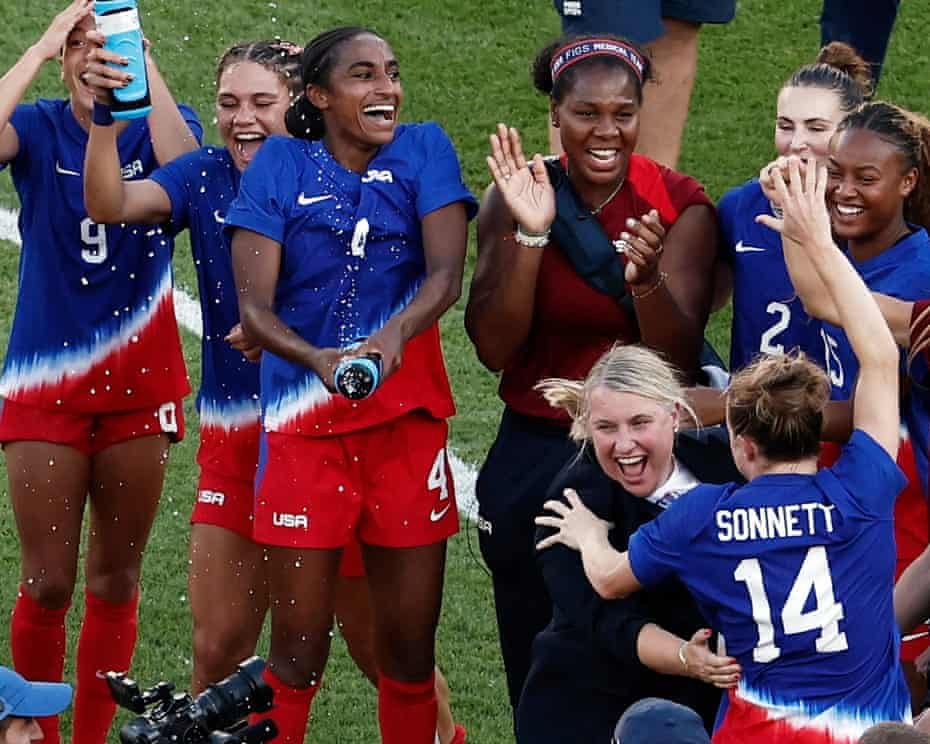
The United States provide a clear example of the competition’s significance. Emma Hayes guided the US women’s national team to Olympic gold at Paris 2024, reinforcing the country’s strong record in the event. The United States have won five of the eight Olympic women’s football tournaments contested since the competition began.
For leading football nations, the Olympic tournament offers a major international platform. Restricting participation to under-23 players could change how federations approach preparation, squad selection and the importance they attach to the competition.
It could also provoke criticism from players who believe the Olympics should remain an opportunity for senior national teams to compete for medals. Any proposed change would therefore require careful consultation before FIFA and the IOC could move forward.
Women’s Olympic football has never had an age limit
Women’s football was introduced to the Olympic programme at the Atlanta Games in 1996. At the time, the sport was still developing professionally, and the women’s tournament did not have eligibility restrictions based on players’ ages.
The men’s Olympic football competition followed a different path. Football became part of the Olympic programme in 1908, but professional players were not permitted to participate until 1984. FIFA had long sought to protect the status of the FIFA World Cup, while concerns about the crowded football calendar also influenced the debate over Olympic eligibility.
Following pressure from FIFA, the IOC introduced an under-23 age restriction for the men’s tournament in 1992. The rules were later adjusted, with each men’s squad allowed to include three overage players from the 1996 Olympics onwards.
The men’s format has therefore provided a model for an age-restricted Olympic football competition for decades. However, transferring the same approach to the women’s tournament would be a major change because its history and development have followed a different route.
The women’s event has traditionally been a senior international competition, and its growing commercial importance has made the question of eligibility more complicated.
Women’s football’s commercial importance could influence IOC decision
Although FIFA is interested in examining the possibility of an age restriction, the IOC may have reasons to preserve the current format. Women’s football has become an important part of the Olympic programme, attracting substantial interest from supporters in markets such as the United States, Europe and Australia.
The popularity of leading international players and national teams contributes to the tournament’s commercial appeal. A move to exclude senior stars could affect the event’s visibility and potentially influence its attractiveness to broadcasters, sponsors and fans.
The importance of women’s football to the Olympic programme is also reflected in the format planned for Los Angeles 2028. For the first time, the women’s tournament will feature more teams than the men’s competition, with 16 women’s teams compared with 12 men’s teams.
This represents a reversal of the numbers used at Paris 2024 and underlines the growing position of women’s football within the Games.
Whether the IOC would support FIFA’s interest in introducing an age restriction remains uncertain. The commercial value of the senior women’s tournament could be an important factor in any discussions between the organisations.
Los Angeles 2028 rules remain unchanged as discussions focus on 2032
Any immediate change to the women’s Olympic football eligibility rules is not possible for the Los Angeles 2028 Games because the qualification criteria have already been established. Qualification tournaments have also begun in some regions, making an alteration to the existing arrangements impractical.
As a result, Brisbane 2032 would be the earliest possible Olympics for an under-23 format if FIFA and the IOC eventually agree to introduce one.
There is currently no confirmed decision or formal proposal. FIFA’s interest is understood to be focused on opening discussions and gathering views from the organisations and individuals who would be affected by such a change.
Both FIFA and the IOC declined to comment on the matter. Their positions on a possible age restriction therefore remain unclear, and further discussions would be needed before any specific plan could emerge.
For now, the women’s Olympic football tournament is set to retain its existing senior-team format at Los Angeles 2028. However, FIFA’s reported interest in an under-23 competition has opened a wider debate about player welfare, the expansion of women’s football and the future structure of the Olympic tournament.
For breaking news and live news updates, like us on Facebook or follow us on Twitter and Instagram. Read more on Latest Football on thefoxdaily.com.






COMMENTS 0