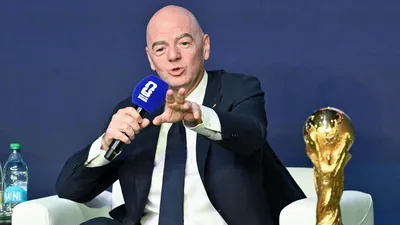
The FIFA World Cup 2026 was expected to be remembered as a landmark tournament. It was the first edition featuring 48 teams, the largest World Cup in history, and a showcase of Football’s growing global reach. Instead, as the tournament concludes, much of the discussion has shifted away from Spain’s historic triumph and toward growing concerns about FIFA’s governance, disciplinary decisions, political influence, and the future direction of world football.
At the center of the debate stands FIFA president Gianni Infantino, who now faces mounting criticism from some of the sport’s most influential figures. While FIFA has highlighted record attendances, commercial success, and global engagement, critics argue that the governing body’s recent decisions have raised serious questions about transparency, competitive integrity, and leadership.
The latest attacks from Javier Tebas and Sepp Blatter have transformed isolated criticism into a broader debate about the future of football governance ahead of the next FIFA presidential election.
Why Is Gianni Infantino Facing Fresh Criticism?
The criticism stems from several controversial issues that emerged during and around the FIFA World Cup 2026.
While no major sporting event is entirely free from debate, critics argue that multiple controversies combined to create a perception that football’s governing body is becoming increasingly disconnected from the interests of clubs, domestic leagues, players, and supporters.
The major concerns include:
- Alleged political interference in football decisions.
- The controversial handling of disciplinary cases.
- Proposals to further expand the World Cup.
- Growing tensions between FIFA and domestic leagues.
- Concerns about competitive integrity.
- The increasing commercialization of major tournaments.
Together, these issues have reignited longstanding debates about how football should be governed in the modern era.
Javier Tebas Leads the Attack on FIFA Leadership
Among FIFA’s most vocal critics is Javier Tebas, the president of Spain’s top football division, La Liga.
Tebas has frequently clashed with FIFA over scheduling, competition expansion, and the increasing demands placed on players and clubs. However, his latest comments represent one of the strongest public attacks yet directed at Infantino.
According to Tebas, FIFA’s current trajectory threatens the broader football ecosystem by prioritizing its own tournaments over domestic competitions that operate throughout the year.
His criticism goes beyond individual decisions and targets what he views as a structural problem within FIFA’s leadership model.
Key Concerns Raised by Tebas
- Expansion of the World Cup.
- Congested international calendar.
- Pressure on players and clubs.
- Growing influence of politics in football.
- Weak accountability mechanisms.
- Reduced protection for domestic leagues.
For Tebas, the issue is not merely about one tournament but about the long-term sustainability of professional football.
The Folarin Balogun Controversy Explained
The most controversial issue of the tournament involved United States striker Folarin Balogun.
During the World Cup, Balogun received a red card that ordinarily would have triggered an automatic suspension.
However, FIFA’s disciplinary committee later postponed the implementation of the suspension, allowing him to remain eligible for the United States’ knockout-stage match.
The decision immediately sparked debate across the football world.
Critics argued that tournament rules should apply equally to every team and every player, regardless of status or circumstance.
Supporters of FIFA’s position maintained that disciplinary committees must retain flexibility when evaluating individual cases.
The controversy quickly evolved into a broader discussion about consistency, transparency, and governance.
Why the Balogun Case Became a Global Talking Point
Football tournaments rely heavily on the perception that rules are applied fairly and consistently.
Even when decisions are technically permissible within regulations, questions often arise if exceptions appear to benefit specific teams or create perceptions of unequal treatment.
The Balogun case became significant because it touched on several sensitive issues simultaneously:
| Issue | Why It Matters |
|---|---|
| Disciplinary Consistency | Ensures equal treatment for all teams |
| Tournament Integrity | Protects trust in competition outcomes |
| Governance Transparency | Builds confidence in decision-making |
| Political Influence | Raises concerns about independence |
| Public Trust | Maintains credibility of governing bodies |
Regardless of individual opinions on the ruling itself, the controversy became symbolic of wider concerns about FIFA’s governance structure.
Sepp Blatter’s Criticism Adds More Pressure
The debate intensified further when former FIFA president Sepp Blatter entered the conversation.
Blatter argued that football risked losing its credibility if political interests continued to overshadow sporting principles.
Although Blatter remains a controversial figure himself due to events during his own FIFA tenure, his comments attracted attention because they reflected concerns already being voiced across parts of the football community.
His intervention highlighted a recurring theme in football governance debates: the need to balance commercial growth, political realities, and sporting integrity.
The Bigger Issue: FIFA vs Domestic Leagues
Beyond individual controversies, the dispute reflects a deeper power struggle between FIFA and domestic football leagues.
For years, clubs and league administrators have expressed concerns about an increasingly crowded football calendar.
Modern players face demands from:
- Domestic leagues.
- National cup competitions.
- Continental tournaments.
- International qualifiers.
- Expanded FIFA competitions.
- Commercial commitments.
Many administrators argue that continued expansion risks creating unsustainable workloads for players while placing additional strain on clubs.
Tebas believes these concerns have not received sufficient attention from FIFA leadership.
The Debate Over a 64-Team World Cup
Another major source of criticism involves discussions about further expanding the World Cup.
The 2026 tournament already increased participation from 32 to 48 teams, making it the largest World Cup in history.
Now, proposals involving a potential 64-team format have generated strong reactions throughout football.
Supporters argue expansion increases global representation and provides more nations with opportunities to participate on football’s biggest stage.
Critics counter that excessive expansion risks diluting competitive quality while creating logistical challenges and increasing player workloads.
| Argument for Expansion | Argument Against Expansion |
|---|---|
| More nations represented | Potential quality dilution |
| Greater global inclusion | Longer tournament schedules |
| Increased development opportunities | Greater strain on players |
| Commercial growth | Pressure on domestic leagues |
This debate is likely to remain central to football governance discussions over the coming years.
Was World Cup 2026 Still a Success?
Despite the controversies, it is important to acknowledge that the tournament achieved several notable successes.
The competition attracted massive global audiences, generated substantial commercial revenue, and showcased emerging football nations on an unprecedented scale.
Spain’s victory, the rise of new stars, dramatic knockout matches, and record participation all contributed to a memorable sporting spectacle.
The challenge for FIFA is that administrative controversies often overshadow sporting achievements when public trust becomes part of the conversation.
What Happens Next for FIFA?
The next major milestone is the FIFA presidential election scheduled for 2027.
Infantino has already indicated his intention to seek another term, but the growing criticism suggests that football governance could become a major campaign issue.
Key topics likely to dominate future discussions include:
- World Cup expansion.
- Calendar reform.
- Governance transparency.
- Disciplinary consistency.
- Relations with domestic leagues.
- Political independence.
Whether these concerns translate into meaningful opposition remains uncertain, but the debate surrounding FIFA’s future direction is clearly intensifying.
Why This Matters Beyond FIFA Politics
The significance of this controversy extends far beyond administrative disagreements.
Football is the world’s most popular sport, involving billions of supporters, thousands of professional clubs, and millions of players.
Decisions made by FIFA influence everything from tournament structures and player welfare to commercial opportunities and grassroots development.
As a result, questions about governance affect the entire football ecosystem.
The current debate is ultimately about what kind of future football wants: one driven primarily by expansion and commercial growth, or one that places greater emphasis on competitive balance, tradition, and sustainability.
Conclusion
Gianni Infantino’s leadership of FIFA is facing renewed scrutiny following a World Cup 2026 that delivered both sporting excitement and significant controversy. Criticism from Javier Tebas and Sepp Blatter has amplified concerns surrounding disciplinary decisions, political influence, tournament expansion, and the broader direction of football governance.
While FIFA continues to highlight the tournament’s commercial and organizational success, the debate over leadership and accountability is unlikely to disappear anytime soon. With the 2027 FIFA presidential election approaching and discussions about future World Cup expansion already underway, the governing body’s next decisions could prove crucial in shaping football’s future.
Whether Infantino ultimately retains widespread support or faces stronger opposition, one thing is clear: the conversation about how global football should be governed has entered a new and increasingly important phase.
For breaking news and live news updates, like us on Facebook or follow us on Twitter and Instagram. Read more on Latest Sports on thefoxdaily.com.





COMMENTS 0