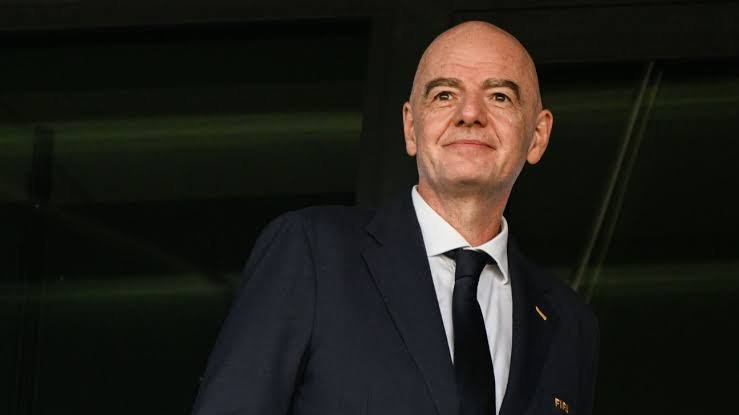
The Asian Football Confederation (AFC) has announced its support for Gianni Infantino to serve another term as FIFA president, giving the incumbent a significant endorsement ahead of the governing body’s next leadership election. AFC president Sheikh Salman bin Ibrahim Al Khalifa announced the decision at the confederation’s extraordinary congress in Tokyo on Friday, October 23, 2026.
The endorsement is politically significant because the AFC represents 47 member associations, making Asia an important constituency in FIFA’s presidential election. Although individual members are not necessarily guaranteed to follow the confederation’s leadership, broad support from the region could strengthen Infantino’s position as he seeks another mandate.
The announcement also marks a notable change in relations between the AFC and Infantino. Just over two months earlier, the Asian confederation had joined European and North and Central American football authorities in declaring that the FIFA president had committed what they described as a fundamental breach of trust. The dispute followed controversy surrounding a proposed World Cup-related commercial plan that has since been abandoned.
With the election scheduled for March and the deadline for rival candidates to file set for November 18, Infantino’s latest endorsement adds an important development to the emerging leadership contest. No challenger had formally filed a candidacy at the time of the announcement described in the report.
Sheikh Salman Announces AFC Support at Tokyo Congress
Sheikh Salman made the endorsement during the AFC’s extraordinary congress in Tokyo, where he publicly embraced Infantino before delivering his statement of support. The gesture provided a visible indication that relations between the two football leaders had improved following their recent disagreements.
Addressing Infantino, Sheikh Salman said the confederation was committed to supporting his leadership as he sought a new term as FIFA president. He also referred to Infantino’s visits to countries across Asia and conversations with members of the confederation, presenting those interactions as evidence of an established relationship.
The announcement matters because the AFC’s position can influence the political environment surrounding a FIFA presidential election. The confederation brings together national football associations from across Asia, including countries with different sporting priorities, financial circumstances and levels of international influence.
However, an endorsement by the AFC leadership should not automatically be interpreted as a guarantee that every member association will vote for Infantino. FIFA presidential elections involve individual member associations, and a confederation’s public position is not the same as a verified count of votes pledged by all its members.
That distinction will remain important as the election approaches. The AFC’s support gives Infantino a substantial political signal of backing, but the final outcome will depend on the voting process and the candidates who are formally eligible to participate.
Why the AFC’s 47 Member Associations Matter in the FIFA Election
The AFC’s endorsement carries weight because of the number of national football associations it represents. FIFA has 211 member associations, each entitled to one vote in the presidential election. This voting structure means that football’s governing body is not elected according to the population of a country, its economic strength or the commercial size of its domestic football market.
Consequently, support from regional confederations can be important when a candidate seeks to build a winning coalition. The AFC’s 47 members represent a substantial bloc within FIFA’s global membership, making the confederation’s position relevant to Infantino’s campaign.
However, the endorsement should be understood as a political advantage rather than a guarantee of victory. Individual associations can hold different views from their confederation’s leadership, and public declarations of support do not necessarily establish how every delegate will vote when the election takes place.
The distinction is especially important in Asia, where national associations have different relationships with FIFA, different development priorities and varying views on the leadership of World Football. The AFC president’s endorsement signals the direction of the confederation, but it does not eliminate the possibility of disagreement among its members.
Infantino will also need to consider support from outside Asia. The election involves the full FIFA membership, so the AFC’s position is only one part of a wider contest that includes Africa, Europe, North America, South America and the other participating regions.
Why the AFC Changed Its Position After the FIFA Commercial Plan Controversy
The most striking aspect of Sheikh Salman’s announcement is the apparent reconciliation following the dispute over FIFA’s proposed commercial strategy. Just over two months before the Tokyo endorsement, the AFC had joined European and North and Central American football authorities in criticizing Infantino over the plan.
The proposal involved establishing a commercial structure connected to FIFA’s major competitions, including the World Cup. The reported $4.2 billion plan sought to attract private investment by selling a stake in the proposed enterprise. It was subsequently abandoned following significant opposition.
The controversy raised broader questions about how FIFA makes major financial decisions, how commercial opportunities are structured and how national associations are consulted before decisions with global consequences are advanced.
For football administrators, the central issue was not simply whether a commercial proposal could generate additional revenue. The process through which the proposal was developed and presented also became a source of concern. Major changes involving FIFA’s most valuable competitions can affect the organisation’s long-term financial structure and relationships with its member associations.
Infantino apologized to FIFA’s 37-member ruling council in Zurich the previous week, acknowledging mistakes in the development of the now-abandoned plan. The apology appears to have helped create an opportunity for renewed discussions, although the precise terms of any understanding reached with the AFC were not fully detailed in Sheikh Salman’s public remarks.
Sheikh Salman acknowledged that the two sides had experienced difficulties but emphasized their recent discussions in Zurich. He indicated that the disagreements should not prevent them from working together going forward.
His comments suggested that the AFC leadership was prepared to separate the earlier dispute from its assessment of Infantino’s future leadership. Nevertheless, the endorsement does not by itself establish that all the governance concerns raised during the controversy have been resolved.
What Was the Abandoned $4.2 Billion FIFA Plan?
The proposed commercial initiative became a major source of friction because it involved the potential sale of an ownership stake in a new enterprise linked to FIFA’s revenue-generating activities.
FIFA oversees international competitions that generate revenue through broadcasting rights, sponsorship agreements, licensing and other commercial arrangements. The World Cup occupies a central position in that structure, making decisions about its future commercial value particularly consequential.
The proposed plan was intended to bring private investment into a new business structure. Its reported value of $4.2 billion made it a substantial undertaking, but the proposal was ultimately scrapped after opposition from football officials.
The controversy illustrates the difference between raising capital and determining how a sports organisation should be governed. Private investment can provide access to financing and commercial expertise, but it can also raise questions about ownership, oversight, decision-making authority and the distribution of future returns.
In FIFA’s case, any arrangement involving the commercial rights associated with major tournaments would need to be considered in the context of the organisation’s responsibilities to its member associations and the wider football community.
It is important to distinguish the abandoned proposal from a completed transaction. The reported plan did not proceed as originally envisaged, and its stated financial value should not be treated as money FIFA actually received from investors.
The episode nevertheless remains relevant to Infantino’s re-election campaign because it placed questions about leadership and decision-making at the centre of discussions about his continued presidency.
Infantino’s Fourth-Term Bid and the Road to the Election
Infantino has led FIFA since 2016, when he succeeded Sepp Blatter following a period of upheaval at the organisation. He was re-elected in 2019 and again in 2023, both times without an opponent in the final presidential contest.
His next campaign would represent an attempt to secure another term beginning in 2027. If re-elected, he would remain in office through 2031, according to the announced election timetable.
Infantino’s tenure has included efforts to expand FIFA’s competitions and increase the organisation’s global commercial reach. His leadership has also attracted criticism over governance decisions and the relationship between FIFA’s commercial ambitions and its responsibility to national associations.
The abandoned investment plan has added a new challenge to that record. The AFC’s endorsement gives Infantino an important public show of support, but it does not erase the disagreements that emerged over the proposal.
The next major procedural milestone is November 18, the deadline for prospective challengers to submit their candidacies. The election is scheduled for March 2027 at the FIFA Congress in Morocco.
As of the announcement in Tokyo, no rival had formally filed to challenge Infantino. That could change before the deadline, and the absence of an announced challenger should not be interpreted as proof that the incumbent will face no opposition.
How the FIFA Presidential Election Works
FIFA’s presidential election is decided by its member associations rather than by a direct public vote. Each association has one vote, giving smaller football nations the same formal voting weight as the world’s largest football markets.
This arrangement helps explain why regional alliances can play such an important role in presidential campaigns. A candidate must build support across a geographically and politically diverse membership rather than relying only on countries with major domestic leagues or large commercial audiences.
The AFC’s endorsement is therefore relevant beyond its immediate regional significance. If a substantial proportion of its member associations support Infantino, those votes could contribute meaningfully to his effort to secure another term.
At the same time, FIFA’s election process means that support from one confederation cannot determine the result on its own. Infantino must secure sufficient backing across the organisation’s full membership, and the position of other confederations will remain important.
The candidate deadline also matters because it determines whether the contest will feature an alternative to the incumbent. If a credible challenger enters the race, member associations will have an opportunity to compare competing approaches to leadership, governance and football development.
Without a confirmed challenger, it remains premature to draw firm conclusions about the eventual outcome. The number of candidates, the positions they present and the voting intentions of individual associations will all shape the final contest.
What the Endorsement Means for Asian Football
For the AFC, supporting Infantino could be viewed as an effort to preserve a working relationship with FIFA’s leadership while seeking continued attention to the development of football across Asia.
National associations rely on FIFA and their regional confederations for competition structures, development programmes, technical support and institutional coordination. The relationship between FIFA and the AFC therefore has implications beyond the presidential election itself.
However, an endorsement should not automatically be interpreted as a promise of additional funding, new competitions or specific policy concessions. Sheikh Salman’s public remarks emphasized cooperation and a better understanding between the two leaders, but did not announce a new financial agreement or a detailed package of commitments.
The practical significance of the endorsement will become clearer through future decisions and programmes. Relevant questions include how FIFA consults its member associations, how major commercial initiatives are evaluated and whether concerns raised by regional bodies lead to clearer governance processes.
Asian football’s influence also depends on the participation of its national associations in FIFA’s wider decision-making system. The confederation’s size gives it a meaningful collective voice, but its ability to shape policy ultimately depends on coordination among members and engagement with the rest of the international football community.
What Happens Next in Infantino’s Re-Election Campaign?
The Tokyo endorsement provides Infantino with a visible boost, but several developments will determine how much it changes the presidential contest.
- Candidate nominations: The November 18 deadline will establish whether a rival formally enters the race.
- Support from individual associations: Public endorsements will offer clues about the balance of opinion, although the final vote remains decisive.
- Relations with other confederations: The response from European and North and Central American football authorities will help show whether the earlier dispute continues to affect Infantino’s campaign.
- Governance commitments: Further clarification about decision-making, transparency and commercial proposals could influence how member associations assess the incumbent’s leadership.
- The March election: The eventual result will determine whether Infantino receives another mandate through 2031.
The endorsement may also encourage further discussions between FIFA and regional football bodies about how major commercial proposals should be developed and communicated. That possibility remains an outlook rather than a confirmed outcome of the Tokyo meeting.
For now, the most concrete development is the AFC leadership’s decision to publicly back Infantino after a period of tension. Whether that support translates into a decisive advantage will depend on the positions taken by individual member associations and the broader election landscape.
Conclusion: AFC Support Gives Infantino a Boost, but Questions Remain
The Asian Football Confederation’s endorsement of Gianni Infantino for another term as FIFA president is an important development in the run-up to the March 2027 election. Sheikh Salman bin Ibrahim Al Khalifa’s announcement in Tokyo offers the incumbent public support from a confederation representing 47 member associations.
The decision is particularly notable because the AFC had previously joined other football authorities in criticizing Infantino over the abandoned $4.2 billion commercial investment plan. His apology to FIFA’s ruling council and subsequent discussions with Sheikh Salman appear to have helped restore their working relationship, although the details of any agreement remain unclear.
Infantino now enters the next stage of his campaign with an endorsement that could strengthen his position. Yet the election is determined by FIFA’s member associations, not by confederation endorsements alone. The November 18 candidacy deadline and the responses of other football bodies will provide further indications of the contest ahead.
The larger test will be whether renewed cooperation is accompanied by greater clarity around the governance questions that triggered the dispute. The AFC’s support marks a significant shift in the political dynamics of world football, but the implications for FIFA’s leadership and decision-making will become clearer only as the election approaches.
For breaking news and live news updates, like us on Facebook or follow us on Twitter and Instagram. Read more on Latest Football on thefoxdaily.com.






COMMENTS 0