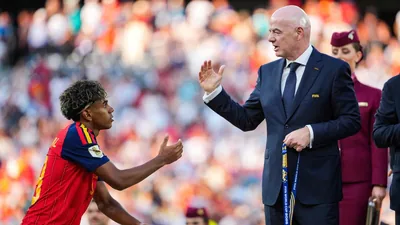
The FIFA $10 billion investment proposal has rapidly become one of the most controversial governance issues in modern football. FIFA President Gianni Infantino has presented member associations with a proposal that could reshape the commercial future of international football by introducing private investment into FIFA’s global business operations.
Supporters believe the initiative could unlock unprecedented financial resources for football development across every continent, providing significantly higher funding to national associations over the next four-year cycle. Critics, however, argue the proposal raises serious questions about transparency, governance, commercial influence, and who ultimately controls football’s most valuable tournaments.
The growing disagreement between FIFA and UEFA has now escalated into one of the biggest political battles the sport has witnessed in recent years, with discussions reportedly including the possibility of a future World Cup boycott if concerns remain unresolved.
What Is FIFA’s $10 Billion Investment Proposal?
At the center of the debate is FIFA’s proposal to establish a new commercial subsidiary valued at approximately $20 billion. Under the proposal, around 20 percent ownership of the new company would be offered to private investors.
The subsidiary would oversee commercial rights linked to FIFA’s flagship competitions, including the men’s FIFA World Cup, the FIFA Women’s World Cup, and the FIFA Club World Cup.
According to FIFA’s proposal, participating member associations could receive substantially increased financial support beginning with the 2027–2030 funding cycle if the investment plan receives sufficient approval.
How the Proposal Would Work
| Proposal Element | Details |
|---|---|
| Estimated Company Valuation | $20 Billion |
| Private Ownership Offered | 20% |
| Investment Package | $10 Billion |
| Funding Period | 2027–2030 Cycle |
| Potential Funding Per Member Association | Up to $40 Million |
| Decision Deadline | September 19, 2026 |
Why FIFA Believes the Plan Is Necessary
Football has become one of the world’s largest sports industries, generating billions of dollars through broadcasting rights, sponsorships, ticket sales, licensing, and digital media.
FIFA argues that attracting strategic private investment would allow it to accelerate football development without relying solely on traditional revenue streams.
The governing body believes additional investment could expand grassroots programs, improve infrastructure, strengthen youth development, modernize football administration, and increase financial support for smaller football associations.
For many developing football nations, additional funding could significantly improve coaching education, stadium facilities, women’s football, and youth academies.
Why UEFA Strongly Opposes the Proposal
UEFA’s concerns extend well beyond the financial aspects of the proposal.
The European governing body has questioned the process through which member associations were asked to consider one of football’s most significant commercial decisions.
Its primary objections focus on:
- Limited consultation before the proposal was presented.
- Concerns regarding governance and transparency.
- Potential commercial influence over football decisions.
- Long-term control of FIFA’s commercial rights.
- The relatively short deadline for member associations.
UEFA argues that changes involving football’s commercial future require extensive discussion among federations, clubs, leagues, players, and other stakeholders rather than a rapid approval process.
Why the September 19 Deadline Has Become So Controversial
One of the biggest points of disagreement is not only the proposal itself but also the timeline.
Member associations have been asked to decide whether to support the investment package by September 19.
Critics argue that such a complex financial arrangement deserves months of independent analysis, legal review, and consultation before national football federations commit to decisions that could influence the sport for decades.
The deadline has therefore become symbolic of the wider governance concerns raised by several football authorities.
Could UEFA Really Boycott a Future FIFA World Cup?
Reports suggesting a possible World Cup boycott have generated headlines across global football.
While no official boycott has been confirmed, the fact that the possibility is being discussed illustrates how serious the disagreement has become.
A coordinated withdrawal by multiple European football associations would represent one of the most significant governance crises in FIFA history.
However, such a move would also carry enormous sporting, commercial, and financial consequences for players, broadcasters, sponsors, and supporters.
For that reason, many analysts believe negotiations remain the most likely outcome before any drastic action is considered.
Why National Football Associations Are Paying Close Attention
For many smaller football nations, the proposal offers access to funding levels that could transform domestic football.
Additional investment may support:
- Youth football development.
- Coach education programs.
- Women’s football expansion.
- Training facilities.
- Referee development.
- Grassroots participation.
- Football infrastructure projects.
At the same time, associations must carefully evaluate any long-term commercial commitments that accompany increased financial support.
The Growing Business of Global Football
Modern football has evolved far beyond the sport played on the field.
Broadcasting agreements, streaming platforms, sponsorship partnerships, digital content, merchandising, and international tournaments now generate enormous revenues.
As commercial opportunities expand, governing bodies increasingly face pressure to balance financial growth with sporting integrity.
The current FIFA proposal reflects this broader trend, where attracting outside investment is becoming more common across global sports.
Women’s Football Could Also Be Affected
Another important dimension of the debate involves women’s football.
As investment in the women’s game continues to grow worldwide, officials have expressed concern that broader disputes between football’s governing bodies could indirectly affect tournament planning, commercial partnerships, and long-term development strategies.
Although the proposal itself is not directed specifically at women’s football, any prolonged governance conflict could create uncertainty surrounding future international competitions.
Balancing Financial Growth and Sporting Integrity
The controversy highlights one of football’s biggest modern challenges.
On one side is the opportunity to generate additional billions that could expand the game worldwide. On the other is the responsibility to ensure transparency, accountability, and independent governance.
Finding the right balance between commercial success and sporting values has become increasingly important as football continues its rapid global expansion.
Possible Outcomes in the Coming Months
Several scenarios could emerge before the September deadline:
- Member associations approve the proposal with broad support.
- FIFA modifies elements of the plan following feedback.
- Additional consultation extends the decision-making process.
- Further negotiations reduce tensions between FIFA and UEFA.
- Governance reforms accompany any future investment agreement.
The eventual outcome will likely influence not only football’s finances but also the relationship between its most powerful governing organizations.
Why This Decision Matters Beyond FIFA
The implications extend beyond one governing body or one tournament.
The decision could establish an important precedent for how international sports organizations attract private investment while protecting competitive integrity and institutional independence.
Other global sports federations will likely watch closely, as similar financial models could eventually emerge across different international competitions.
Future Outlook
The coming weeks may prove to be among the most significant in FIFA’s recent administrative history. If member associations support the proposal, football could enter a new era of commercial investment and expanded development funding.
If opposition continues to grow, FIFA may face increasing pressure to revise its governance processes, provide greater transparency, and seek broader consensus before implementing transformative financial reforms.
Regardless of the final outcome, the debate has already highlighted how modern football is increasingly shaped not only by performances on the pitch but also by decisions made in boardrooms around the world.
Conclusion
FIFA’s $10 billion investment proposal represents one of the boldest financial initiatives ever considered in international football. The promise of significantly increased funding has generated optimism among many national associations, while concerns over governance, transparency, and commercial influence have prompted strong resistance from UEFA and several other stakeholders.
As the September deadline approaches, football’s governing bodies face a defining moment. Whether through compromise, revision, or approval, the decisions made in the coming weeks could reshape the financial structure and governance of world football for many years to come.
For breaking news and live news updates, like us on Facebook or follow us on Twitter and Instagram. Read more on Latest Sports on thefoxdaily.com.




COMMENTS 0