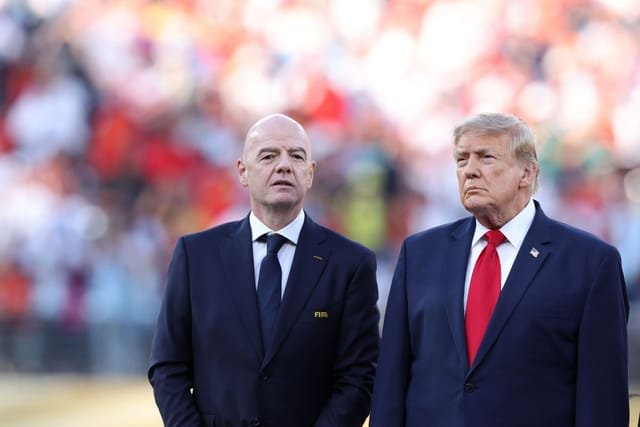
Gianni Infantino‘s response to FIFA World Cup 2026 conspiracy theories has reignited debate over refereeing, disciplinary decisions, and transparency in international Football. Following the conclusion of the historic 48-team tournament hosted across the United States, Canada, and Mexico, the FIFA president addressed criticism surrounding officiating decisions and allegations of bias, arguing that similar controversies occur regularly in the world’s biggest domestic leagues. Infantino also pointed to the competition’s safety record, global reach, and fan engagement as evidence of the tournament’s overall success.
While discussions over controversial moments continue across social media, the governing body’s focus has shifted toward preserving the legacy of what became the largest FIFA World Cup ever staged.
A Historic FIFA World Cup Comes to an End
The 2026 FIFA World Cup marked a new chapter in football history.
For the first time, the tournament featured 48 national teams and was jointly hosted by three countries—the United States, Canada, and Mexico. The expanded format increased the number of matches, participating nations, and global audiences, making it the biggest edition of the competition since its inception.
The tournament concluded with Spain defeating defending champions Argentina 1-0 after extra time in the final, securing La Roja’s second FIFA World Cup title and ending a 16-year wait for football’s biggest prize.
Infantino Addresses Critics and Conspiracy Theories
Following the tournament, Gianni Infantino responded directly to criticism surrounding controversial refereeing and disciplinary decisions.
Rather than denying that difficult calls occurred, the FIFA president argued that disputed decisions are an unavoidable part of elite football.
“Such decisions are common in some of the biggest leagues around the world.”
His message emphasized that referees regularly face complex situations involving yellow cards, red cards, penalty decisions, and disciplinary reviews—issues that are debated every week across major domestic competitions.
Why Officiating Continues to Divide Opinion
Modern football has evolved significantly with the introduction of technologies such as Video Assistant Referee (VAR), semi-automated offside systems, and advanced goal-line technology.
However, technology has not eliminated controversy.
Many decisions still involve subjective interpretation, including:
- Serious foul play.
- Denial of obvious goal-scoring opportunities.
- Handball incidents.
- Simulation.
- Advantage and disciplinary judgments.
Because these situations often depend on a referee’s interpretation of the Laws of the Game, disagreements remain inevitable even with technological assistance.
Record-Breaking Tournament by the Numbers
Despite criticism in certain areas, FIFA considers the tournament one of its most successful editions.
| Category | 2026 FIFA World Cup |
|---|---|
| Host Nations | United States, Canada and Mexico |
| Participating Teams | 48 |
| Total Matches | 104 |
| Host Cities | 16 |
| Tournament Champions | Spain |
| Finalists | Spain and Argentina |
The expanded competition attracted millions of supporters across North America while introducing more nations to football’s biggest stage.
Spain’s Triumph Marks a New Era
Spain’s victory represented more than another international trophy.
After first lifting the FIFA World Cup in 2010, La Roja once again demonstrated the effectiveness of their technical, possession-based philosophy while successfully blending experienced leaders with an emerging generation of young talent.
The triumph reinforced Spain’s position among the sport’s elite national teams and highlighted the country’s continued investment in player development.
Argentina’s Brave Campaign Ends in Heartbreak
Defending champions Argentina entered the tournament aiming to retain football’s biggest prize but ultimately fell short in the final.
Despite the disappointment, reaching another FIFA World Cup final further underlined the consistency and competitiveness of the Argentine national team on the global stage.
The campaign also added another memorable chapter to one of international football’s richest histories.
Ticket Prices Remained a Major Talking Point
While the football attracted worldwide attention, many supporters expressed concern over ticket affordability.
Higher demand, larger venues, and increased commercial interest resulted in significant discussions about accessibility for ordinary fans.
The issue has become increasingly important for major sporting events, where organizers must balance commercial success with ensuring supporters from different backgrounds can attend matches.
Safety and Tournament Organization Receive Praise
One area FIFA highlighted was tournament security.
According to Infantino, the competition concluded without major security incidents, allowing millions of supporters from around the world to celebrate football in a safe environment.
Managing a tournament spread across three countries presented unprecedented logistical challenges involving travel, stadium operations, transportation, and crowd management, making successful coordination a significant organizational achievement.
Individual Awards Recognized Outstanding Performers
Several players produced exceptional performances throughout the tournament.
- Kylian Mbappe claimed the Golden Boot after finishing as the tournament’s leading scorer.
- Spain captain Rodri received the Golden Ball as the competition’s best player.
- Young defender Pau Cubarsi won the Best Young Player award following an impressive tournament.
The awards reflected both established superstars and emerging talents who left a lasting impression on football’s biggest stage.
The Growing Impact of a 48-Team World Cup
The expansion from 32 to 48 teams represented one of the biggest structural changes in FIFA World Cup history.
Supporters of the new format believe it:
- Provides more nations with qualification opportunities.
- Expands football’s global reach.
- Increases commercial revenue.
- Creates new international rivalries.
- Encourages football development in emerging nations.
Critics, however, continue to debate whether a larger tournament reduces overall competitive balance and increases fixture congestion for players.
Why Refereeing Will Always Be Scrutinized
Regardless of technological progress, officiating remains one of football’s most debated topics.
Every major international tournament produces moments that divide opinion among fans, former players, coaches, and analysts.
The combination of enormous global audiences and high stakes ensures every controversial decision receives intense examination, particularly during knockout matches where a single incident can influence a nation’s hopes.
Expert Analysis: Transparency Matters as Much as Accuracy
While Gianni Infantino defended FIFA’s officiating processes, modern football increasingly demands greater transparency alongside accurate decision-making. Supporters today expect not only correct outcomes but also clear explanations regarding disciplinary rulings, VAR interventions, and referee reviews.
Several domestic competitions have already experimented with improved communication between officials and fans. As technology continues evolving, football’s governing bodies may face growing pressure to provide more detailed explanations during future international tournaments, strengthening public trust while reducing speculation surrounding controversial moments.
What the 2026 World Cup Legacy Could Be
The 2026 FIFA World Cup may ultimately be remembered for more than its champions.
Its expanded format, three-country hosting model, record number of matches, and global participation have created a blueprint that could influence future editions of football’s biggest tournament.
Although debates over refereeing, ticket pricing, and scheduling are likely to continue, the competition also demonstrated football’s unmatched ability to unite millions of supporters across continents.
Looking Ahead to the Next FIFA World Cup
Attention will gradually shift toward the next cycle of international football as national teams begin rebuilding for future qualification campaigns.
FIFA is also expected to review feedback from players, coaches, referees, broadcasters, and supporters to further improve tournament operations, technology, and fan experience before the next edition.
Conclusion
Gianni Infantino has firmly rejected conspiracy theories surrounding the 2026 FIFA World Cup, maintaining that controversial refereeing and disciplinary decisions are a normal part of elite football rather than evidence of bias. While criticism over officiating and ticket prices remains part of the post-tournament conversation, the competition also delivered historic milestones through its expanded 48-team format, successful multi-country hosting, and Spain’s memorable championship triumph. As football continues to evolve, balancing transparency, technology, and sporting integrity will remain one of FIFA’s biggest priorities heading into future World Cups.
For breaking news and live news updates, like us on Facebook or follow us on Twitter and Instagram. Read more on Latest Sports on thefoxdaily.com.






COMMENTS 0