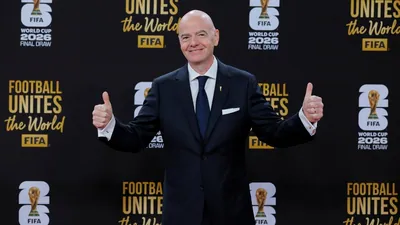
The football world is witnessing a significant power struggle after FIFA announced plans to establish a new commercial subsidiary valued at approximately $20 billion. The proposal, championed by FIFA president Gianni Infantino, aims to attract private investment while promising to reinvest profits into football development across the globe. However, the announcement has been met with fierce resistance from UEFA, Europe’s governing football body, which argues that football’s governance and commercial rights should never be treated as tradable assets.
The disagreement goes far beyond finances. It represents a broader debate over who should shape the future of the world’s most popular sport, how football’s enormous commercial value should be managed, and whether private investment can coexist with the principles that have traditionally governed the game.
What Is FIFA Planning?
Under the proposed structure, FIFA intends to create a wholly owned commercial entity known as the FIFA Forward Enterprise (FFE). This subsidiary would consolidate FIFA’s commercial operations, including sponsorships, media rights, marketing, licensing, and event-related business activities.
While FIFA would continue to oversee all sporting matters—including international competitions, governance, regulatory decisions, and the global football calendar—the commercial arm would be responsible for generating additional revenue through strategic investments and business partnerships.
To fund the venture, FIFA plans to offer minority, non-controlling stakes in the company to external investors, with the objective of raising up to $4.2 billion. According to FIFA, the organization would retain full control over football governance while using fresh capital to expand development programs worldwide.
Why FIFA Believes This Strategy Is Necessary
Football has evolved into one of the largest entertainment industries in the world. Major international tournaments generate billions of dollars through broadcasting agreements, sponsorship contracts, hospitality, ticket sales, digital content, and merchandising.
FIFA argues that although elite football has experienced tremendous financial growth, many national associations continue to struggle with infrastructure, coaching education, youth academies, women’s football, and grassroots development.
The proposed investment model is designed to bridge that gap by creating additional long-term revenue that can be redistributed across FIFA’s 211 member associations.
According to FIFA, the initiative is intended to:
- Increase funding for grassroots football.
- Expand youth development programs.
- Support emerging football nations.
- Invest in women’s football.
- Strengthen football infrastructure globally.
- Create more sustainable financial growth beyond major tournaments.
UEFA’s Strong Opposition Explained
UEFA’s response was immediate and unusually forceful. Europe’s governing body argued that football’s governing institutions should never allow the commercial ownership of assets that represent the sport itself.
The organization questioned both the transparency of the proposal and the potential influence private investors could eventually gain over football’s commercial direction.
Its central concern is that football is a global public institution rather than a conventional business.
“The soul and governance of football are not assets to trade.”
That statement summarizes UEFA’s broader philosophy: while commercial growth is essential, the sport’s governance must remain insulated from financial interests that could prioritize investor returns over sporting integrity.
Understanding FIFA Forward Enterprise
The proposed FIFA Forward Enterprise would operate as FIFA’s commercial engine while remaining legally separate from the governing body’s sporting responsibilities.
| Category | Current FIFA Structure | Proposed FIFA Forward Enterprise |
|---|---|---|
| Football Governance | FIFA | Remains with FIFA |
| World Cup Operations | FIFA | Commercial management through FFE |
| Media Rights | FIFA | Managed by FFE |
| Sponsorship Revenue | FIFA | Managed by FFE |
| Private Investment | None | Minority investors allowed |
| Regulatory Decisions | FIFA | Not transferred |
This distinction is important because FIFA insists that no investor would have authority over the Laws of the Game, competitions, refereeing, or sporting regulations.
Why the Proposal Is So Significant
The FIFA World Cup is widely regarded as the most valuable sporting event on the planet. Every edition generates enormous commercial interest from broadcasters, sponsors, advertisers, hospitality companies, and global brands.
Creating a dedicated commercial company marks a major shift in how FIFA intends to monetize these assets over the coming decades.
Instead of relying primarily on tournament cycles every four years, FIFA appears to be positioning itself for continuous commercial expansion through a more corporate business model.
The Bigger Governance Debate
Beyond finances, the proposal has reopened long-standing questions about governance in international football.
Should governing bodies remain purely non-commercial organizations focused on regulation and development, or should they embrace private capital to accelerate growth?
Supporters argue that additional investment could modernize football infrastructure, increase opportunities for smaller nations, and reduce financial inequality across continents.
Critics counter that once external investors enter the equation, pressure to maximize profits may eventually influence scheduling, tournament formats, broadcasting decisions, and commercial priorities.
Potential Benefits for Global Football
If implemented successfully, FIFA’s proposal could deliver several long-term advantages.
- Greater financial support for developing football nations.
- Improved stadiums and training facilities.
- Expanded youth development initiatives.
- More investment in women’s football competitions.
- Enhanced coaching education worldwide.
- Increased funding for grassroots programs.
Many football associations outside Europe and South America continue to operate with limited financial resources. Additional funding could help reduce competitive disparities over time.
The Risks UEFA Wants to Avoid
UEFA’s concerns extend beyond immediate financial arrangements.
Its objections focus on broader questions surrounding transparency, accountability, investor influence, and long-term governance.
Some of the risks highlighted by critics include:
- Commercial priorities overshadowing sporting values.
- Reduced transparency regarding investor relationships.
- Potential conflicts between profit generation and competitive fairness.
- Future pressure to commercialize additional football assets.
- Growing influence of financial stakeholders over global football strategy.
Although FIFA insists investors would hold only minority positions without governance authority, UEFA believes the precedent itself deserves careful scrutiny.
Comparison With Other Sports
Football is not the first major sport to explore private investment.
Leagues across basketball, cricket, motorsport, and American sports have increasingly attracted institutional investors seeking long-term returns from media rights and commercial growth.
However, FIFA occupies a unique position because it functions both as the sport’s global regulator and organizer of its most prestigious competitions. That dual role makes any commercialization strategy particularly sensitive.
How National Associations Could Be Affected
The proposal now moves to FIFA’s 211 member associations, which will examine the plan before any final decision is reached.
Smaller football federations may view additional investment favorably if it leads to larger development grants, coaching support, and infrastructure funding.
Meanwhile, larger associations may focus more closely on governance safeguards, transparency requirements, and long-term financial oversight.
The eventual outcome will likely depend on whether FIFA can convince its members that commercial expansion will strengthen—not weaken—the game’s independence.
What Happens Next?
Before becoming reality, the proposal must receive approval from FIFA’s governing bodies.
The review process will include discussions among:
- FIFA Council members.
- National football associations.
- Commercial advisors.
- Legal and governance experts.
Any approved structure would almost certainly include additional governance frameworks designed to reassure stakeholders that football’s regulatory independence remains protected.
Why This Decision Could Shape Football for Decades
The debate extends well beyond a single financial proposal.
It reflects two contrasting visions for football’s future. One emphasizes commercial innovation as a tool for expanding the global game, while the other prioritizes institutional independence and traditional governance.
Whichever approach ultimately prevails could influence how football is managed for generations, affecting everything from youth development funding to the commercial value of future FIFA World Cups.
Future Outlook
The coming months are likely to feature extensive discussions between FIFA, UEFA, national associations, clubs, and other stakeholders. Even if the proposal undergoes significant revisions, the conversation has already highlighted football’s growing challenge: balancing commercial opportunity with sporting integrity.
As broadcasting revenues continue to rise and football’s global audience expands, governing bodies will face increasing pressure to modernize financially while preserving the values that have made the sport universally popular.
Conclusion
FIFA’s proposed $20 billion FIFA Forward Enterprise represents one of the most ambitious commercial initiatives in the history of international football. Supporters believe it could unlock unprecedented investment for developing the game worldwide, while critics fear it risks transforming football’s governing institutions into commercially driven enterprises.
UEFA’s sharp opposition ensures that the proposal will receive intense scrutiny before any final decision is made. Whether the plan is approved, modified, or rejected, the debate has already become a defining moment in football governance, raising fundamental questions about who should shape the future of the world’s most popular sport and how its enormous commercial value should be managed responsibly.
For breaking news and live news updates, like us on Facebook or follow us on Twitter and Instagram. Read more on Latest Sports on thefoxdaily.com.





COMMENTS 0