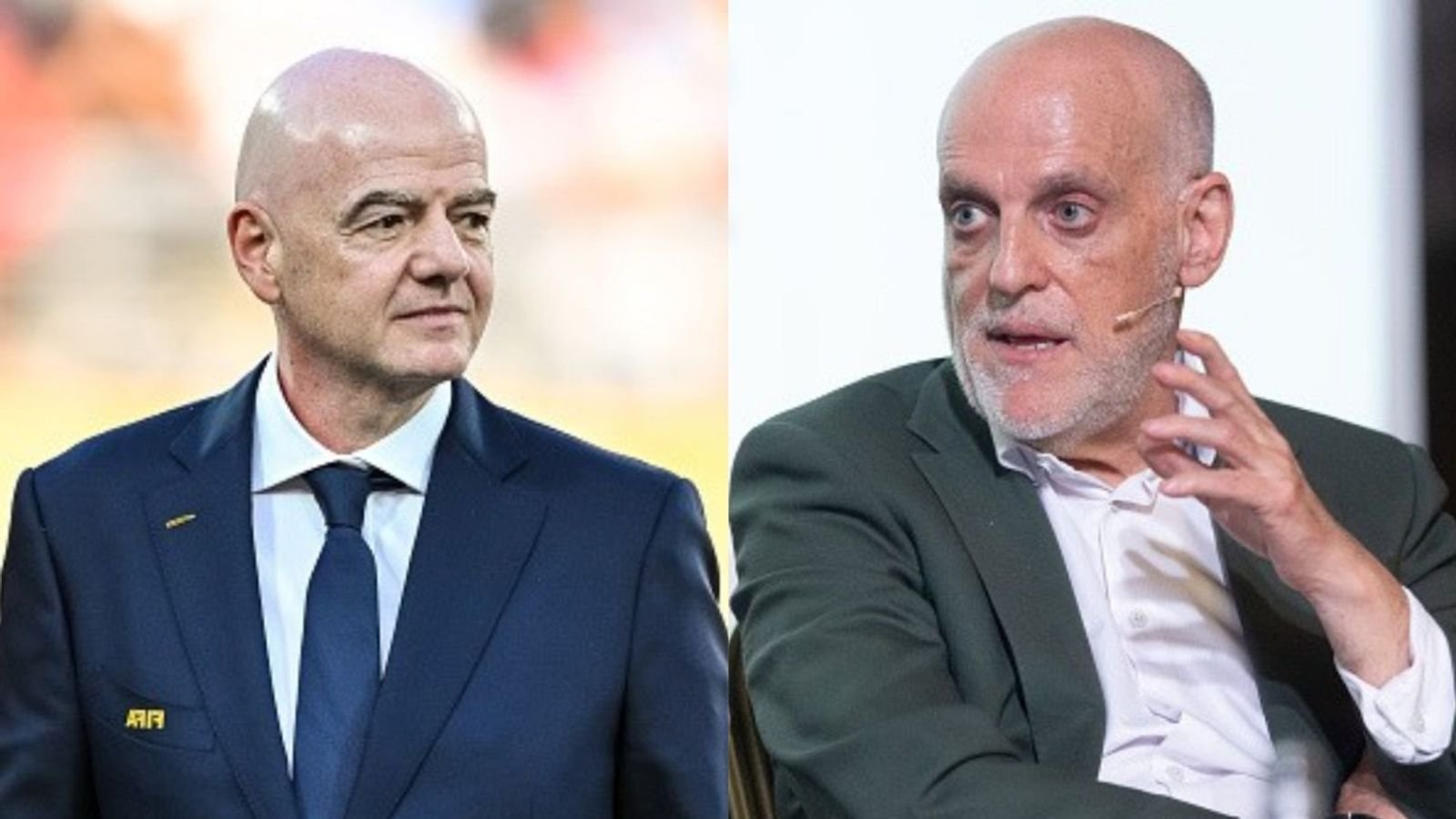
The relationship between FIFA and domestic football leagues has rarely been more strained. Just days after fresh debates emerged over scheduling, player workload, tournament expansion, and commercial priorities, La Liga president Javier Tebas publicly called for FIFA president Gianni Infantino to resign, claiming the organization is moving football in a dangerous direction.
The comments represent far more than a personal disagreement between two influential football executives. They highlight a growing global conflict over who controls the future of the sport, how football’s calendar should be managed, and whether international competitions are becoming too powerful at the expense of domestic leagues.
As FIFA continues expanding its flagship tournaments and increasing its commercial footprint, critics argue that the balance between international football and club football is becoming increasingly difficult to maintain. Tebas’ latest remarks have brought that debate back into the spotlight.
Why Javier Tebas Wants Gianni Infantino to Step Down
Javier Tebas has been one of the most vocal critics of FIFA’s leadership in recent years. His latest demand for Infantino’s resignation stems from concerns that FIFA is prioritizing tournament growth and revenue generation over the long-term health of football.
According to Tebas, the governing body’s decision-making process increasingly favors larger international competitions while placing additional strain on clubs, leagues, players, and supporters.
The La Liga chief believes FIFA’s current direction risks damaging the foundation upon which the sport is built. While World Cups generate enormous attention and revenue, domestic leagues remain the engine that drives football for most of the year.
From player development and fan engagement to broadcasting deals and employment opportunities, national leagues form the backbone of the global football economy.
The Core Issues Behind the FIFA Criticism
Tebas’ criticism extends beyond a single tournament. Instead, it reflects broader concerns about FIFA’s long-term strategy and governance model.
1. Expansion of Major International Tournaments
One of the biggest concerns involves FIFA’s continued expansion plans. Critics argue that larger tournaments may increase commercial opportunities but could also reduce competitive quality and create additional scheduling challenges.
Supporters of expansion believe it provides greater representation for emerging football nations. Opponents argue that football risks becoming oversaturated, with too many matches competing for attention.
2. Congested International Calendar
The modern football calendar is more crowded than ever before. Elite players are expected to compete in domestic leagues, domestic cups, continental competitions, international qualifiers, and major tournaments with little recovery time.
This growing workload has become one of football’s most controversial issues.
| Competition Type | Impact on Players |
|---|---|
| Domestic Leagues | Long season commitments |
| Continental Tournaments | Additional travel and matches |
| International Fixtures | Reduced recovery periods |
| World Cup Events | High-intensity tournament schedule |
Medical experts and coaches have repeatedly warned that increasing workloads raise the risk of injuries, fatigue, and declining performance levels.
3. Commercialization of Football
Another criticism centers on the growing commercialization of major tournaments. Extended halftime entertainment, expanded sponsorship integrations, and increased advertising opportunities have generated debate about whether football is moving too far toward entertainment-driven models.
While commercial revenue helps fund the sport worldwide, critics argue there must be limits to prevent competition integrity from becoming secondary to business objectives.
The Balancing Act Between FIFA and Domestic Leagues
The disagreement between FIFA and league administrators highlights a fundamental challenge facing modern football.
International tournaments deliver global audiences, national pride, and historic moments that unite fans across continents. Domestic leagues, however, provide the week-to-week competition that sustains clubs, develops players, and supports local football cultures.
Tebas’ argument is that FIFA benefits from a football ecosystem largely maintained by domestic competitions. Without strong leagues, clubs would struggle to develop talent capable of performing on the world stage.
This creates a delicate balance where both sides depend on each other, yet often compete for calendar space, television audiences, and commercial investment.
How FIFA’s World Cup Evolution Has Changed Football
The World Cup has transformed dramatically over the past few decades. What began as a relatively compact international competition has evolved into one of the most commercially successful sporting events in the world.
Modern World Cups attract billions of viewers, generate enormous sponsorship revenue, and influence football development across every continent.
However, growth has also brought new challenges.
- More matches require additional scheduling space.
- Players spend more time away from clubs.
- Travel demands continue to increase.
- Recovery periods become shorter.
- Domestic leagues face greater scheduling pressure.
These issues have become increasingly important as football’s global calendar becomes more crowded each year.
Why Domestic Leagues Are Defending Their Position
Domestic leagues such as La Liga, the Premier League, Serie A, Bundesliga, and Ligue 1 remain among football’s most valuable properties.
They generate billions in revenue, employ thousands of professionals, and provide year-round entertainment for supporters.
Tebas argues that these competitions should not be viewed merely as supporting actors in football’s ecosystem. Instead, they represent the foundation that enables international tournaments to thrive.
From youth academies and coaching development to stadium investment and community engagement, leagues perform functions that extend far beyond organizing matches.
Player Welfare Has Become a Central Issue
Perhaps the strongest argument in the current debate revolves around player welfare.
Elite footballers are playing more matches than ever before. Many top players now participate in over 60 matches per season, not including travel, training camps, promotional commitments, and international duties.
Sports science research increasingly emphasizes the importance of recovery, injury prevention, and workload management.
As tournaments expand and schedules become more demanding, governing bodies face growing pressure to protect athletes from excessive physical and mental strain.
Potential Consequences of Overloaded Schedules
- Higher injury rates
- Shorter player careers
- Reduced match quality
- Mental fatigue and burnout
- Declining performance levels
These concerns are no longer limited to club executives. Coaches, players, unions, and medical professionals have increasingly raised similar warnings.
Could FIFA Face Greater Resistance in the Future?
Tebas’ comments may represent only one voice, but they reflect concerns shared by several influential figures within football.
As FIFA continues pursuing ambitious expansion plans, opposition from domestic leagues could intensify. Future discussions about scheduling, tournament formats, player workload, and revenue distribution are likely to become even more contentious.
The challenge for football’s governing bodies will be finding a compromise that allows international competitions to grow without weakening the domestic structures that support the sport throughout the year.
A Comparison of the Two Perspectives
| FIFA’s Position | League Administrators’ Concerns |
|---|---|
| Expand football globally | Protect domestic competitions |
| Create more opportunities for nations | Avoid calendar congestion |
| Increase global engagement | Reduce player workload |
| Grow commercial revenues | Preserve competitive balance |
| Enhance tournament visibility | Protect football’s long-term ecosystem |
The Bigger Picture: A Battle Over Football’s Future
The debate sparked by Tebas is ultimately about much more than a single World Cup or one FIFA president.
It reflects a broader struggle over how football should evolve in the coming decades. Should the sport continue expanding its global events and commercial opportunities, or should greater emphasis be placed on preserving traditional domestic competitions?
There is no simple answer. Football’s popularity continues to grow worldwide, creating demand for more international events and broader participation. At the same time, excessive expansion risks placing unsustainable pressure on players, clubs, and leagues.
The most successful solution will likely require cooperation rather than confrontation.
What Happens Next?
FIFA has not publicly responded to Tebas’ latest criticism, but the debate surrounding tournament expansion, player welfare, and football governance is unlikely to disappear.
With future World Cups expected to attract record audiences and generate unprecedented revenues, pressure will continue mounting on governing bodies to demonstrate that growth can coexist with sustainability.
The coming years could prove decisive in determining whether football finds a workable balance between global ambition and domestic stability.
Conclusion
Javier Tebas’ demand for Gianni Infantino’s resignation has reignited one of football’s most important debates. At its core, the disagreement centers on how the sport should be managed, how much expansion is healthy, and whether international tournaments are placing too much strain on domestic competitions.
While FIFA sees growth as an opportunity to expand football’s reach and influence, critics fear that an increasingly crowded calendar could undermine the foundations of the sport. The clash between global ambition and domestic sustainability is becoming one of football’s defining issues.
Whether or not Tebas’ call for resignation gains wider support, his comments have ensured that questions about governance, player welfare, tournament expansion, and the future direction of football will remain firmly in the spotlight.
For breaking news and live news updates, like us on Facebook or follow us on Twitter and Instagram. Read more on Latest Sports on thefoxdaily.com.




COMMENTS 0