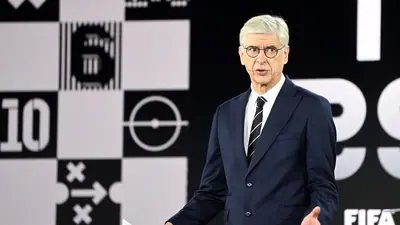
The governance of world Football has entered another turbulent chapter after Arsene Wenger publicly distanced himself from FIFA President Gianni Infantino‘s controversial proposal to bring private investment into the organization’s commercial operations. Wenger, who serves as FIFA’s Chief of Global Football Development, emphasized that he neither participated in developing the proposal nor had prior knowledge of it, stating that he first learned about the initiative through media reports.
His comments carry significant weight because Wenger is one of FIFA’s most respected senior figures. While he stopped short of criticizing Infantino personally or calling for leadership changes, his clear endorsement of abandoning the project represents one of the strongest internal responses since FIFA withdrew the proposal following widespread opposition from football confederations and national associations.
The controversy extends far beyond one commercial proposal. It has reignited long-standing debates over transparency, governance, stakeholder consultation, and the balance between generating revenue and preserving the independence of football’s global governing body.
What Was FIFA’s Commercial Investment Proposal?
At the center of the controversy was FIFA’s plan to establish FIFA Forward Enterprise, a separate commercial entity responsible for managing the organization’s business operations, commercial rights, and major events.
Under the proposal, FIFA explored selling a minority stake of up to 20 percent in the new entity to private investors. The objective was reportedly to unlock significant financial value while retaining overall control of football’s governing body.
Supporters of similar commercial models argue that outside investment can accelerate infrastructure development, digital innovation, fan engagement, and global expansion. However, critics questioned whether introducing private investors into FIFA’s commercial structure could eventually create conflicts between financial objectives and football’s long-term interests.
Why the Proposal Sparked Global Opposition
The proposal quickly became controversial not simply because of private investment, but because many stakeholders believed the consultation process was inadequate.
Several football confederations and national associations reportedly felt they had not been sufficiently informed before discussions progressed. In global sports governance, consultation is viewed as essential because FIFA’s decisions directly affect hundreds of member associations across every continent.
Concerns centered on several issues:
- Whether member associations received enough information before key discussions.
- How private investment could influence future commercial decisions.
- Whether football’s long-term interests would remain the primary priority.
- The level of transparency surrounding negotiations.
- The potential precedent such a deal could establish for international sports organizations.
As criticism intensified, FIFA ultimately decided to withdraw the proposal rather than continue pursuing the investment plan.
Arsene Wenger’s Role Inside FIFA Explained
Much of the public discussion stemmed from Wenger’s senior position within FIFA, prompting questions about whether he had participated in developing the proposal.
In his statement, Wenger clarified that his responsibilities are focused exclusively on football development rather than commercial strategy.
His work includes overseeing global football development initiatives, youth academies, coaching education, technical analysis of the game, and serving as a technical adviser within football’s law-making framework. According to Wenger, commercial planning falls outside his responsibilities.
By making that distinction publicly, he sought to separate football development from business decision-making inside FIFA.
Why Wenger’s Statement Is Significant
Wenger’s intervention is notable because he has generally avoided becoming involved in FIFA’s political disputes since joining the organization in 2019.
Instead, he has consistently focused on technical development projects, youth football, coaching education, and improving the sport worldwide.
His decision to publicly support withdrawing the proposal therefore carries additional significance. It demonstrates that even senior officials working inside FIFA believe transparency and consultation remain fundamental principles in governing world football.
Understanding FIFA’s Governance Structure
FIFA is one of the world’s largest international sporting organizations, responsible for overseeing global football competitions, development funding, regulatory frameworks, and international cooperation.
Because of its global influence, major strategic decisions typically require extensive communication with member associations and continental confederations.
Football governance depends not only on legal authority but also on trust among stakeholders. Any perception that important decisions are made without sufficient consultation can quickly lead to institutional tensions.
| Issue | Why It Matters |
|---|---|
| Transparency | Builds confidence among member associations and supporters. |
| Consultation | Ensures stakeholders participate in major strategic decisions. |
| Commercial Independence | Protects football from excessive external financial influence. |
| Governance | Maintains accountability within international football administration. |
| Trust | Strengthens FIFA’s credibility across global football. |
Private Investment in Sports: Opportunity or Risk?
The debate surrounding FIFA reflects a broader trend across professional sports.
Private equity firms and institutional investors have increasingly shown interest in acquiring stakes in leagues, clubs, tournaments, and commercial rights. Supporters argue that additional capital accelerates innovation, infrastructure projects, and digital transformation.
Opponents counter that financial investors naturally prioritize long-term returns, which may not always align with sporting values, competitive balance, or grassroots development.
The FIFA controversy illustrates how introducing private investment into governing bodies presents unique challenges compared with investment in individual clubs or leagues.
How the Decision Could Influence FIFA’s Future
Although the proposal has been withdrawn, its impact is likely to extend well beyond the immediate controversy.
Future commercial reforms will almost certainly face greater scrutiny, while member associations may demand stronger consultation processes before major structural changes are considered.
The episode could also encourage FIFA to improve communication mechanisms between its leadership, continental confederations, and national football associations.
Pressure Builds Ahead of FIFA’s Presidential Election
The controversy arrives at an important political moment for world football.
With FIFA’s next presidential election approaching in 2027, governance issues are expected to become central topics of discussion.
Several football associations have already expressed concerns regarding transparency and decision-making processes. Whether those concerns translate into meaningful political opposition remains one of the biggest questions facing FIFA over the coming months.
While Infantino continues to lead the organization, the debate surrounding governance standards is unlikely to disappear anytime soon.
Why Transparency Matters in Global Football
Football generates enormous commercial revenue through broadcasting rights, sponsorships, tournaments, and licensing agreements. Because those revenues support development programs across hundreds of countries, confidence in governance structures is essential.
Transparent decision-making helps ensure that financial growth benefits football at every level—from grassroots participation to elite international competitions.
When major strategic initiatives lack broad stakeholder support, even commercially attractive ideas can struggle to gain acceptance.
Lessons From the FIFA Controversy
- Major governance reforms require broad stakeholder consultation.
- Transparency remains essential for maintaining institutional credibility.
- Commercial innovation must be balanced with football’s long-term interests.
- Clear communication reduces uncertainty and speculation.
- Independent oversight strengthens trust in global sporting organizations.
What Happens Next?
Following the withdrawal of the commercial investment proposal, FIFA is expected to refocus attention on its existing football development initiatives while continuing discussions about future governance reforms.
The organization will also face increasing expectations to demonstrate greater openness in future strategic decisions, particularly those involving commercial partnerships or structural changes.
Meanwhile, Wenger is likely to continue concentrating on football development projects, youth academies, coaching education, and technical innovation rather than administrative politics.
Conclusion
Arsene Wenger’s decision to publicly distance himself from FIFA’s abandoned commercial investment proposal has added a significant new dimension to one of football’s biggest governance controversies in recent years. By clarifying that he had no involvement in the project and describing its withdrawal as “absolutely necessary,” Wenger reinforced the importance of transparency, accountability, and consultation within the sport’s global governing body.
Although FIFA has shelved the proposal, the wider debate over governance, commercial strategy, and stakeholder trust is far from over. As world football moves toward another presidential election cycle, the lessons from this episode are likely to shape future reforms and influence how major strategic decisions are communicated across the global game.
For breaking news and live news updates, like us on Facebook or follow us on Twitter and Instagram. Read more on Latest Football on thefoxdaily.com.






COMMENTS 0