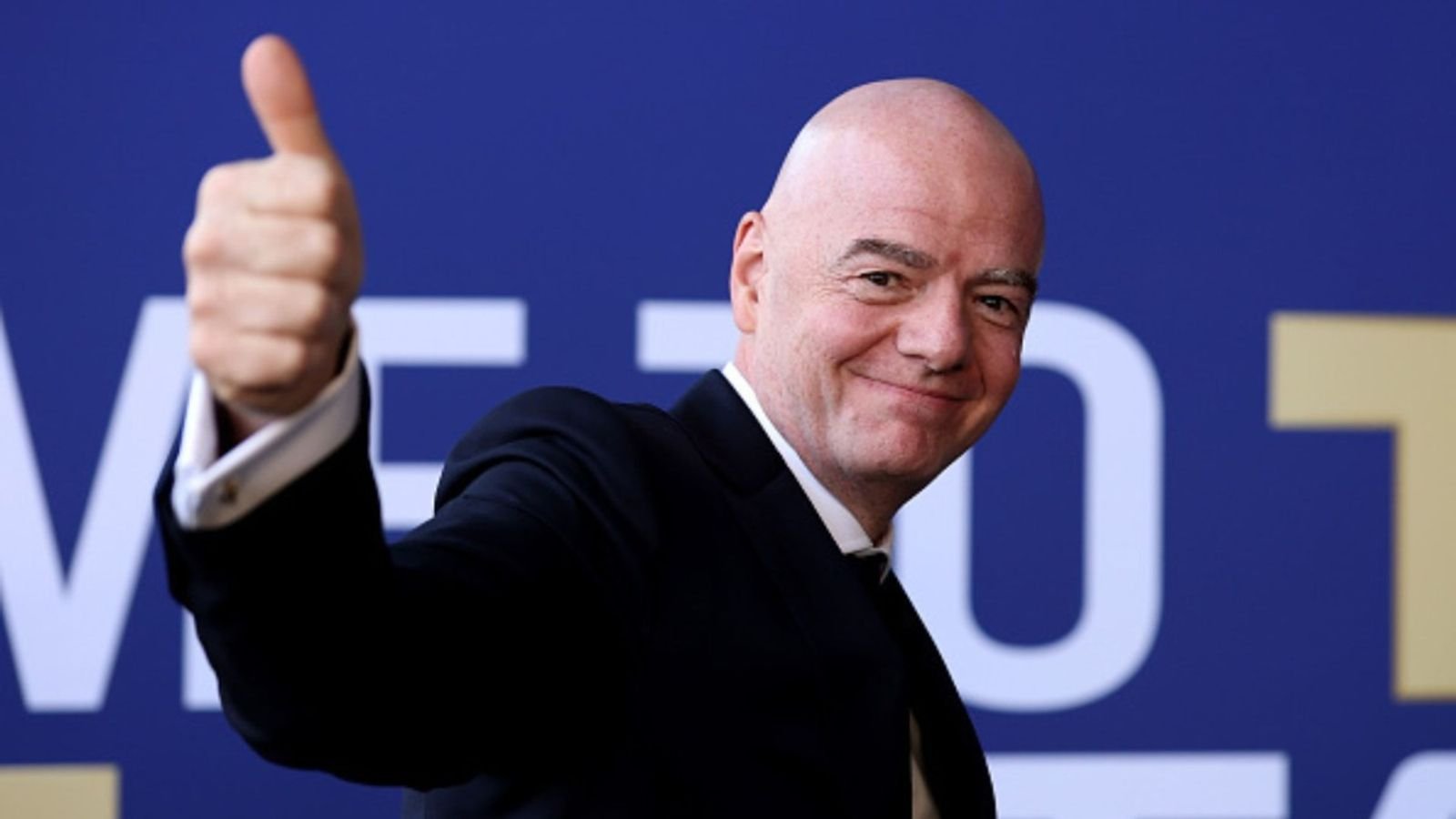
FIFA President Gianni Infantino has survived one of the biggest governance challenges of his presidency after receiving unanimous backing from the organization’s senior leadership during a crisis meeting in Rabat, Morocco. The meeting came in response to growing backlash over the now-abandoned FIFA Forward Enterprise (FFE) proposal, a multi-billion-dollar commercial restructuring plan that would have fundamentally changed how FIFA manages and monetizes its flagship tournaments.
Although FIFA’s leadership has publicly reaffirmed confidence in Infantino, the controversy has sparked broader questions about transparency, decision-making, commercial investment in global football, and the balance of power between FIFA and its six continental confederations. The episode has become more than a failed business proposal—it has evolved into a major governance test for world football’s most influential organization.
Why FIFA Convened an Emergency Meeting in Morocco
The emergency meeting, held at FIFA’s Africa office in Rabat, brought together Gianni Infantino, FIFA Secretary General Mattias Grafström, and members of the FIFA Management Board.
The gathering followed mounting criticism after details emerged about FIFA Forward Enterprise (FFE), a proposed commercial entity that would have managed the commercial rights of FIFA’s biggest competitions, including the men’s and women’s FIFA World Cups.
Following intense opposition from football stakeholders across multiple continents, FIFA ultimately abandoned the proposal before it could move forward.
Despite the controversy, FIFA issued a statement confirming that its senior leadership had unanimously reaffirmed support for Infantino, emphasizing that he remains the only official directly elected by all 211 FIFA Member Associations.
What Was FIFA Forward Enterprise (FFE)?
The FIFA Forward Enterprise proposal represented one of the most ambitious commercial projects in FIFA’s history.
Its objective was to establish a separate commercial company responsible for managing and maximizing the value of FIFA’s global media, sponsorship, licensing, and tournament rights.
Under the proposal, FIFA intended to sell approximately a 20 percent minority stake in the new entity to private investors.
The organization believed the investment could generate approximately $4.2 billion, significantly increasing funding available for football development projects worldwide.
| FFE Proposal Overview | Details |
|---|---|
| Purpose | Create a separate commercial company for FIFA’s media and commercial rights |
| Stake Proposed for Sale | Approximately 20% |
| Projected Investment | Nearly $4.2 billion |
| Major Assets Included | Commercial rights for FIFA tournaments including the Men’s and Women’s World Cups |
| Potential Benefit | Higher funding for FIFA member associations and football development |
Why Did the Proposal Face Such Strong Opposition?
While attracting private investment may appear commercially attractive, many football stakeholders believed the proposal carried significant long-term risks.
Critics questioned whether private investors would eventually gain excessive influence over football’s most valuable commercial assets. There were also concerns about governance, transparency, and whether future revenues would primarily benefit investors rather than football itself.
Another major criticism centered on consultation. Several football organizations argued they had not been sufficiently involved before such a significant proposal was introduced.
The result was unusually unified resistance from multiple confederations that rarely align so publicly on governance matters.
UEFA Led the Opposition
Europe’s governing body emerged as the strongest critic of the proposed restructuring.
UEFA reportedly warned that it could reconsider participation in FIFA competitions if concerns surrounding the proposal were not addressed. Given Europe’s commercial importance and sporting influence, that opposition significantly increased pressure on FIFA’s leadership.
The controversy demonstrated that even FIFA, despite being football’s global governing body, must carefully balance the interests of continental confederations when pursuing major commercial reforms.
Other Confederations Also Raised Concerns
Opposition was not limited to Europe.
Both CONCACAF and the Asian Football Confederation reportedly rejected the proposal, creating rare cross-confederation resistance.
Several national football associations also expressed reservations, with some—including England and Wales—publicly withdrawing support for a potential future re-election campaign by Gianni Infantino.
This broad opposition transformed what began as a commercial initiative into a leadership challenge.
FIFA Acknowledges Mistakes
One of the most notable outcomes of the Morocco meeting was FIFA’s public acknowledgment that mistakes had been made during the handling of the proposal.
According to the organization, the leadership recognized shortcomings in the process, while separate apologies were delivered to both the FIFA Council and all 211 member associations.
FIFA also stated that lessons had been learned and indicated similar procedural issues would not be repeated in future governance decisions.
Public acknowledgments of this nature remain relatively uncommon within international sporting organizations, making the statement particularly significant.
What Happens Next?
Rather than immediately moving on from the controversy, FIFA plans to conduct a formal review of the entire process.
A detailed report is expected to be presented to the FIFA Council during a future meeting, where governance procedures, communication, and commercial planning are likely to receive close scrutiny.
The review could influence how FIFA approaches future investment opportunities and structural reforms.
Why This Matters Beyond FIFA
The controversy extends well beyond one organization.
International sports governing bodies increasingly face pressure to generate new revenue while protecting the integrity of competitions and maintaining trust among stakeholders.
Football’s rapidly expanding commercial value makes balancing these objectives increasingly difficult.
As broadcasting markets evolve and global sports rights become more valuable, organizations like FIFA continue searching for innovative funding models. However, recent events illustrate that financial ambition must be matched by transparency, consultation, and stakeholder confidence.
Commercial Growth vs Governance: A Delicate Balance
Modern football has become one of the world’s largest entertainment industries.
Major tournaments generate billions through broadcasting, sponsorships, hospitality, licensing, and digital partnerships. Consequently, investors are increasingly interested in acquiring stakes in sports-related commercial businesses.
Yet football organizations operate differently from traditional corporations.
Unlike private companies, FIFA represents national associations whose priorities include grassroots development, competitive fairness, and long-term sporting growth—not simply maximizing financial returns.
The failed FFE proposal illustrates the challenge of balancing commercial innovation with institutional responsibility.
Comparison: Potential Benefits vs Key Concerns
| Potential Benefits | Major Concerns |
|---|---|
| Billions in new investment | Private investor influence over football assets |
| Higher funding for member associations | Reduced governance transparency |
| Expansion of football development programs | Insufficient consultation with confederations |
| Commercial modernization | Long-term control of tournament rights |
What This Means for Gianni Infantino
Although FIFA’s executive leadership has publicly supported Infantino, the episode may continue to shape perceptions of his presidency.
His administration has overseen significant commercial expansion, larger international tournaments, and increased investment in global football development. However, governance decisions increasingly attract close examination from confederations, national associations, clubs, broadcasters, and supporters.
The coming months will likely determine whether the Morocco meeting marks the end of the controversy or simply the beginning of broader discussions about FIFA’s future governance model.
A Broader Lesson for International Sports Organizations
FIFA’s experience reflects a growing reality across international sport.
Organizations responsible for governing global competitions are under pressure to increase revenues while maintaining public trust and institutional independence.
Whether in football, cricket, athletics, or Olympic sports, stakeholders increasingly expect major financial decisions to involve extensive consultation, clear governance frameworks, and transparent communication.
The failed FFE proposal may ultimately become an important case study in how large sports organizations approach transformational commercial projects in the future.
What Football Fans Should Watch Next
- The findings of FIFA’s internal review.
- Future discussions within the FIFA Council regarding governance reforms.
- Whether relationships between FIFA and UEFA improve following the dispute.
- Any revised commercial strategy replacing the abandoned FFE proposal.
- Developments surrounding Gianni Infantino’s future leadership and international support.
Conclusion
FIFA’s decision to publicly reaffirm support for Gianni Infantino has stabilized the organization’s leadership following a turbulent period, but it has not erased the broader questions raised by the failed FIFA Forward Enterprise proposal.
The controversy demonstrated that while football’s commercial potential continues to grow, governance decisions involving the sport’s most valuable assets require widespread consultation and stakeholder confidence. The strong reaction from UEFA, CONCACAF, the Asian Football Confederation, and several national associations underscored the importance of consensus when introducing transformational reforms.
As FIFA prepares its internal review and evaluates future commercial strategies, the organization faces an opportunity to strengthen transparency and rebuild trust. How successfully it responds may shape not only Infantino’s legacy but also the future governance of world football for years to come.
For breaking news and live news updates, like us on Facebook or follow us on Twitter and Instagram. Read more on Latest Football on thefoxdaily.com.



COMMENTS 0