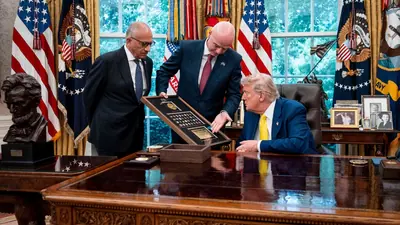
FIFA is facing one of its most significant governance debates in recent years after Carlos Cordeiro, a senior adviser to FIFA president Gianni Infantino, resigned over the governing body’s controversial investment proposal. The disagreement centers on FIFA’s plan to create a new commercial subsidiary valued at approximately $20 billion, allowing private investors to purchase a minority ownership stake in the organization’s commercial rights.
The resignation arrives at a critical moment for world football. FIFA has enjoyed record commercial growth through the expansion of the FIFA World Cup, the Women’s World Cup, and the revamped FIFA Club World Cup. However, the latest proposal has triggered questions about whether football’s governing body should seek outside investment despite already possessing significant financial reserves.
Beyond one executive stepping down, the controversy has opened a broader discussion about the future ownership of football’s commercial rights, financial independence, and governance ahead of FIFA’s next presidential election.
Why Carlos Cordeiro Resigned from FIFA
Carlos Cordeiro announced his resignation after making it clear that he fundamentally disagreed with FIFA’s proposed commercial restructuring.
The former US Soccer president stressed that he had no role in developing the proposal and could not support a plan that involves selling a stake in football’s most valuable commercial assets.
“I cannot stand by while FIFA considers selling a stake in the World Cup.”
Cordeiro argued that football should remain financially independent and questioned why FIFA would seek external capital despite maintaining billions of dollars in financial reserves and operating without debt.
His departure is significant because he was more than an external adviser. Cordeiro represented FIFA on the White House Task Force for the FIFA World Cup and regularly participated in high-level meetings involving FIFA leadership and government officials as preparations continued for future international tournaments.
Understanding FIFA’s Proposed Investment Plan
The proposal involves establishing a separate commercial company responsible for managing FIFA’s most valuable commercial rights.
Those assets include:
- FIFA World Cup commercial rights.
- FIFA Women’s World Cup commercial rights.
- FIFA Club World Cup commercial rights.
- Global sponsorship agreements.
- Broadcasting and licensing opportunities.
According to the proposal, FIFA would retain majority ownership while private investors would acquire a 20 percent stake in the newly created entity.
The commercial business has reportedly been valued at around $20 billion, with FIFA expecting to raise approximately $4.2 billion through the investment.
Why FIFA Wants Outside Investment
Supporters of the proposal argue that modern football has become increasingly competitive from a commercial perspective.
Global sports organizations are investing heavily in technology, digital media, fan engagement, streaming platforms, artificial intelligence, and emerging international markets. Outside investment could provide additional resources to accelerate these projects while allowing FIFA to expand competitions and develop football infrastructure worldwide.
Advocates also believe that separating commercial operations into an independent company could improve efficiency, attract specialized management expertise, and maximize long-term revenue opportunities.
From a business standpoint, the model resembles structures adopted by several major sports leagues and entertainment companies that separate commercial operations from governance responsibilities.
Why Critics Believe the Proposal Is Risky
Opponents argue that football differs fundamentally from traditional commercial businesses because it represents a global public interest rather than a purely profit-driven enterprise.
Cordeiro has become one of the highest-profile critics of the proposal, describing it as a poor financial decision.
“It is mortgaging football’s future without any compelling justification.”
His central argument is straightforward. Since FIFA already maintains substantial financial reserves and carries no debt, there appears to be little financial necessity to permanently sell a share of its most valuable commercial assets.
Critics fear that introducing private investors could gradually increase pressure to prioritize revenue generation over sporting integrity, competition balance, and the long-term interests of football associations.
How Private Equity Has Changed Global Sports
Private equity firms have become increasingly active across global sports over the past decade.
Investment groups have purchased stakes in football clubs, media businesses, motorsport organizations, and commercial rights companies, attracted by growing broadcast revenues and expanding global audiences.
Supporters argue these investments bring:
- Fresh capital for expansion.
- Improved commercial expertise.
- Digital innovation.
- Infrastructure development.
- Global market growth.
However, critics frequently warn that private equity firms typically seek strong financial returns within defined investment periods, creating potential conflicts between commercial objectives and sporting values.
The FIFA debate reflects this wider conversation taking place across international sport.
| Issue | Supporters’ View | Critics’ View |
|---|---|---|
| Outside Investment | Raises capital for growth | Reduces long-term independence |
| Commercial Company | Improves efficiency | Prioritizes profits over football |
| Private Investors | Bring business expertise | Expect financial returns |
| FIFA Financial Position | Additional resources accelerate projects | Existing reserves make investment unnecessary |
Who Is Carlos Cordeiro?
Before joining FIFA in an advisory role, Carlos Cordeiro served as president of the United States Soccer Federation.
His professional background extends beyond football administration. Having spent decades in international banking, he developed extensive experience in finance, investment, and corporate strategy.
That financial expertise has added weight to his criticism of FIFA’s proposal, as his objections focus not only on governance but also on the long-term economic value of football’s commercial rights.
Cordeiro resigned as US Soccer president in 2020 following controversy surrounding the federation’s legal position during the United States women’s national team’s equal-pay lawsuit.
The Political Dimension Behind the Proposal
The investment proposal has attracted additional attention because FIFA identified a New York-based investment firm founded by Joshua Kushner as the lead investor.
Although the proposal remains focused on commercial investment rather than politics, the involvement of a high-profile investment group has increased public interest in the negotiations and prompted closer scrutiny of FIFA’s governance process.
As football’s global governing body continues expanding its commercial ambitions, transparency surrounding major financial decisions is expected to remain an important issue.
Why This Matters Ahead of FIFA’s Presidential Election
The controversy comes as FIFA prepares for its next presidential election.
Gianni Infantino is widely expected to seek another term after more than a decade leading world football’s governing body.
Prospective challengers must submit their nominations before the official deadline later this year, making the investment proposal an issue that could influence campaign discussions about FIFA’s future direction.
Large commercial decisions often become defining governance issues during leadership elections because they shape the organization’s long-term financial strategy.
Potential Impact on Global Football
If approved, the investment proposal could influence how international football generates and manages revenue for decades.
Commercial income supports numerous FIFA initiatives, including:
- Global football development programs.
- Youth competitions.
- Women’s football expansion.
- Infrastructure funding.
- Referee education.
- Member association grants.
Any structural change affecting commercial revenue therefore extends well beyond corporate finance and could eventually influence football development across every continent.
The Bigger Governance Question
Perhaps the most important issue raised by Cordeiro’s resignation is not whether private investment is inherently good or bad. Instead, it highlights the broader challenge facing modern sports organizations.
Football has evolved into one of the world’s largest entertainment industries while simultaneously remaining a global cultural institution. Governing bodies must balance commercial growth with protecting the sport’s traditions, competitive integrity, and independence.
The debate surrounding FIFA’s proposal reflects that delicate balance. Financial innovation may create new opportunities, but it also requires careful consideration of long-term consequences that extend far beyond immediate capital generation.
Conclusion
Carlos Cordeiro’s resignation has transformed FIFA’s commercial restructuring proposal from an internal financial discussion into a global governance debate. His opposition underscores concerns that selling a stake in football’s premier competitions could fundamentally alter how the sport’s commercial future is managed.
Whether FIFA ultimately proceeds with the investment plan or modifies its approach, the discussion has already highlighted the increasing tension between commercial expansion and preserving football’s long-term independence. With a presidential election approaching and scrutiny continuing to grow, the decisions made in the coming months could shape FIFA’s financial model and governance philosophy for years to come.
For breaking news and live news updates, like us on Facebook or follow us on Twitter and Instagram. Read more on Latest Sports on thefoxdaily.com.



COMMENTS 0