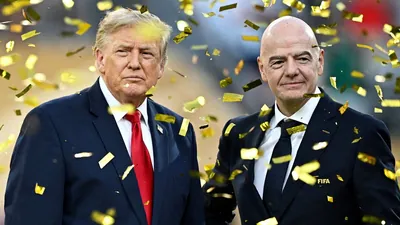
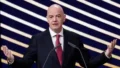
World football is witnessing one of its most significant governance battles in recent years as FIFA President Gianni Infantino faces mounting pressure over a controversial proposal to restructure the commercial rights of the sport’s biggest tournaments. What initially appeared to be an ambitious financial strategy has evolved into a global political and sporting dispute involving football confederations, investors, governments and, according to reports, even US President Donald Trump.
At the centre of the controversy is FIFA’s proposed FIFA Forward Enterprise (FFE), a commercial initiative that sought to unlock billions of dollars in investment by creating a separate entity to manage the commercial rights of competitions such as the FIFA World Cup, FIFA Women’s World Cup and FIFA Club World Cup. While FIFA argued the plan would generate unprecedented funding for football development worldwide, critics warned it could fundamentally change who influences the future of the world’s most popular sport.
As opposition intensified, FIFA was forced to pause the proposal. The debate has now expanded beyond finance, becoming a discussion about governance, transparency, political influence and the future independence of international football.
What Was FIFA’s FIFA Forward Enterprise Proposal?
The FIFA Forward Enterprise proposal represented one of the most ambitious commercial initiatives ever considered by world football’s governing body.
Under the proposal, FIFA would establish a separate commercial company responsible for managing the commercial rights associated with its premier competitions. Rather than selling the tournaments themselves, FIFA intended to sell a minority stake in this new commercial entity to outside investors while maintaining control over football governance and competition management.
The proposal reportedly valued the new business at approximately $20 billion, making it one of the largest commercial ventures in global sports.
The core objectives included:
- Generating long-term investment without relinquishing control of football competitions.
- Increasing financial support for FIFA’s member associations.
- Creating new commercial growth opportunities for global tournaments.
- Expanding football development programs worldwide.
- Strengthening FIFA’s long-term financial sustainability.
FIFA argued that additional investment would significantly increase development funding distributed to national football associations, helping smaller federations improve infrastructure, coaching, youth academies and grassroots participation.
Why the Proposal Became So Controversial
Despite its financial ambitions, the proposal immediately raised concerns among football’s major governing bodies.
Critics questioned whether introducing private investment into FIFA’s commercial structure could gradually shift priorities away from sporting integrity and toward maximizing investor returns.
Several concerns dominated the debate:
| Concern | Why Critics Objected |
|---|---|
| Private Investment | Fear that commercial interests could influence football decisions. |
| Governance | Questions about accountability and long-term control. |
| Transparency | Concerns over consultation with member associations. |
| Sporting Integrity | Risk of financial priorities outweighing football interests. |
| Global Representation | Smaller football nations sought greater involvement before major structural changes. |
Although FIFA repeatedly emphasized that governance would remain entirely under its control, critics argued that external investors could eventually seek greater influence over commercial strategy and tournament expansion.
UEFA Led the Opposition
The strongest resistance came from UEFA, whose member associations collectively opposed the proposal.
European football leaders expressed concern that football’s commercial future should remain under the control of football institutions rather than investment groups.
Reports indicated that all 55 UEFA member associations supported strong action against the proposal, illustrating the depth of opposition within European football.
UEFA’s position reflected a broader philosophy that football should prioritize sporting values over commercial opportunities, even when significant financial rewards are available.
Concacaf and the Asian Football Confederation Also Raised Questions
Opposition was not limited to Europe.
Other major confederations reportedly expressed concerns regarding both the proposal itself and the consultation process leading up to its presentation.
The debate highlighted an increasingly important issue within international football governance: balancing rapid commercial growth with consensus among FIFA’s diverse global membership.
For many football administrators, the process of decision-making became almost as important as the proposal itself.
Why FIFA Eventually Shelved the Plan
As resistance continued to grow across multiple football confederations, FIFA ultimately decided not to proceed with the proposal in its original form.
Although shelving the plan reduced immediate tensions, it also exposed divisions within international football regarding the future commercial direction of the sport.
The decision demonstrated that even FIFA’s leadership faces significant institutional limits when broad consensus cannot be achieved.
Donald Trump’s Reported Support for Gianni Infantino
Amid the growing pressure surrounding Infantino’s leadership, reports have claimed that US President Donald Trump is prepared to support the FIFA president during the crisis.
According to those reports, the relationship between Trump and Infantino has strengthened considerably over recent years, particularly through collaboration connected to the 2026 FIFA World Cup.
The reported support reflects the increasingly close relationship between global sporting events and international politics.
While football governance officially operates independently from national governments, major tournaments frequently involve cooperation between political leaders, host nations and international sporting organizations.
The Trump-Infantino Relationship Explained
Trump and Infantino have maintained a visible relationship since first meeting in 2018.
Over the following years, their cooperation reportedly expanded through discussions involving major FIFA competitions, tournament organization and football’s continued growth in the United States.
The successful staging of the 2026 FIFA World Cup further strengthened that relationship, with reports suggesting both sides viewed the tournament as a landmark event for American football development.
Such relationships are not unusual in international sport, where large-scale tournaments require extensive cooperation between governing bodies and host governments.
The Investment Consortium Behind the Proposal
The commercial proposal also attracted attention because of the investment groups reportedly involved.
The consortium was said to include prominent financial institutions with significant experience in sports and technology investments.
Their involvement highlighted growing investor interest in global sports properties, reflecting a broader trend across international football, Formula One, golf and other major competitions.
Sports organizations increasingly recognize that media rights, digital platforms and global fan engagement have transformed elite competitions into valuable long-term investment opportunities.
How Commercial Investment Is Changing Global Sport
Football is not the only sport experiencing increased interest from private investment.
Across the sporting landscape, investors have acquired stakes in clubs, leagues and media businesses.
| Trend | Impact on Sport |
|---|---|
| Private Equity Investment | Greater commercial expansion opportunities. |
| Digital Media Growth | Higher global broadcasting revenues. |
| International Sponsorship | Expanded commercial partnerships. |
| Infrastructure Investment | Improved stadiums and fan experiences. |
Supporters argue that responsible investment accelerates growth, while critics believe excessive commercialization risks undermining sporting traditions.
Why FIFA Governance Matters Beyond Football
FIFA is more than the organizer of the World Cup.
Its decisions influence football development in more than 200 member associations, affecting youth football, women’s football, coaching education, infrastructure projects and international competitions.
As a result, leadership decisions inside FIFA often carry consequences far beyond elite professional football.
Questions surrounding governance, transparency and accountability therefore attract global attention from governments, commercial partners and supporters alike.
What Happens Next?
With the commercial proposal now paused, attention shifts to FIFA’s next steps.
The organization may eventually revisit elements of commercial restructuring after broader consultation with its member associations. Any future proposal is likely to involve greater transparency, additional stakeholder engagement and clearer governance safeguards.
For Gianni Infantino, the immediate challenge is restoring confidence among football’s major confederations while demonstrating that FIFA can pursue commercial growth without compromising sporting independence.
What This Means for the Future of the World Cup
The controversy is unlikely to affect the scheduling or organization of upcoming FIFA tournaments in the short term. However, it has sparked an important global conversation about how football should finance its future.
As broadcasting markets evolve and competition for global audiences intensifies, FIFA will continue exploring new commercial opportunities. The challenge will be balancing financial innovation with the values that have made the World Cup the world’s most celebrated sporting event.
Expert Insight: The Bigger Governance Challenge
The current debate highlights a broader issue facing modern sport. International governing bodies increasingly require larger financial resources to expand competitions, invest in grassroots development and meet growing operational costs.
At the same time, supporters, clubs and football associations expect transparency, democratic decision-making and protection of sporting integrity.
Successfully balancing these competing priorities will define not only FIFA’s future but also the future governance models of international sport.
Conclusion
The reported involvement of Donald Trump in supporting Gianni Infantino has added a political dimension to an already complex FIFA governance crisis. While the immediate controversy centres on the abandoned FIFA Forward Enterprise proposal, the underlying issues extend far beyond one commercial initiative.
The debate has exposed fundamental questions about who should shape football’s future, how the sport should generate new revenue and what safeguards are necessary to preserve its independence. Whether FIFA eventually revives a revised commercial strategy or pursues a different path altogether, the decisions made over the coming months could influence the governance and financial structure of world football for years to come.
For breaking news and live news updates, like us on Facebook or follow us on Twitter and Instagram. Read more on Latest Sports on thefoxdaily.com.


COMMENTS 0