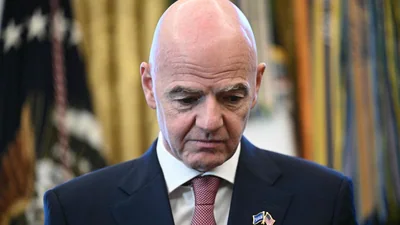
Gianni Infantino FIFA presidency is facing one of its most challenging moments since he took office in 2016. A proposal to introduce private investment into FIFA’s commercial business has evolved into a broader debate about governance, consultation, and trust within world football. Although FIFA has withdrawn the proposal, the political fallout continues to dominate discussions across the global game.
The controversy is no longer solely about financial restructuring. It has become a test of leadership, institutional credibility, and the relationship between FIFA and its continental confederations ahead of the next FIFA presidential election.
Why FIFA’s Investment Proposal Triggered Global Opposition
The now-withdrawn proposal sought to establish a separate commercial entity responsible for managing the business rights of FIFA’s flagship competitions, including the men’s and women’s FIFA World Cups. The objective was to attract outside investment while allowing FIFA to generate additional capital for football development programs.
Supporters argued that private investment could unlock new financial opportunities and expand global football development. However, critics feared that introducing external investors into football’s commercial structure could reduce transparency and shift priorities toward financial returns rather than sporting development.
As opposition grew across multiple confederations, FIFA ultimately decided to abandon the initiative.
UEFA Delivers Its Strongest Criticism of Infantino’s Leadership
Following the withdrawal of the proposal, UEFA welcomed FIFA’s decision but simultaneously issued one of the strongest public statements directed at the organization’s leadership in recent years.
The European governing body argued that the controversy reflected deeper governance issues rather than simply a disagreement over one commercial proposal. UEFA emphasized that major decisions affecting global football should involve meaningful consultation with member associations and continental confederations.
“The current FIFA leadership has not only lost UEFA’s confidence but also that of many other members of the football family.”
The statement immediately intensified speculation about FIFA’s internal politics and the future of its leadership.
Timeline of the FIFA Governance Controversy
| Stage | Key Development | Outcome |
|---|---|---|
| Investment Proposal | FIFA introduced plans for a new commercial entity involving private investment. | Initial financial restructuring proposal. |
| Confederation Opposition | UEFA, Concacaf, and AFC expressed strong concerns. | Growing international resistance. |
| Proposal Withdrawn | FIFA officially abandoned the investment initiative. | Immediate proposal cancelled. |
| Governance Debate | UEFA called for accountability and governance reforms. | Leadership scrutiny intensified. |
| Presidential Election Focus | Attention shifted toward FIFA’s upcoming presidential election. | Political uncertainty increased. |
Why Governance Has Become the Central Issue
Modern football generates billions of dollars through broadcasting rights, sponsorships, licensing, ticket sales, and commercial partnerships. Because of the enormous financial value attached to global competitions, governance has become just as important as sporting success.
National associations, clubs, players, sponsors, and supporters all expect major decisions to be made transparently and through broad consultation. When confidence in governance processes weakens, disagreements can quickly escalate into institutional conflicts.
The current debate illustrates that Football Governance is increasingly judged not only by outcomes but also by how decisions are reached.
How the Controversy Could Influence FIFA’s Future
Although FIFA withdrew the proposal, the discussion surrounding governance reforms is unlikely to disappear. Instead, the controversy may encourage broader conversations about financial oversight, stakeholder consultation, and institutional accountability.
Several important questions now dominate football administration:
- How should major commercial reforms be approved?
- What role should continental confederations play in future decision-making?
- How can FIFA strengthen transparency while maintaining operational efficiency?
- Should existing financial reserves be used differently to support football development?
The answers to these questions could influence football governance well beyond the current dispute.
The Significance of the FIFA Presidential Election
Attention has naturally shifted toward the next FIFA presidential election. Leadership contests often become opportunities for member associations to evaluate not only past achievements but also future priorities.
While Gianni Infantino has overseen several major initiatives during his presidency, the latest controversy has introduced greater uncertainty into the political landscape than previously existed.
Whether additional candidates formally emerge or not, governance, transparency, and financial management are now expected to become central themes of the upcoming election cycle.
Understanding FIFA’s Global Voting Structure
One unique aspect of FIFA’s governance is its one-member, one-vote electoral system. Every national football association has equal voting power regardless of size or commercial influence.
This structure means that presidential elections are shaped by support from associations across every continent rather than solely by football’s largest markets.
As a result, political discussions inside FIFA often extend far beyond Europe, making global consensus essential for long-term institutional stability.
What This Means for Football Fans
For supporters, governance debates may seem distant from the action on the pitch. However, administrative decisions influence almost every aspect of modern football.
- Distribution of development funding.
- Investment in grassroots football.
- Commercial rights management.
- Growth of women’s football.
- Support for national associations.
- Long-term planning of international competitions.
Strong governance helps ensure that football revenues are reinvested into developing the sport rather than creating unnecessary institutional conflicts.
Can FIFA Rebuild Trust?
With the investment proposal withdrawn, FIFA now faces the challenge of rebuilding confidence among its stakeholders. Greater consultation, clearer communication, and transparent governance processes are likely to become increasingly important in future reforms.
At the same time, continental confederations will continue advocating for stronger participation in decisions that shape the global football calendar and commercial landscape.
The current situation may ultimately encourage more collaborative decision-making across world football, reducing the likelihood of similar disputes in the future.
Conclusion
The collapse of FIFA’s private investment proposal has evolved into one of the most significant governance debates of Gianni Infantino’s presidency. UEFA’s public criticism has intensified scrutiny of leadership, transparency, and institutional accountability, ensuring that football governance will remain under the spotlight in the months ahead.
Although FIFA’s proposal has been withdrawn, the wider conversation is far from over. As the organization prepares for its next presidential election and considers future reforms, restoring trust among member associations, confederations, and stakeholders will be just as important as managing the world’s biggest football tournaments. The outcome of these discussions could shape the direction of global football for years to come.
For breaking news and live news updates, like us on Facebook or follow us on Twitter and Instagram. Read more on Latest Sports on thefoxdaily.com.





COMMENTS 0