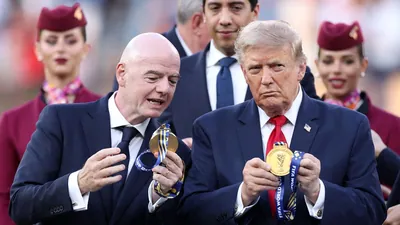
The FIFA World Cup investment plan has become one of the most controversial developments in international football. FIFA’s proposal to create a commercial entity valued at approximately $20 billion and invite outside investors has triggered fierce opposition from UEFA, raising concerns about football governance, transparency, and the long-term future of the world’s most prestigious sporting event.
The proposal goes far beyond a financial restructuring. It has opened a wider debate over who should control football’s biggest tournaments, how commercial revenues should be distributed, and whether global football can balance financial growth with the traditions that have made the FIFA World Cup the most watched sporting competition on the planet.
What Is FIFA’s New Commercial Proposal?
FIFA plans to establish a separate commercial enterprise responsible for managing the business operations of its major tournaments, including the men’s and women’s FIFA World Cups. The governing body intends to sell minority stakes in this business while maintaining overall control over football governance, competition rules, scheduling, and sporting decisions.
The objective is to unlock billions of dollars in fresh investment that could accelerate commercial expansion, improve tournament operations, and significantly increase funding distributed to football associations worldwide.
According to FIFA, the proposal is designed to create long-term financial sustainability without transferring control of the sport itself.
Why UEFA Is Strongly Opposed
UEFA believes the proposal represents a fundamental shift in football’s governance model. European football leaders argue that introducing private investment into the commercial engine behind the World Cup creates risks that extend well beyond finance.
The concerns include:
- Reduced transparency over investor influence.
- Potential conflicts between commercial objectives and sporting integrity.
- Pressure to maximize profits through expanded tournaments or additional competitions.
- Long-term dependence on external investors.
- Loss of trust among national football associations.
For UEFA, football is viewed as a global public institution rather than a commercial asset. The organization argues that decisions affecting the World Cup should prioritize sporting values instead of investment returns.
Could UEFA Really Boycott the FIFA World Cup?
Although no final decision has been made, UEFA is reportedly considering every available option, including the possibility of a World Cup boycott if negotiations fail.
A European boycott would be unprecedented in modern football. UEFA member nations consistently produce many of the strongest teams in international competition, making their participation essential to the tournament’s sporting quality, commercial appeal, television audiences, and sponsorship value.
Even the discussion of a boycott highlights the seriousness of the current dispute.
Background: FIFA and UEFA Have Clashed Before
The latest disagreement is not an isolated incident. Over the past decade, FIFA and UEFA have repeatedly disagreed on several major issues involving the international football calendar and competition formats.
Some previous areas of conflict include:
- Expansion of the FIFA Club World Cup.
- Proposal for a biennial FIFA World Cup.
- International match scheduling.
- Player workload concerns.
- Commercial rights and tournament revenues.
Many observers see the current investment proposal as another chapter in the broader struggle over who should shape football’s future.
How FIFA Plans to Use the Investment
FIFA argues that additional funding would strengthen football development worldwide rather than simply increasing profits.
One of the central promises involves substantially increasing financial support for member associations through expanded development programs. Smaller football nations that often struggle with infrastructure, youth academies, coaching education, and women’s football could receive significantly higher funding than under current arrangements.
FIFA believes stronger financial support will reduce inequality between wealthy football nations and developing federations.
Potential Benefits of the Proposal
Supporters believe the commercial restructuring could generate several long-term advantages.
- Greater investment in grassroots football.
- Improved football infrastructure globally.
- Enhanced women’s football development.
- Modernization of digital broadcasting and fan engagement.
- Financial stability for emerging football nations.
If managed responsibly, the additional capital could accelerate football development in regions that have historically received limited investment.
Why Critics Remain Concerned
Despite FIFA’s assurances, critics argue that outside investors naturally seek financial returns. Over time, this could influence commercial priorities even if sporting decisions technically remain under FIFA’s control.
Potential risks include:
- Higher ticket prices.
- Increasing commercialization of tournaments.
- Greater emphasis on sponsorship revenue.
- Expanded competition formats primarily for financial reasons.
- Reduced influence of national football associations.
Football historians also warn that introducing investment structures into global governing bodies could permanently change how international tournaments are managed.
How the 2026 FIFA World Cup Changed Football Economics
The commercial debate has intensified following the remarkable financial success of the 2026 FIFA World Cup hosted across the United States, Canada, and Mexico.
Record-breaking attendance, premium hospitality packages, global sponsorship growth, and expanding digital audiences demonstrated the enormous commercial value of the tournament.
That financial success has encouraged FIFA to explore new ways of monetizing its competitions while demand from institutional investors for premium sports assets continues to grow worldwide.
The Growing Trend of Investment in Global Sports
Football is not the only sport attracting institutional investment. Around the world, private equity firms and investment groups have increased their presence across major leagues and sporting organizations.
Recent years have seen investments across:
- European football leagues.
- Formula One.
- Professional golf.
- Basketball.
- Cricket franchises.
This broader trend reflects the increasing value of sports media rights, streaming platforms, global sponsorships, and international fan engagement.
However, governing bodies remain different from domestic leagues because they oversee the rules and integrity of the sport itself, making investment decisions considerably more sensitive.
Comparison: FIFA’s Position vs UEFA’s Position
| Issue | FIFA’s View | UEFA’s View |
|---|---|---|
| Commercial Investment | Unlock long-term growth | Creates governance risks |
| Revenue Distribution | Increase funding globally | Needs greater transparency |
| Investor Participation | Minority ownership only | May influence future decisions |
| Football Governance | FIFA retains full control | Commercial pressure could grow over time |
| Long-Term Vision | Expand global football | Protect football’s independence |
What This Means for Fans
For supporters, the dispute may appear to involve boardroom politics, but its consequences could eventually affect the fan experience.
Future decisions regarding tournament expansion, ticket pricing, broadcasting models, sponsorship integration, scheduling, and competition formats may all be influenced by the outcome of this debate.
Fans ultimately care most about competitive football, affordable access, and preserving the unique atmosphere that has defined the FIFA World Cup for generations.
The Bigger Governance Question
Beyond investment itself lies a larger question facing global sport: how should governing bodies finance future growth without compromising independence?
Modern football generates enormous commercial revenue, but expectations continue to rise. Infrastructure, technology, women’s football, youth development, sustainability initiatives, and global expansion all require significant funding.
The challenge is finding a model that balances commercial innovation with sporting integrity.
What Happens Next?
The coming months are expected to be crucial. UEFA’s discussions with its member associations could determine whether opposition remains symbolic or evolves into coordinated action.
Meanwhile, FIFA will likely continue engaging national associations to build support by emphasizing increased development funding and continued control over football governance.
Much will depend on whether additional transparency, governance safeguards, or structural changes are introduced before any final approval process.
Why This Debate Could Shape Football for Decades
The FIFA World Cup has always been more than a tournament—it is one of the world’s most influential sporting institutions. Decisions made today regarding its commercial structure may define how football is governed for decades to come.
If the investment model succeeds while preserving independence, it could become a blueprint for other international sports organizations. If it fails to gain trust among football’s major stakeholders, it may deepen divisions between FIFA and UEFA while delaying future commercial reforms.
Either outcome will influence not only administrators and investors but also players, clubs, broadcasters, sponsors, and billions of football supporters across the globe.
Conclusion
The controversy surrounding FIFA’s proposed World Cup investment plan highlights the growing tension between commercial opportunity and sporting tradition. FIFA sees private investment as a pathway to expanding football worldwide and increasing support for member associations, while UEFA fears that introducing outside investors risks undermining the independence and values that have defined the game for generations.
As discussions continue, football stands at a defining crossroads. Whether the proposal is ultimately approved, modified, or rejected, the debate has already raised fundamental questions about who should shape the future of the world’s most popular sport—and how that future can balance financial innovation with the integrity that fans expect from the FIFA World Cup.
For breaking news and live news updates, like us on Facebook or follow us on Twitter and Instagram. Read more on Latest Sports on thefoxdaily.com.



COMMENTS 0