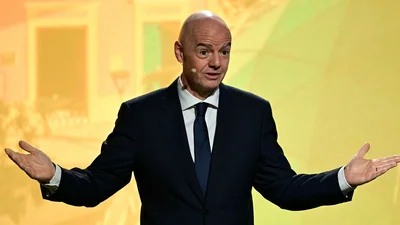
UEFA‘s criticism of FIFA President Gianni Infantino has sparked one of the biggest governance controversies in world football in recent years. Although FIFA has officially withdrawn its proposal to bring private investment into the commercial rights of its flagship competitions, the decision has done little to ease tensions between football’s governing bodies. Instead, UEFA has questioned FIFA’s leadership, accusing it of failing to uphold promises of transparency and accountability.
The dispute extends far beyond a single financial proposal. It reflects an ongoing debate about who should control football’s commercial future, how revenues should be distributed, and whether the sport’s biggest decisions are being made in the best interests of players, clubs, associations, and supporters.
Why FIFA’s Private Investment Proposal Became So Controversial
The proposal centered on creating a new commercial entity reportedly valued at around USD 20 billion to manage the commercial rights of FIFA’s premier competitions, including the FIFA World Cup. Under the plan, a minority stake would have been offered to private investors in exchange for significant financial backing.
Supporters viewed the proposal as an opportunity to unlock new revenue streams and accelerate investment in football development. Critics, however, feared it would introduce greater commercial influence into decisions that should remain focused on the sport itself.
The backlash from multiple football confederations eventually led FIFA to withdraw the proposal before it could move forward.
UEFA’s Strong Response to FIFA Leadership
Despite welcoming FIFA’s decision to abandon the investment plan, UEFA issued one of its strongest public statements in years. The European governing body argued that the issue was no longer simply about the proposal itself but about the way it was developed and presented.
According to UEFA, major decisions affecting global football require meaningful consultation with member associations and confederations rather than rapid decision-making behind closed doors.
“The current FIFA leadership has not only lost UEFA’s confidence but also that of many other members of the football family.”
The statement represents a significant escalation in the relationship between football’s two most influential governing organizations.
What UEFA Accused Gianni Infantino Of
UEFA referred to promises made by Gianni Infantino when he first became FIFA President in 2016, particularly his commitments regarding transparency and responsible financial management.
The governing body argued that the abandoned proposal contradicted those earlier commitments and questioned whether FIFA had adequately consulted stakeholders before attempting to move forward.
UEFA also highlighted FIFA’s substantial financial reserves, suggesting that additional private investment was unnecessary if existing resources were managed more effectively for football development.
Timeline of the FIFA Investment Proposal
| Stage | Development | Impact |
|---|---|---|
| Proposal Introduced | FIFA explored creating a commercial entity with private investment. | Raised concerns across international football. |
| Confederation Opposition | UEFA, AFC and CONCACAF publicly opposed the proposal. | Pressure increased on FIFA leadership. |
| Proposal Withdrawn | FIFA abandoned the investment initiative. | Immediate controversy eased but governance concerns remained. |
| UEFA Statement | UEFA demanded greater accountability and governance reforms. | Relationship between FIFA and UEFA became increasingly strained. |
Why Governance Matters in Modern Football
Football has evolved into a multi-billion-dollar global industry. Major tournaments generate enormous broadcasting, sponsorship, ticketing, and commercial revenues. As financial stakes increase, governance becomes equally important.
Transparent decision-making helps ensure that revenues benefit every level of football, from grassroots development to elite international competitions. When stakeholders believe decisions are being made without sufficient consultation, confidence in governing institutions can quickly decline.
That is why UEFA’s criticism focuses not only on the investment proposal itself but also on the decision-making process behind it.
Financial Debate: Investment Versus Existing Resources
One of UEFA’s strongest arguments concerns FIFA’s financial position. The organization believes that with substantial existing reserves, football’s governing body already possesses enough resources to strengthen development programs without introducing private investors.
UEFA instead proposed improving the distribution of funds through existing development mechanisms, particularly programs designed to support football associations around the world.
The debate therefore becomes less about raising additional money and more about how current financial resources should be allocated.
Global Football’s Power Balance Is Being Tested
The disagreement also reflects the broader balance of power within international football. FIFA oversees the global game, while continental confederations such as UEFA manage competitions and development across their respective regions.
Whenever major commercial or structural reforms are proposed, cooperation between these organizations becomes essential. The latest dispute demonstrates how difficult that cooperation can become when stakeholders disagree over priorities and governance.
Although FIFA has withdrawn the proposal, rebuilding trust may require greater collaboration before future reforms are introduced.
Potential Impact on Fans, Clubs and National Associations
For supporters, the controversy may appear to be an administrative disagreement. However, governance decisions often influence the long-term direction of football.
- Commercial rights determine how tournaments are marketed and broadcast.
- Financial decisions influence investment in youth football and grassroots programs.
- Governance reforms affect how national associations receive funding.
- Transparency strengthens confidence among clubs, sponsors, and supporters.
Because of these factors, debates surrounding football governance can ultimately shape the sport at every level.
What Happens Next?
UEFA has announced that it will work alongside member associations and other football confederations to examine how the proposal emerged and recommend governance improvements.
The organization has also called for stronger consultation mechanisms before major financial initiatives are considered in the future. Whether FIFA embraces those recommendations could play a significant role in repairing relations with its continental partners.
Future discussions are likely to focus on financial transparency, governance reforms, resource distribution, and the role of member associations in shaping football’s long-term strategy.
Conclusion
UEFA’s public criticism of FIFA President Gianni Infantino marks a significant moment in modern football governance. Although FIFA’s decision to withdraw its controversial private investment proposal prevented a larger structural change, it also exposed deep divisions over leadership, transparency, and financial management.
The coming months will determine whether both organizations can rebuild trust through greater cooperation and accountability. While the immediate proposal has been abandoned, the wider conversation about how global football should be governed—and who should influence its future—has only just begun.
For breaking news and live news updates, like us on Facebook or follow us on Twitter and Instagram. Read more on Latest Sports on thefoxdaily.com.




COMMENTS 0