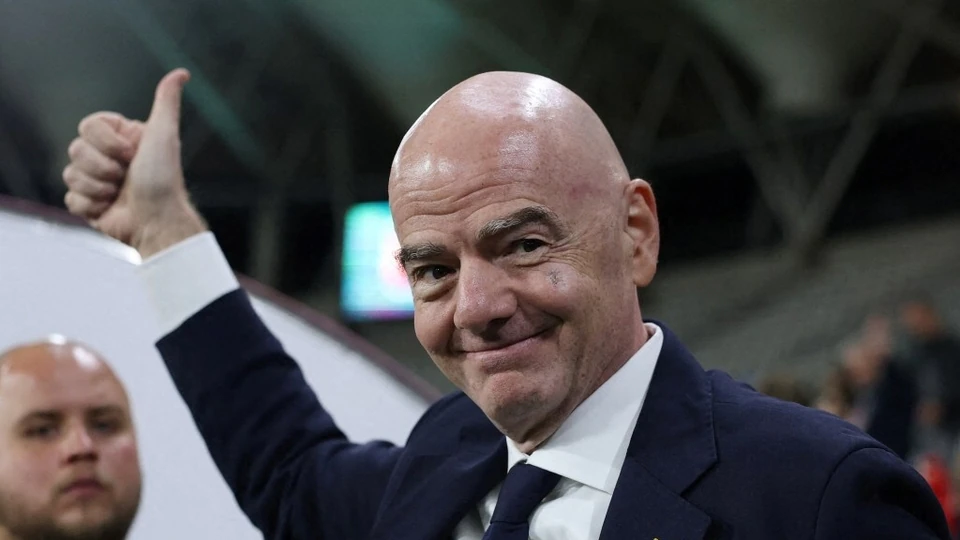
FIFA president Gianni Infantino is making another push to strengthen his position within international football after facing criticism over a controversial proposal to privatize part of the organization’s World Cup commercial rights.
During a meeting of FIFA’s top council in Zurich, Switzerland, Infantino addressed the backlash surrounding FIFA Forward Enterprise, a proposed project involving Joshua Kushner that reportedly collapsed following widespread criticism over the summer.
Infantino offered an apology to council members but continued to defend the proposal, arguing that it could have benefited FIFA’s member associations. He also emphasized that the project had only ever been a proposal, a position that reportedly left several council members dissatisfied.
Despite the controversy, Infantino retains substantial support across Africa, Asia and South America. With FIFA’s next presidential election approaching in March and no serious challenger having emerged, the Swiss administrator appears determined to maintain his influence by offering member associations additional financial support.
Gianni Infantino Addresses FIFA Forward Enterprise Controversy
The latest meeting of the FIFA Council in Zurich marked the first gathering of the organization’s top decision-making body since the collapse of Infantino’s controversial FIFA Forward Enterprise proposal.
The initiative, which involved Joshua Kushner, sparked criticism over plans to privatize part of the commercial rights associated with the FIFA World Cup. The backlash created an uncomfortable situation for Infantino, who faced questions about the proposal and its potential implications for the governing body and its members.
During the meeting, Infantino apologized but stopped short of completely abandoning his defense of the project. He presented his arguments for why the proposal could have represented a beneficial financial arrangement for FIFA’s member associations.
He also maintained that FIFA Forward Enterprise had been a proposal rather than a finalized agreement. However, that explanation did little to satisfy some council members who wanted clearer answers about the initiative and how it had been developed.
The controversy has become a significant challenge for Infantino as he seeks to maintain confidence among FIFA’s leadership and its 211 member associations.
German Football Chief Says Answers Were Unsatisfactory
Infantino’s explanation failed to convince every member of the FIFA Council. Bernd Neuendorf, head of the German Football Association, expressed dissatisfaction with the responses provided during the meeting.
“No satisfactory answers were provided,” Neuendorf told reporters.
The comments reflected the continuing concerns surrounding the proposal and the questions facing FIFA’s leadership following its collapse.
For Infantino, the challenge is to address those concerns without allowing the controversy to undermine his broader political standing within international football. Although critics have questioned the initiative, the extent to which the dispute will affect his presidential ambitions remains uncertain.
The episode also highlights the difficulties facing FIFA as it balances commercial opportunities, financial transparency and the interests of its diverse membership.
Infantino Retains Strong Support Ahead of FIFA Presidential Election
Despite the criticism, Infantino remains in a powerful position ahead of FIFA’s next presidential election, scheduled for March.
Much of the opposition to his leadership has reportedly come from Europe and North America. However, criticism from those regions alone may not be sufficient to remove him, given his substantial support base across Africa, Asia and South America.
FIFA represents 211 member associations, and maintaining support across that broad membership is central to any presidential campaign. Infantino has spent years building relationships with national football federations, particularly through initiatives intended to increase funding and expand the game internationally.
At 56, the Swiss administrator continues to benefit from the absence of a serious rival. No major challenger has yet emerged for the upcoming election, while the deadline for presidential nominations is November 18.
That situation gives Infantino an opportunity to strengthen his position before the campaign formally takes shape. Nevertheless, the FIFA Forward Enterprise controversy could remain a point of discussion among those seeking greater accountability from the organization’s leadership.
FIFA Offers Member Associations an Additional $15 Million
As criticism over the failed proposal continues, Infantino is turning to a familiar strategy to maintain support: promising additional funding for football development.
His latest offer involves providing each FIFA member association with an additional $15 million to support the development of the game around the world.
The proposed increase is intended to reinforce FIFA’s commitment to helping national federations improve football infrastructure, expand participation and strengthen their domestic programmes.
Financial assistance has long been an important part of FIFA’s relationship with its member associations. For smaller federations in particular, international funding can play a significant role in supporting development programmes and improving access to the sport.
Infantino’s latest proposal follows the same approach that has helped him cultivate relationships across the global football community. By offering more financial resources, he is seeking to reinforce the benefits of FIFA membership while navigating criticism over his leadership.
However, the effectiveness of the offer will depend on the details of the funding plan, how the money is distributed and the extent to which the proposal addresses the priorities of individual federations.
Why the FIFA Funding Strategy Matters
FIFA’s financial support programmes are an important component of its international development strategy. The organization oversees football across countries with widely differing financial resources, infrastructure and opportunities for participation.
Additional funding can help national associations invest in facilities, coaching, youth development and other initiatives intended to grow the game. Such support can be particularly valuable for federations that have limited domestic revenue streams.
For Infantino, however, the proposed $15 million increase also carries political significance. Financial commitments to member associations can strengthen relationships and demonstrate the tangible benefits of his administration.
The strategy is not new in international football, but it remains influential. With the presidential election approaching, the funding proposal could become an important part of Infantino’s efforts to secure continued support.
At the same time, the controversy surrounding FIFA Forward Enterprise illustrates why financial decisions can attract scrutiny. Member associations and critics may want greater clarity about how commercial proposals are developed and how FIFA evaluates potential partnerships.
FIFA Leadership Faces Questions Over Transparency and Accountability
The fallout from FIFA Forward Enterprise has renewed attention on the decision-making processes within football’s global governing body.
Although Infantino insists the project was only a proposal, critics may continue to seek more information about its development, the reasoning behind it and the circumstances that led to its collapse.
The reaction from Neuendorf suggests that at least some officials remain unconvinced by the explanations offered during the council meeting. Their concerns could keep the issue alive as FIFA prepares for its next presidential election.
For Infantino, the immediate priority is likely to be maintaining unity within the organization while demonstrating that FIFA’s financial and development programmes continue to benefit its members.
The coming months will show whether the controversy has a lasting effect on his standing or whether his existing international support network remains strong enough to carry him through the election campaign.
The Bigger Picture: Infantino’s Position in World Football
Infantino’s latest effort to win support highlights the political and financial realities of leading FIFA. The organization must manage major commercial properties, including the World Cup, while responding to the needs of hundreds of national football associations.
His administration has emphasized development funding and expanding opportunities for football around the world. Those initiatives have helped him cultivate relationships with federations beyond the traditional power centres of European and North American football.
However, the FIFA Forward Enterprise controversy demonstrates that commercial proposals can become politically sensitive when questions arise about their structure, transparency or potential consequences.
Infantino’s challenge is to persuade FIFA’s members that his leadership continues to serve their interests while addressing concerns raised by critics. The additional funding offer may help strengthen his position, but it does not automatically resolve the questions surrounding the abandoned proposal.
Other Major Sports Stories to Follow
Beyond FIFA’s internal politics, several major developments are attracting attention across the global sporting landscape.
Los Angeles Dodgers Face Questions About Their Future
The Los Angeles Dodgers are confronting questions about their long-term prospects after being swept by the Milwaukee Brewers in the National League Championship Series. Despite their financial resources, the Dodgers must consider the effects of an ageing roster and determine how best to remain competitive.
Jake Bauers Emerges as a Key Figure for the Brewers
Milwaukee Brewers player Jake Bauers has become an important figure in the team’s postseason story after previously considering retirement. His emergence reflects the determination and resilience that have helped Milwaukee challenge expectations.
Milwaukee Brewers Find Success Without Relying on Home Runs
In a baseball era frequently dominated by power hitting, the Brewers have developed an approach that emphasizes persistence and pressure on opposing pitchers. Their style has helped propel them towards a potential World Series appearance.
Angel Reese’s Move to Atlanta Changes Her WNBA Season
Angel Reese’s move from the Chicago Sky to the Atlanta Dream has become a major storyline in the WNBA. After a frustrating period in Chicago, the former LSU star has helped put Atlanta in contention for the franchise’s first championship.
NFL Teams Continue to Debate Overtime Strategy
NFL coaches continue to face difficult decisions over whether to kick or receive at the beginning of overtime under the league’s rules. The debate highlights the strategic challenges teams face when attempting to maximize their chances of winning close games.
Jon Rahm Leaves LIV Golf Amid Questions About His Future
Jon Rahm’s reported decision to give up more than $100 million to leave LIV Golf has raised questions about his next career move. Despite being a former Masters champion, the Spaniard still faces uncertainty over whether and when he could return to the PGA Tour.
Conclusion
Gianni Infantino is making another effort to consolidate his position as FIFA president after the collapse of the controversial FIFA Forward Enterprise proposal. Although he apologized during the latest FIFA Council meeting, his continued defense of the initiative left some officials dissatisfied.
With the next presidential election approaching in March, Infantino is relying on a familiar strategy: offering member associations additional financial support. His proposal to provide each federation with another $15 million could strengthen relationships across FIFA’s global membership.
Infantino continues to enjoy substantial support in Africa, Asia and South America, while no serious challenger has emerged ahead of the November 18 nomination deadline. However, criticism over the failed commercial proposal could remain a challenge as the election approaches.
Ultimately, the controversy presents Infantino with a test of leadership and accountability. His ability to reassure FIFA’s members, explain the failed initiative and maintain confidence in his development agenda could prove crucial to his efforts to secure another term.
For breaking news and live news updates, like us on Facebook or follow us on Twitter and Instagram. Read more on Latest Sports on thefoxdaily.com.





COMMENTS 0