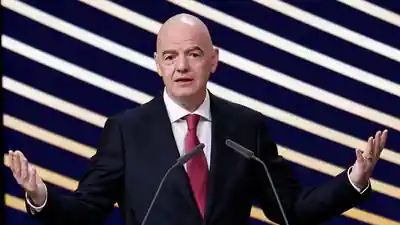
FIFA World Cup investment plan has become one of the most controversial topics in global football after reports emerged that FIFA is exploring the sale of a minority stake in the commercial rights of its flagship tournament. The proposal, reportedly designed to generate billions of dollars through private investment, has prompted sharp criticism from national associations, continental confederations, and political leaders who argue that decisions affecting football’s biggest competition should follow transparent governance and extensive consultation.
The criticism is not centered solely on the financial proposal itself. Instead, much of the opposition stems from how the reported plan surfaced. Several of football’s most influential organizations stated they first learned about the proposal through media reports rather than through FIFA’s internal governance channels, raising fresh questions about decision-making at the highest level of world football.
What Is FIFA’s Proposed Investment Plan?
According to reports, FIFA is considering establishing a new commercial entity that would manage certain commercial rights linked to the FIFA World Cup. The proposed venture, reportedly referred to as FIFA Forward Enterprise, would assign a significant commercial valuation to the tournament before offering a minority ownership stake to private investors.
The reported objective is to generate billions of dollars in fresh investment while expanding FIFA’s financial resources for future football development projects and member associations.
Although the proposal remains subject to further discussion and approval, it has already become one of the most debated commercial initiatives in football history.
Why Football Authorities Are Objecting
The strongest criticism has focused less on private investment itself and more on governance.
Leading football organizations argue that a proposal capable of reshaping the commercial future of the World Cup should have been presented to stakeholders before becoming public.
- Concerns over transparency.
- Limited consultation with stakeholders.
- Questions regarding governance procedures.
- Uncertainty over future commercial control.
- Lack of detailed financial information.
Several governing bodies emphasized that football’s most valuable competition belongs to the global football community rather than any individual institution.
England’s Football Association Questions the Process
The Football Association expressed disappointment after stating that it had received no detailed explanation of the reported proposal before media coverage emerged.
The governing body indicated that it remained unaware of the proposal’s structure, financial conditions, and long-term implications.
Officials stressed that decisions involving the future commercial direction of football require proper governance, meaningful consultation, and full transparency before advancing to formal consideration.
“We are deeply concerned about the lack of process and governance.”
The statement reflected broader concerns that football institutions should be fully informed before proposals of such significance enter the public domain.
UEFA Delivers Its Strongest Criticism
Among all football organizations responding to the reports, UEFA issued one of the strongest objections.
Europe’s governing body argued that football’s governance should never become subject to commercial transactions without broad stakeholder agreement.
Its response emphasized that football’s traditions, governance, and integrity should remain protected regardless of financial opportunities.
“The soul and governance of football are not assets to trade.”
The statement illustrates growing concern that commercial expansion should not compromise the principles that have historically guided international football.
CONCACAF and AFC Echo Similar Governance Concerns
Opposition has not been limited to Europe.
Both CONCACAF and the Asian Football Confederation also questioned the reported lack of prior consultation.
Officials argued that proposals capable of changing football’s commercial future should involve comprehensive engagement with confederations, national associations, leagues, and other stakeholders before formal announcements are made.
The similar responses from multiple continents demonstrate that concerns extend beyond regional politics and instead focus on governance standards.
Could Private Investment Change the FIFA World Cup?
One of the biggest questions raised by analysts is how private investment could influence future decisions surrounding the World Cup.
While no such changes have been announced, critics fear that commercial investors could eventually favor measures designed to increase revenue.
Potential concerns discussed by football observers include:
- Expansion of tournament formats.
- Increasing the number of participating teams.
- More frequent editions of the competition.
- Greater emphasis on commercial scheduling.
- Higher pressure to maximize broadcasting revenue.
Supporters of the proposal argue that additional investment could strengthen football development worldwide, while critics warn that commercial priorities must never outweigh sporting integrity.
The Balance Between Commercial Growth and Sporting Tradition
Football has evolved into one of the world’s largest entertainment industries, generating billions of dollars through broadcasting rights, sponsorships, ticket sales, and digital media.
As commercial revenues continue growing, governing bodies increasingly face the challenge of balancing financial expansion with the traditions that make competitions like the FIFA World Cup unique.
Finding that balance has become one of modern football’s most important governance challenges.
| Potential Benefits | Potential Concerns |
|---|---|
| Additional investment for football development. | Reduced stakeholder influence. |
| Greater financial stability. | Commercial pressure on tournament decisions. |
| Expanded funding opportunities. | Governance transparency questions. |
| Support for member associations. | Long-term ownership concerns. |
Political Reaction Adds Another Dimension
The debate has expanded beyond football administration into political discussion.
Public figures have argued that the FIFA World Cup represents far more than a commercial property. Instead, they describe it as a global sporting institution built through generations of players, supporters, national associations, and international competition.
These reactions demonstrate how decisions involving the World Cup often attract attention well beyond the football community.
Why Governance Matters in Global Football
International football operates through cooperation between FIFA, continental confederations, national associations, leagues, clubs, players, sponsors, and supporters.
Because so many stakeholders contribute to the game’s success, governance experts generally emphasize consultation before implementing major structural changes.
Transparent decision-making helps maintain confidence, reduces conflict, and ensures long-term stability across the football ecosystem.
Expert Analysis: Football Faces a Defining Commercial Moment
The reported investment proposal reflects a broader trend across global sports, where governing bodies increasingly explore new financial models to fund growth.
However, football occupies a unique position because of its global popularity and cultural importance.
Unlike many commercial businesses, international football competitions derive their value from public trust, competitive integrity, and worldwide participation. Any proposal affecting those foundations inevitably attracts close scrutiny.
The current debate therefore extends beyond investment alone—it concerns who should shape football’s future and how those decisions should be made.
What Happens Next?
FIFA is expected to provide additional details regarding the proposal and engage further with member associations and confederations before any final decision is considered.
Stakeholders will likely evaluate the legal, commercial, governance, and sporting implications before determining whether the reported structure serves the long-term interests of global football.
The discussions could become one of the most significant governance debates the sport has experienced in recent years.
Conclusion
The reported FIFA World Cup investment plan has triggered one of the strongest governance debates in modern football. While additional financial investment could create new opportunities for the sport’s development, football authorities across multiple continents have made it clear that transparency, consultation, and responsible governance must remain central to any proposal involving the game’s most prestigious tournament. As FIFA prepares to present further details, the coming months could shape not only the commercial future of the World Cup but also the broader relationship between football governance, private investment, and the global football community.
For breaking news and live news updates, like us on Facebook or follow us on Twitter and Instagram. Read more on Latest Sports on thefoxdaily.com.



COMMENTS 0