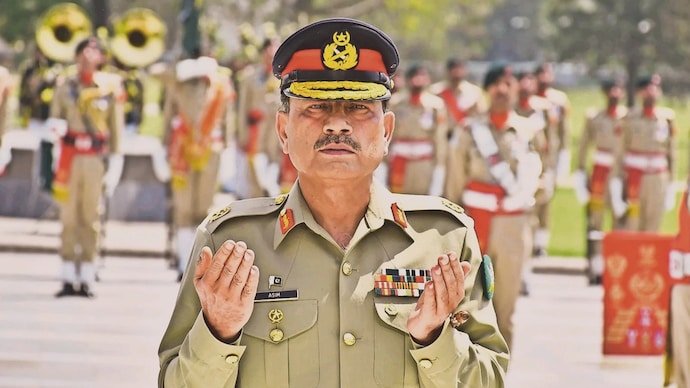
Pakistan Army Chief and Chief of Defence Forces Field Marshal Asim Munir has reaffirmed the armed forces’ determination to defeat terrorism during a visit to Peshawar, where he reviewed the security situation in Khyber-Pakhtunkhwa and received briefings on ongoing counter-terrorism efforts.
Munir visited the Corps Headquarters in Peshawar on Tuesday as Pakistan faces renewed militant violence, particularly in Khyber-Pakhtunkhwa. His visit focused on the province’s security environment, counter-terrorism operations, border management and the operational readiness of military formations deployed in the region.
According to the Inter-Services Public Relations (ISPR), Munir was briefed on the prevailing security situation and the measures being taken to counter militant activity. The military said the army and other armed forces remained committed to confronting terrorism and maintaining security across the country.
The visit comes against the backdrop of a broader resurgence in militant violence in Pakistan since the Afghan Taliban returned to power in Kabul in 2021. Islamabad has repeatedly raised concerns about militant groups operating from Afghan territory, particularly the banned Tehreek-e-Taliban Pakistan (TTP), and has called for action against what it describes as cross-border sanctuaries.
Asim Munir reviews security situation in Peshawar
During his visit to Corps Headquarters Peshawar, Munir received an assessment of the security situation in Khyber-Pakhtunkhwa. The briefing covered ongoing counter-terrorism operations, border management measures and the preparedness of military formations operating in the province.
ISPR said Munir emphasised the armed forces’ resolve to defeat terrorism with support from the Pakistani population and to work towards lasting peace and stability.
The army chief also praised the morale, readiness and professionalism of officers and soldiers serving in the region. He acknowledged their efforts to protect the country and its population and paid tribute to personnel who have been killed during counter-terrorism operations.
Khyber-Pakhtunkhwa has remained a major focus of Pakistan’s security operations because of its location along the country’s border with Afghanistan and the history of militant activity in several parts of the province.
Militancy remains a major security challenge in Khyber-Pakhtunkhwa
Munir’s visit took place after a deadly militant attack in Kohat, where militants targeted the old Police Lines during Friday prayers. At least 21 people were killed and more than 100 others were injured in the attack, according to police.
Police later said eight attackers were killed during the clearance operation that followed the assault.
The incident highlighted the continuing vulnerability of security personnel and civilians in parts of Khyber-Pakhtunkhwa. Attacks on police and security installations can also place pressure on local authorities, who must maintain public services and security while responding to repeated threats.
The scale of the violence has kept counter-terrorism operations at the centre of Pakistan’s security agenda. Military and civilian authorities have continued to focus on intelligence gathering, border controls, targeted operations and protection of sensitive installations.
Why Khyber-Pakhtunkhwa is central to Pakistan’s counter-terrorism efforts
Khyber-Pakhtunkhwa occupies a strategically important position because it borders Afghanistan and includes several areas that have historically been affected by militant activity.
The region has experienced decades of conflict involving militant organisations, Pakistani security forces and other armed groups. The security environment has also been influenced by developments across the border in Afghanistan.
For Pakistan, controlling militant networks operating in or around the border region is therefore closely connected with wider border management. Security forces have sought to prevent militants from moving across the frontier, establishing bases and planning attacks inside Pakistan.
The situation is complicated by the geography of the Afghanistan-Pakistan border, which includes mountainous and difficult-to-monitor terrain. Managing such a border requires a combination of military deployments, intelligence operations, physical security measures and cooperation between civilian and security institutions.
Pakistan’s concerns over TTP and Afghan sanctuaries
Pakistan has repeatedly accused the Tehreek-e-Taliban Pakistan, or TTP, of using bases and sanctuaries in Afghanistan to plan and conduct attacks inside Pakistan.
Islamabad has urged Afghanistan’s Taliban authorities to prevent militant groups from operating from Afghan territory. Pakistani officials have argued that attacks carried out by the TTP pose a direct security threat to Pakistan.
The Afghan Taliban administration has rejected accusations that Afghanistan is being used to deliberately facilitate attacks against Pakistan and has previously maintained that it does not allow Afghan territory to be used against other countries.
The dispute over militant activity has become one of the most persistent security issues between Islamabad and Kabul since the Taliban returned to power in August 2021.
Pakistan’s military leadership has increasingly linked its domestic counter-terrorism efforts with the security situation along the Afghan border. Munir’s latest visit to Peshawar therefore comes within a broader strategy focused on both internal militant threats and Border Security.
Counter-terrorism operations remain a military priority
The military briefing received by Munir included updates on ongoing counter-terrorism operations in the province. Such operations can involve intelligence-led raids, searches for militant networks, protection of vulnerable locations and efforts to disrupt planned attacks.
Border management was another major component of the briefing. For Pakistan’s security forces, monitoring movement along the Afghanistan border is an important part of preventing militants from crossing between the two countries.
The emphasis on operational preparedness also reflects the continuing need for military units stationed in Khyber-Pakhtunkhwa to respond quickly to attacks and intelligence alerts.
At the same time, counter-terrorism operations carry significant risks for soldiers, police officers and civilians. The repeated loss of personnel in militant attacks has made security operations one of the most demanding responsibilities facing Pakistan’s armed forces.
Munir pays tribute to troops killed in the fight against terrorism
During the Peshawar visit, Munir paid tribute to members of the security forces who have lost their lives during counter-terrorism operations.
The military has frequently highlighted the sacrifices of soldiers and police officers involved in operations against militant groups. Security personnel have remained among the primary targets of attacks in areas where militant organisations continue to operate.
Munir’s remarks on the morale and readiness of troops were also intended to underline the military’s continued focus on maintaining operational capability in the face of the renewed threat.
For communities in affected areas, however, the security challenge extends beyond military operations. Repeated attacks can disrupt daily life, damage public Infrastructure and create uncertainty for residents, businesses and local institutions.
Afghanistan remains a key part of Pakistan’s security calculations
The return of the Afghan Taliban to power in 2021 changed the regional security environment and brought renewed attention to the Afghanistan-Pakistan border.
Pakistan had hoped that the Taliban government would prevent anti-Pakistan militant groups from using Afghan territory. Relations have instead been strained by repeated accusations over TTP activity.
Islamabad has argued that militant sanctuaries across the border make it more difficult to prevent attacks inside Pakistan. The Afghan Taliban, meanwhile, has disputed Pakistan’s accusations and maintained its own position on the presence and activities of militant groups.
The issue has also affected broader relations between the two neighbours, including discussions over border controls, security coordination and the movement of people and goods.
What Munir’s Peshawar visit signals
Munir’s visit underscores the importance Pakistan’s military leadership places on Khyber-Pakhtunkhwa at a time when militant attacks remain a serious security concern.
The focus on counter-terrorism operations, border management and operational readiness indicates that Pakistan’s armed forces intend to maintain pressure on militant networks and strengthen security along the country’s western frontier.
However, the long-term security situation will depend on more than military operations alone. Intelligence cooperation, effective policing, border management, local administration and efforts to prevent militant recruitment are also important components of a sustained counter-terrorism strategy.
The relationship between Pakistan and Afghanistan will remain another important factor. Any reduction in cross-border militant activity would depend in part on the ability and willingness of authorities on both sides to address the networks responsible for attacks.
Pakistan’s continuing battle against terrorism
Pakistan has spent years conducting military operations against militant organisations, particularly in areas close to the Afghan border. Khyber-Pakhtunkhwa has remained at the centre of many of those efforts because of its geography and the presence of militant networks.
The recent increase in violence has renewed pressure on the government and security forces to strengthen counter-terrorism measures. The deadly attack in Kohat and other incidents have demonstrated the continuing threat faced by security personnel and civilians.
Munir’s visit to Peshawar comes as Pakistan seeks to respond to that challenge through military operations, improved border controls and greater operational preparedness.
For now, the army’s stated position is that it will continue its campaign against militant violence. Whether that effort can deliver sustained stability will depend on developments inside Pakistan as well as the wider security situation along the Afghanistan border.
As Khyber-Pakhtunkhwa remains under heightened security pressure, the government and military face the continuing task of protecting civilians, disrupting militant networks and preventing violence from spreading further across the country.
For breaking news and live news updates, like us on Facebook or follow us on Twitter and Instagram. Read more on Latest World on thefoxdaily.com.



COMMENTS 0