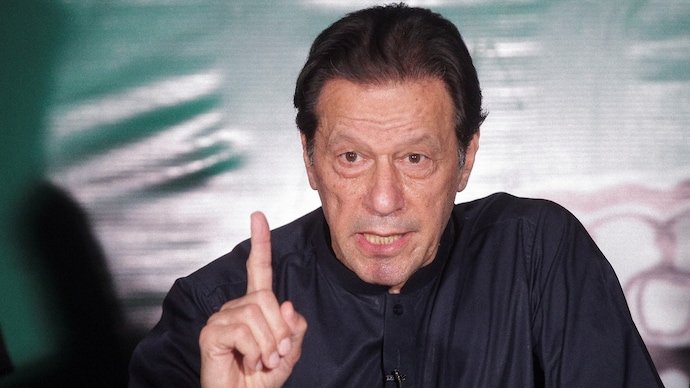
Pakistan Tehreek-e-Insaf has accused the Pakistan government of failing to comply with a Supreme Court order concerning Imran Khan‘s hospital transfer, after the jailed former prime minister was taken to a government hospital for medical tests and subsequently returned to Adiala Jail.
The dispute has added a new layer to the continuing confrontation between Khan’s party and the authorities over his imprisonment and treatment. PTI says the Supreme Court had specifically directed that Khan be moved from Adiala Jail to the private Shifa International Hospital in Islamabad and remain there for medical care until September 16.
Instead, the party says Khan was taken to the Pakistan Institute of Medical Sciences, or PIMS, on Thursday night, where he underwent medical tests before being sent back to prison.
PTI has described the development as a possible breach of the court’s order and said its legal team will pursue the matter. The party has also threatened a nationwide protest campaign, including a proposed long march to Islamabad on September 26 if Khan remains behind bars.
The controversy now centres on three connected issues: whether the Supreme Court’s medical-transfer directive was followed, what treatment Khan is receiving in custody and how PTI will respond if the former prime minister is not released.
Why Imran Khan’s hospital transfer has become a political flashpoint
The immediate dispute concerns the destination of Khan’s medical transfer.
According to PTI, the Supreme Court’s August 18 order required the 73-year-old politician to be transferred from Adiala Jail in Rawalpindi to Shifa International Hospital for medical treatment and to remain admitted there through September 16.
PTI says that instead of being admitted to the private hospital, Khan was taken to PIMS in Islamabad on Thursday night. After undergoing medical examinations and tests, he was reportedly returned to Adiala Jail.
For PTI, the distinction is important because the party says the Supreme Court did not merely direct that Khan receive medical tests. It says the order specifically required his admission to Shifa.
The government has not, in the material available for this report, provided a detailed public explanation addressing PTI’s allegations about why Khan was taken to PIMS instead of Shifa.
That leaves the precise circumstances surrounding the decision to be clarified, particularly whether authorities considered the PIMS visit sufficient compliance with the court’s directions or whether other factors prevented the transfer to the private hospital.
PTI threatens a new protest movement
The alleged breach has given PTI another issue around which to mobilise its supporters.
Khyber Pakhtunkhwa Chief Minister Sohail Afridi, speaking to reporters in Islamabad, described the alleged non-compliance with the court order as “unfortunate” and said PTI’s legal team would begin proceedings.
Afridi also said Khan had asked him to intensify the party’s political movement. According to Afridi, the campaign would now proceed at a faster pace.
He said PTI was prepared to expand its political activity across the country and announced plans to visit different areas of Pakistan as part of the mobilisation effort.
The party has also threatened a long march to Islamabad on September 26 if Khan remains imprisoned.
That threat is significant because PTI’s relationship with Pakistan’s authorities has been marked by repeated periods of political confrontation, protests, arrests and legal battles since Khan was removed from power and subsequently imprisoned.
What PTI is demanding
PTI’s latest campaign is not limited to the hospital dispute.
The party has linked several demands together, including Khan’s medical treatment, access to his lawyers and release from prison.
The demands reflect the broader dispute surrounding Khan’s detention. PTI argues that he should receive treatment consistent with the court’s directions and that his ability to communicate with his legal team and family should not be unnecessarily restricted.
The party is also presenting the hospital issue as a question of judicial authority.
If a court directs authorities to take a specific action and one side alleges that the instruction was not followed, the dispute can move beyond ordinary political disagreement into a legal question over compliance with the judiciary.
That is why PTI’s decision to involve its legal team could become as important as its threatened street protests.
What Imran Khan’s sister said about his condition
Khan’s sister Uzma Khan gave a separate account of the events surrounding his brief stay at PIMS.
She said she went to Adiala Jail and was subsequently taken to PIMS, where she was initially asked to wait before being allowed to meet her brother.
According to her account, Khan questioned why he had been taken to PIMS rather than Shifa International Hospital.
Uzma said she told him that he would be taken to Shifa for a comprehensive examination and treatment if doctors considered it necessary. She said Khan was initially satisfied with that explanation.
However, she said he later asked her to remain with him and repeatedly complained about what he described as harsh treatment in detention.
These allegations are claims made by Khan and his family and have not independently established the medical or prison conditions described in the account.
Claims over solitary confinement and lack of human contact
Uzma also made a series of allegations about Khan’s conditions in prison.
She said her brother told her that he had been subjected to what he described as “cruelty” and that a doctor WHO had visited him had attributed a deterioration in his Health to a lack of human contact.
She further claimed that Khan had not been provided with reading material or television for an extended period.
According to Uzma, Khan said newspapers and television had been made available for two days before being withdrawn again.
She also claimed that a doctor who examined Khan on August 10 had diagnosed severe anxiety associated with what she described as mental pressure from solitary confinement, which she said was contributing to elevated blood pressure.
These claims are politically sensitive and medically significant, but they should be distinguished from independently verified medical findings. The material provided for this report does not include a publicly released medical report confirming all of the allegations.
Dr Faisal Sultan gives account of the hospital visit
Khan’s personal physician, Dr Faisal Sultan, also spoke at the press conference in Islamabad.
He said he went to Shifa International Hospital while Uzma Khan went to PIMS.
According to Sultan, he waited at Shifa but was eventually informed, as dawn approached, that Khan might not arrive and that he should leave.
His account supports PTI’s assertion that the expected transfer to Shifa did not take place.
However, the precise reason for the change in arrangements remains a central unanswered question. Establishing that reason will be important in determining whether the incident resulted from a logistical or medical decision, an administrative interpretation of the court order, or deliberate non-compliance.
The legal question could be more important than the political rhetoric
The most consequential aspect of the dispute may be whether the authorities complied with the exact wording of the Supreme Court’s August 18 order.
Political parties can make allegations and issue warnings, but a claim that a judicial order was ignored can ultimately be tested through legal proceedings.
PTI has indicated that its lawyers intend to pursue that route.
The court could potentially be asked to determine what its original order required, whether the government’s actions fulfilled those requirements and whether further directions are necessary.
Until that process occurs, claims from PTI and any response from government authorities should be treated separately from established facts.
Why medical access has become central to Khan’s detention
Medical care in prison can become particularly contentious when the detainee is a major political figure.
In Khan’s case, disagreements over his treatment have become intertwined with wider arguments about his detention and the political conflict between PTI and the authorities.
For the former prime minister’s supporters, access to doctors of their choice and compliance with court-directed treatment are matters of basic rights.
For the authorities, medical decisions involving an imprisoned political leader also have security and administrative implications.
The challenge is therefore to separate legitimate medical requirements from the surrounding political contest.
A transparent medical process, clear communication about treatment and documented compliance with judicial directions would reduce uncertainty and make it easier to resolve the dispute on evidence rather than competing political claims.
PTI’s reference to Mohamed Morsi
During her press conference, Uzma said Khan compared his treatment in detention with that of former Egyptian president Mohamed Morsi.
She said Khan referred to Morsi’s death and alleged that prolonged solitary confinement and harsh treatment could produce similar consequences.
The comparison is Khan’s reported personal assessment and should not be treated as an established equivalence between the two cases.
Nevertheless, the reference illustrates the seriousness with which Khan’s family views his detention conditions and health.
It also shows how the dispute is being framed politically. PTI has consistently argued that Khan’s imprisonment is part of a broader campaign against the party and its leadership, while Pakistani authorities have pursued criminal and legal cases against him.
The political stakes for Pakistan’s government
The government now faces a potentially difficult balancing act.
It must manage Khan’s detention while also demonstrating that court orders and legal procedures are being respected. Any perception that a Supreme Court directive has been ignored could provide PTI with a powerful political and legal argument.
At the same time, a large PTI mobilisation could create another challenge for authorities, particularly if demonstrations move toward Islamabad.
Past confrontations between PTI supporters and security forces have shown how quickly political protests in Pakistan can become major law-and-order issues.
The threatened September 26 march therefore gives the hospital dispute a deadline that could increase pressure on both sides.
What could happen next?
The immediate next step is likely to be legal action by PTI over the alleged non-compliance with the Supreme Court order.
The party’s lawyers could seek clarification or enforcement of the August 18 directive, while the government may be expected to explain why Khan was taken to PIMS and subsequently returned to Adiala Jail.
The medical question will also remain important. If Khan’s doctors, family and party continue to raise concerns about his health, pressure could grow for a transparent assessment of his condition and treatment arrangements.
On the political front, PTI has said it will intensify its mobilisation. The proposed September 26 long march is therefore another potential flashpoint if Khan remains incarcerated.
The outcome will depend partly on whether the medical and legal dispute can be resolved before the party’s planned protest campaign gathers momentum.
Why the Imran Khan hospital dispute matters beyond PTI
The dispute is ultimately about more than where one prisoner receives medical care.
It raises questions about the authority of Pakistan’s courts, the treatment of political prisoners, access to medical care in detention and the ability of political parties to challenge government decisions through legal and democratic channels.
For PTI, the issue provides another reason to demand Khan’s release and mobilise supporters. For the government, the controversy presents an opportunity to demonstrate that the judicial process is being respected and that medical decisions are being made according to established procedures.
For the Supreme Court, the dispute could test how effectively its orders can be implemented when they involve a highly polarising political figure.
As PTI prepares for possible legal proceedings and threatens a nationwide protest push, the key question is no longer simply whether Imran Khan was taken to a hospital.
It is whether the authorities followed the court’s specific instructions, whether Khan is receiving the medical care that has been ordered and whether the dispute can be resolved through Pakistan’s legal institutions before it develops into another major confrontation in the streets.
For breaking news and live news updates, like us on Facebook or follow us on Twitter and Instagram. Read more on Latest World on thefoxdaily.com.





COMMENTS 0