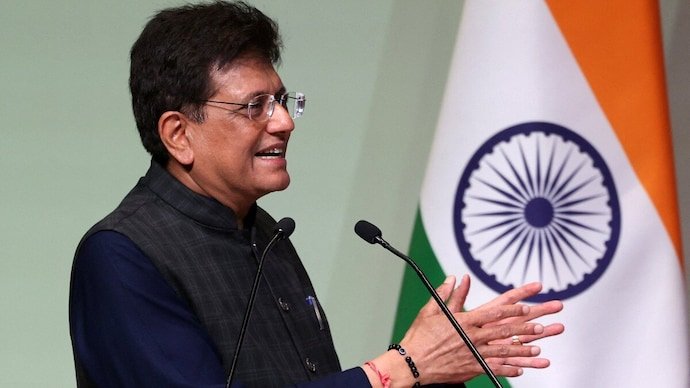
The long-awaited India-US trade deal remains one of the most closely watched developments in global commerce, but New Delhi has made it clear that speed will not come at the cost of national interest. Speaking at the India Global Forum in London, Union Commerce and Industry Minister Piyush Goyal stated that India will sign the agreement only if the United States creates a tariff framework that gives Indian exporters a measurable advantage over competing economies such as Vietnam, Thailand, Indonesia, Malaysia, the Philippines and china.
The statement reflects a major shift in India’s trade philosophy. Instead of pursuing a Trade Agreement simply for greater market access, India is focusing on securing a stronger competitive position for its manufacturers and exporters. In today’s interconnected Global Economy, where multinational companies constantly compare production costs across countries, even a small tariff difference can determine where factories are built, investments flow and jobs are created.
As negotiations continue, the proposed trade agreement has become about much more than reducing tariffs. It represents India’s broader ambition to strengthen its position in global Manufacturing while deepening one of its most important strategic partnerships.
Primary Search Intent
Informational: Why is the India-US trade deal delayed, what did Piyush Goyal say, and how could the agreement affect trade, exports, businesses and consumers?
Why Piyush Goyal’s Statement Matters
Piyush Goyal’s comments came immediately after another round of India-US trade negotiations concluded, providing one of the clearest explanations yet for why the agreement has not been signed despite months of discussions.
According to the minister, both countries had broadly agreed on the framework of the deal earlier this year. However, subsequent changes in the US tariff landscape have altered the assumptions on which the negotiations were based.
India’s central demand is straightforward: any agreement must ensure that Indian products enter the American market under tariff conditions that are more favourable than those available to competing manufacturing nations.
For New Delhi, this is not merely a negotiating tactic. It is viewed as essential to protecting India’s export competitiveness at a time when global supply chains are rapidly being reorganised.
Why Competitive Tariffs Matter More Than Ever
Tariffs directly influence the final price of exported goods. Even a difference of five or ten percentage points can dramatically affect purchasing decisions by American importers.
If Indian manufacturers pay lower import duties than competitors, they immediately become more attractive suppliers for US businesses. Conversely, if competing countries receive similar or lower tariff treatment, India risks losing export orders despite offering comparable quality.
This explains why India is not negotiating in isolation. Every concession offered by Washington to Vietnam, Malaysia or Thailand indirectly affects India’s negotiating position.
Rather than asking whether tariffs are lower than before, New Delhi is asking a more important question:
Will Indian exporters enjoy a meaningful advantage over their biggest competitors?
That distinction could shape billions of dollars in future trade.
How Global Supply Chains Have Changed
The global manufacturing landscape looks very different from just five years ago.
Businesses worldwide have been diversifying production away from excessive dependence on any single country. The COVID-19 pandemic exposed vulnerabilities in concentrated supply chains, while geopolitical tensions and trade disputes accelerated efforts to build alternative manufacturing hubs.
India has emerged as one of the largest beneficiaries of this transition.
Global companies across sectors such as electronics, pharmaceuticals, automobiles, engineering goods, chemicals and textiles have expanded manufacturing operations in India. Government initiatives encouraging domestic production have further strengthened this trend.
However, lower tariffs remain one of the strongest incentives for multinational corporations deciding where to establish factories serving the US market.
Understanding the Tariff Issue
During his remarks, Goyal explained that negotiations initially revolved around reducing effective tariff barriers significantly, allowing India to enjoy a clear competitive edge.
Subsequent developments in US trade policy, including judicial scrutiny of certain tariff measures and the approaching expiry of temporary tariff provisions, have complicated the situation.
As Washington prepares a revised tariff framework covering multiple trading partners, India is waiting to understand how the new rules will affect relative competitiveness before finalising the agreement.
In simple terms, New Delhi wants certainty before committing to a long-term trade arrangement.
India-US Trade Relations Continue to Expand
Despite the pending agreement, economic ties between India and the United States continue to deepen.
The United States remains one of India’s largest trading partners, with bilateral trade spanning goods, services, technology, defence, energy and digital industries.
Indian exports to America include:
- Pharmaceutical products
- Engineering goods
- Gems and jewellery
- Textiles and apparel
- Chemicals
- Information technology services
- Agricultural products
Meanwhile, India imports aircraft, crude oil, defence equipment, electronic products, machinery and advanced technology from the United States.
This diversified relationship means that a comprehensive trade agreement could influence multiple sectors simultaneously.
Which Industries Stand to Benefit Most?
| Sector | Potential Impact of Trade Deal |
|---|---|
| Electronics | Higher exports and greater manufacturing investment |
| Pharmaceuticals | Improved market access and increased competitiveness |
| Textiles | Better pricing against Southeast Asian competitors |
| Engineering Goods | Greater export opportunities in industrial equipment |
| Chemicals | Expanded US market access |
| Auto Components | Increased participation in North American supply chains |
| IT Services | Stronger overall economic cooperation |
Why Export Numbers Are Being Closely Watched
Recent trade figures show that India’s export surplus with the United States has narrowed compared to last year.
While several factors influence monthly trade data including global demand, commodity prices and exchange rates the decline has added urgency to ongoing negotiations.
For policymakers, maintaining strong export growth is important not only for economic expansion but also for employment generation across manufacturing industries.
A favourable trade agreement could help reverse some of this slowdown by making Indian products more competitive in one of the world’s largest consumer markets.
India’s Trade Strategy Has Clearly Evolved
India’s recent trade negotiations with multiple partners reveal a noticeable strategic shift.
Instead of signing agreements quickly, New Delhi has increasingly focused on securing long-term economic benefits. Recent negotiations have emphasised:
- Balanced market access
- Protection of sensitive sectors
- Support for domestic manufacturing
- Greater opportunities for exporters
- Supply chain resilience
- Technology partnerships
The approach reflects India’s broader objective of becoming a global manufacturing powerhouse rather than simply a large consumer market.
What Businesses Are Watching
Indian exporters are closely monitoring developments because the eventual agreement could influence pricing, production planning and future investment decisions.
Manufacturers considering capacity expansion may delay major investments until greater clarity emerges regarding tariff structures.
Similarly, multinational companies evaluating new production locations are comparing India’s future trade advantages with competing destinations across Asia.
The outcome could therefore shape investment flows for years rather than months.
Challenges Still Remain
Although both governments have repeatedly expressed optimism, several complex issues remain under discussion.
Trade negotiations between major economies typically involve difficult compromises across agriculture, industrial products, digital trade, intellectual property, market access and regulatory standards.
Both sides must also balance domestic political considerations alongside commercial priorities.
That explains why comprehensive trade agreements often require extended negotiations even after broad political understanding has been reached.
A Unique Perspective Often Missing in Coverage
Much of the discussion around the India-US trade deal focuses on tariff percentages, but the bigger story is about investment competition.
Global manufacturers increasingly choose production locations based on total export costs rather than labour costs alone.
If India secures even a modest tariff advantage over competing economies, international companies may redirect future manufacturing investments toward Indian facilities.
This could create long-term benefits extending far beyond export statistics, including new factories, higher employment, technology transfer and stronger integration into global supply chains.
In other words, the agreement is not simply about today’s exports it is about determining where tomorrow’s manufacturing capacity will be built.
Comparison: India vs Competing Manufacturing Economies
| Country | Competitive Strength | India’s Objective |
|---|---|---|
| China | Large manufacturing ecosystem | Offer an alternative supply base |
| Vietnam | Strong export-oriented manufacturing | Secure lower US tariffs |
| Thailand | Automobile and electronics exports | Gain pricing advantage |
| Malaysia | Semiconductors and electronics | Improve competitiveness |
| Indonesia | Industrial manufacturing | Expand export opportunities |
| Philippines | Electronics production | Strengthen market access |
What Happens Next?
The coming weeks will be critical.
The United States is expected to finalise its updated tariff framework after completing ongoing trade reviews. Once greater clarity emerges regarding future tariff treatment for major trading partners, India will be in a stronger position to determine whether the proposed agreement delivers the competitive advantage it seeks.
Negotiators from both countries are expected to continue technical discussions while monitoring changes in US trade policy.
Future Outlook
The India-US trade deal remains one of the most significant economic negotiations currently underway. While both governments appear committed to strengthening bilateral trade, New Delhi’s position signals that the agreement must support India’s long-term manufacturing ambitions rather than simply increase trade volumes.
If India secures the tariff advantage it seeks, the agreement could accelerate exports, attract fresh foreign investment and reinforce the country’s role as a major global manufacturing hub. If those conditions are not met, negotiations may continue until a more favourable framework emerges.
Ultimately, the success of the agreement will not be measured by the date it is signed but by whether it creates lasting economic opportunities for Indian businesses, workers and exporters in an increasingly competitive global marketplace.
For breaking news and live news updates, like us on Facebook or follow us on Twitter and Instagram. Read more on Latest India on thefoxdaily.com.






COMMENTS 0