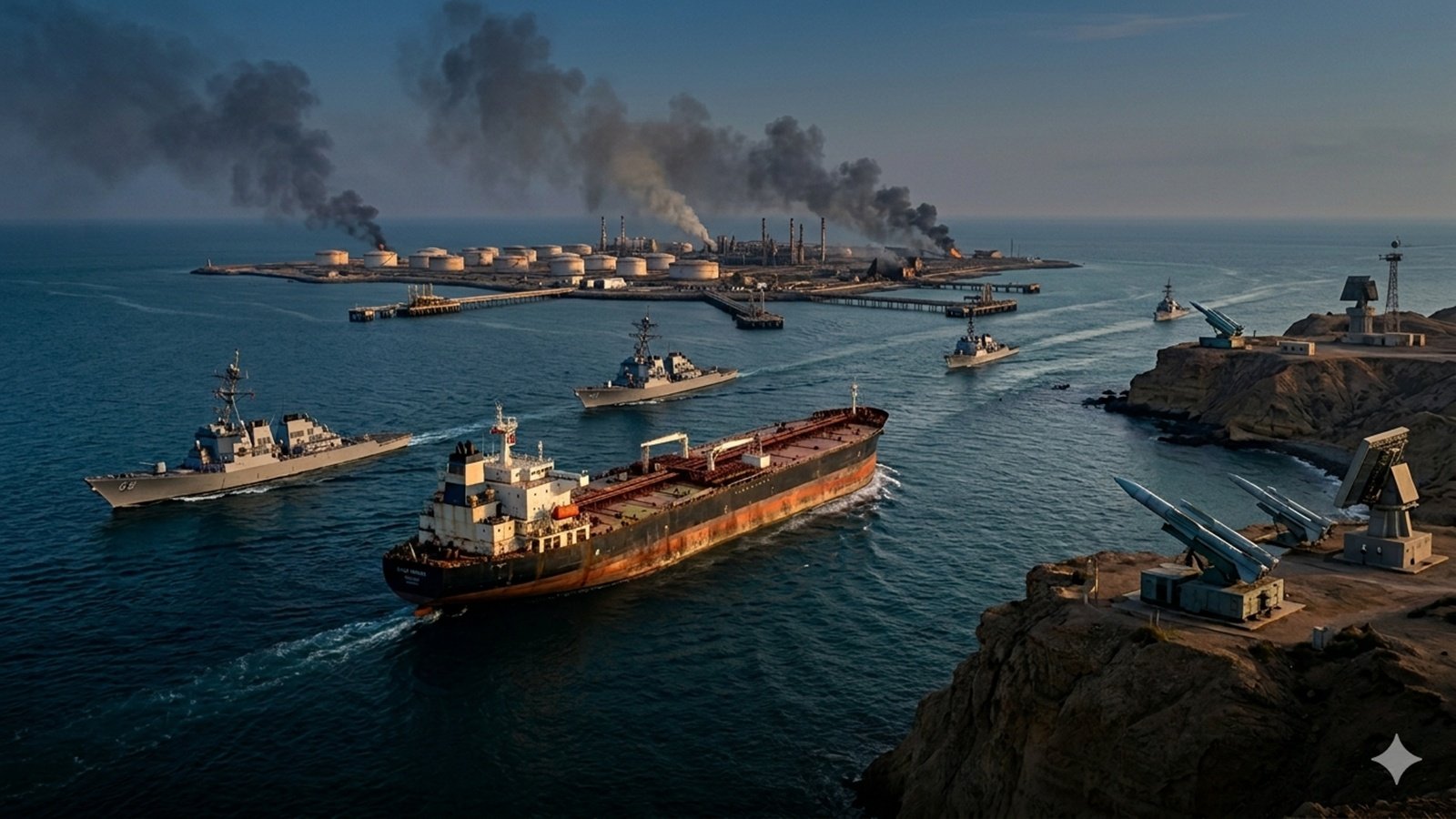
The reopening of the Strait of Hormuz following the United States-Iran Memorandum of Understanding signed on June 17 has brought relief to governments, energy traders, and consumers worldwide. Yet beneath the market optimism lies a deeper problem: the global oil market has lost an estimated 1.15 billion barrels of supply during the 3.5-month conflict involving Iran, Israel, and the United States.
The reopening of the world’s most critical oil transit route has triggered a decline in crude prices, with Brent crude slipping below the psychologically important $80-per-barrel level. Financial institutions have already revised their forecasts downward, betting that Iranian oil production will gradually return to global markets. However, energy analysts warn that the physical realities of restoring disrupted supply chains are far more complex than current market sentiment suggests.
For countries heavily dependent on Middle Eastern energy imports, including India, China, Japan, and several European economies, the key issue is no longer whether the Strait is open. The more important question is whether global supply chains can recover quickly enough to prevent elevated fuel prices, inflationary pressures, and economic uncertainty over the coming months.
Why the Strait of Hormuz Matters to the Global Economy
The Strait of Hormuz is widely regarded as the world’s most important oil chokepoint. Located between Iran and Oman, this narrow waterway connects the Persian Gulf to the Arabian Sea and serves as a critical passage for crude oil and liquefied natural gas exports from major producers such as Saudi Arabia, Iraq, Kuwait, the United Arab Emirates, Qatar, and Iran.
Roughly one-fifth of the world’s oil consumption typically passes through the Strait of Hormuz. Any disruption immediately raises concerns about global Energy Security, shipping costs, inflation, and economic growth.
The recent conflict demonstrated just how dependent the world remains on this narrow maritime corridor despite years of efforts to diversify energy sources and transportation routes.
Understanding the 1.15 Billion Barrel Supply Loss
The headline figure of 1.15 billion barrels represents more than just temporary production disruptions. It reflects months of reduced exports, interrupted shipping schedules, damaged infrastructure, delayed deliveries, and supply chain bottlenecks that accumulated throughout the conflict period.
To understand the scale, consider that many countries maintain Strategic Petroleum Reserves specifically to protect against supply disruptions. Yet even with those reserves available, the global energy system has struggled to absorb such a significant loss.
The disruption has affected not only oil producers but also refiners, shipping companies, traders, and consumers worldwide.
The challenge facing the market now is that reopening a shipping lane does not instantly replace oil that was never produced, transported, or stored.
The Market’s Immediate Reaction: Falling Oil Prices
Financial Markets responded positively to the signing of the memorandum of understanding. Investors interpreted the agreement as a sign that the worst-case scenario of a prolonged regional conflict had been avoided.
As a result, crude oil prices fell sharply.
Several major financial institutions revised their forecasts downward, anticipating a gradual normalization of supply conditions. Expectations that Iranian production could return steadily over the coming months have reinforced the belief that global markets may avoid a severe Energy Crisis.
However, commodity specialists caution that financial markets often react faster than physical supply chains can recover. The decline in oil prices reflects future expectations rather than current supply realities.
Why Analysts Believe Markets May Be Too Optimistic
One of the most important insights emerging from the crisis is the growing gap between market sentiment and physical market conditions.
Many analysts argue that investors are pricing in a full recovery long before such a recovery is actually possible.
Even though the Strait has reopened, several logistical challenges remain:
- Shipping routes must be fully secured.
- Potential naval hazards and unexploded threats must be cleared.
- Oil production facilities need to resume normal operations.
- Storage infrastructure requires replenishment.
- Tanker fleets must return to regular schedules.
- Refineries need stable supply flows before normal inventories can be restored.
These factors mean that the reopening represents the beginning of recovery rather than the completion of it.
The Hidden Crisis: Global Oil Storage Levels
Perhaps the most overlooked aspect of the crisis is the dramatic reduction in global oil inventories.
Oil stockpiles worldwide have reportedly declined by approximately 190 million barrels in recent months. This depletion has placed additional pressure on energy markets because inventories serve as a buffer during supply disruptions.
Several storage facilities are now operating near critical levels.
Strategic reserves that governments rely upon during emergencies have also been significantly drawn down.
When inventories fall too low, markets become increasingly vulnerable to even minor disruptions because there is less stored oil available to offset shortages.
The Strategic Petroleum Reserve Problem
A major concern for policymakers is the current state of emergency reserves.
Strategic petroleum reserves are designed to protect economies during supply shocks caused by wars, natural disasters, sanctions, or geopolitical crises.
However, reserve levels have been declining across many advanced economies.
OECD strategic reserves are reportedly at their lowest levels in decades, while the United States Strategic Petroleum Reserve has fallen to levels not seen in more than four decades.
This creates a dangerous situation because governments now have less flexibility to respond to future disruptions.
Even if the current crisis gradually stabilizes, the reduced reserve cushion remains a significant vulnerability for the global Economy.
Why India Is Watching Closely
Few major economies have as much at stake as India.
India imports more than 85% of its crude oil requirements, making energy security a critical economic issue. A substantial portion of these imports travels through the Strait of Hormuz.
Any disruption affects:
- Petrol and diesel prices.
- Transportation costs.
- Inflation levels.
- Industrial production expenses.
- Airline operating costs.
- Government fiscal planning.
Even though international crude prices have declined since the agreement, Indian consumers may not immediately experience significant relief because supply normalization takes time.
The timing is particularly important given seasonal increases in fuel demand during summer months and ongoing economic growth.
How Long Will Recovery Take?
The biggest misconception about the reopening of the Strait is the assumption that normal conditions will return quickly.
Energy experts estimate that rebuilding inventories and replacing lost supply could take many months and potentially up to a year under certain scenarios.
The reason is simple: replacing 1.15 billion lost barrels requires sustained production increases beyond normal demand levels.
Even if producers increase output significantly, the market must first satisfy current consumption before rebuilding depleted inventories.
This creates a lengthy recovery process that extends far beyond the reopening of shipping routes.
| Recovery Challenge | Impact on Market |
|---|---|
| Inventory Rebuilding | Supports higher oil prices |
| Shipping Normalization | May take several months |
| Production Ramp-Up | Requires operational stability |
| Strategic Reserve Replenishment | Increases future demand |
| Refinery Adjustments | Slows return to normal supply chains |
The Inflation Risk Is Not Over
One reason policymakers remain cautious is that energy prices influence nearly every sector of the economy.
Oil affects transportation, manufacturing, agriculture, Logistics, aviation, and consumer goods pricing.
Even if crude prices remain below recent peaks, supply shortages and inventory rebuilding can keep energy costs elevated compared to pre-conflict levels.
This means inflationary pressures could persist longer than financial markets currently anticipate.
Central banks around the world will continue monitoring energy markets closely because oil remains one of the most influential drivers of inflation expectations.
A Comparison With Previous Oil Shocks
The current disruption differs from many previous energy crises because it combines physical supply losses, shipping disruptions, inventory depletion, and geopolitical uncertainty.
| Factor | Previous Oil Crises | Current Strait of Hormuz Crisis |
|---|---|---|
| Supply Disruption | Moderate to High | Extremely High |
| Inventory Levels | Generally Higher | Historically Low |
| Global Demand | Lower | Near Record Levels |
| Shipping Risks | Limited | Significant |
| Recovery Complexity | Moderate | Very High |
This combination makes the current situation particularly challenging despite the recent diplomatic breakthrough.
The Role of the US-Iran Memorandum of Understanding
The agreement itself represents a significant geopolitical development.
By facilitating the reopening of the Strait and reducing immediate military tensions, the memorandum has lowered the risk of a broader regional conflict that could have threatened global energy supplies even further.
The deal also creates a pathway for Iranian production to gradually re-enter international markets, potentially helping stabilize supply conditions over time.
However, Diplomacy can only solve part of the problem. Physical oil production, transportation, storage, and refining infrastructure must still recover from months of disruption.
What Investors Should Watch Next
Several indicators will determine whether the market’s optimism is justified.
- Speed of Iranian production recovery.
- Global inventory rebuilding trends.
- Strategic reserve replenishment programs.
- Shipping activity through the Strait.
- OPEC+ production decisions.
- Summer fuel demand trends in major economies.
If these indicators improve steadily, current price forecasts could prove accurate. However, any setback could quickly tighten markets again.
A Unique Angle: The Real Crisis Is Inventory, Not Production
Most headlines focus on oil production losses, but the deeper issue may actually be inventory depletion.
Production can be increased relatively quickly when geopolitical conditions improve. Rebuilding inventories, on the other hand, requires sustained surpluses over long periods.
This distinction is crucial because markets often underestimate how long it takes to restore energy security after a major disruption.
In many ways, the reopening of the Strait solves yesterday’s problem—blocked shipments. The bigger challenge now is rebuilding the energy cushion that protects the global economy from future shocks.
Conclusion
The reopening of the Strait of Hormuz marks a major diplomatic and economic breakthrough, reducing fears of an extended disruption to one of the world’s most important energy corridors. Yet the global oil market remains far from normal.
The loss of approximately 1.15 billion barrels during the conflict has left inventories depleted, strategic reserves weakened, and supply chains under pressure. While falling oil prices reflect optimism about the future, the physical process of restoring production, replenishing storage facilities, and rebuilding reserves could take many months.
For India and other energy-importing nations, the reopening is undoubtedly positive news. However, the true measure of success will not be whether tankers can once again pass through the Strait of Hormuz, but whether global energy markets can recover fast enough to prevent prolonged price pressures and economic uncertainty. The waterway may be open, but the journey back to energy stability has only just begun.
For breaking news and live news updates, like us on Facebook or follow us on Twitter and Instagram. Read more on Latest World on thefoxdaily.com.






COMMENTS 0