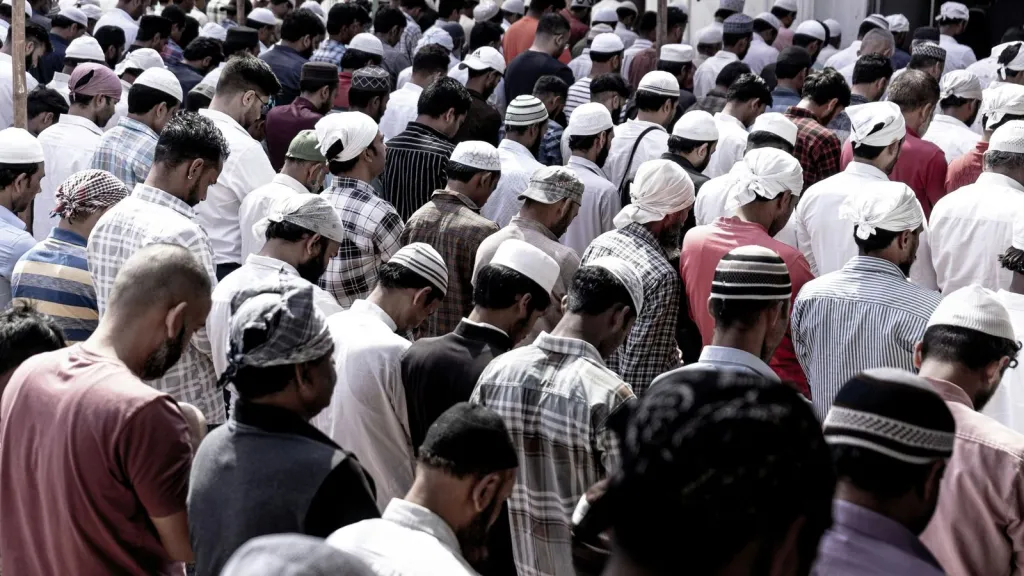
Islam is projected to overtake Christianity as the world’s largest religious group by 2035, with higher birth rates among Muslim women emerging as the primary driver of the demographic shift, according to projections by the Pew Research Center. Although both religious populations are expected to grow, the Muslim population is expanding at a faster pace, gradually narrowing the numerical gap between the two largest faith groups.
The central factor behind this change is fertility. Between 2020 and 2025, Muslim women had an average of 3.1 children, compared with 2.5 among Christian women. Women belonging to other religious groups recorded an average of 1.6 children during the same period. These differences in birth rates are expected to influence the religious composition of the global population over the coming decades.
The projections highlight how demographic patterns, rather than large-scale religious conversions, are reshaping the global religious landscape. Population Growth, the age distribution of religious communities and differences in fertility rates are expected to play a greater role in determining which faith groups expand fastest.
Why Islam Is Expected to Surpass Christianity by 2035
Pew Research Center’s projections indicate that Islam could become the world’s largest religious group by 2035. The shift is expected to happen because the Muslim population is growing more rapidly than the Christian population, even though Christianity is also projected to add followers in absolute numbers.
The difference in fertility rates provides a major explanation. Muslim women had an average of 3.1 children between 2020 and 2025, while the average among Christian women was 2.5. This means Muslim communities are expected to experience stronger natural population growth through births, assuming other demographic conditions remain broadly consistent with the projections.
Conrad Hackett, senior demographer at Pew Research Center, summed up the main driver with the observation: “It’s the babies.” His explanation emphasises that differences in birth rates have a greater influence on the relative growth of religious populations than conversion or changes in religious affiliation.
Religious identity can change during a person’s lifetime, but such changes are only one part of population growth. The number of children born into different religious communities, the age of their populations and mortality patterns can have a much larger cumulative effect over several decades.
Muslim Population Growth Is Being Driven by Higher Fertility
Fertility rates measure the average number of children a woman is expected to have during her reproductive years under prevailing age-specific birth-rate patterns. Differences in these rates can gradually reshape the size of population groups, particularly when they persist across generations.
The latest figures cited in the projections show a clear gap between Muslim and Christian fertility:
| Religious Group | Average Children Per Woman (2020–2025) |
|---|---|
| Muslims | 3.1 |
| Christians | 2.5 |
| Other religious groups | 1.6 |
The difference between the Muslim and Christian averages is 0.6 children per woman. While that gap may appear modest at an individual level, its impact becomes more significant when applied across millions of families and successive generations.
The average fertility rate among other religious groups is even lower. At 1.6 children per woman, it falls below the commonly cited replacement-level fertility rate of approximately 2.1 children per woman in populations with relatively low mortality. Replacement-level fertility is the average number of children needed for a generation to replace itself over time, without accounting for migration.
However, fertility rates alone do not determine the future size of a religious community. The age structure of a population also matters. A group with a relatively young population has more people entering childbearing ages, which can sustain population growth even when fertility rates begin to decline.
How the Global Religious Population Is Changing
Christianity and Islam remain the two largest religious traditions worldwide, but their population growth patterns differ. Christianity has historically maintained the largest global following, while Islam has experienced faster demographic expansion in recent decades.
Pew’s earlier population estimates placed the global Christian population at approximately 2.27 billion in 2020, compared with around 2.02 billion Muslims. The projections indicate that the gap is expected to narrow substantially by 2035, when the Muslim population is projected to reach approximately 2.57 billion and the Christian population around 2.52 billion.
These figures represent demographic projections rather than a record of people changing their religious beliefs. They estimate how populations may develop based on factors such as fertility, mortality, migration and religious switching.
The projected crossover is therefore not expected to result from a single event or a sudden change in religious affiliation. It reflects the accumulated impact of population trends over many years.
Religious Conversion Plays a Smaller Role Than Birth Rates
Religious switching can influence the size of faith communities. People may leave a Religion, adopt another faith or identify with no religion at all. These changes can affect the relative growth of religious groups, particularly in countries where religious affiliation is changing rapidly.
However, Pew’s analysis identifies fertility as the dominant factor behind the projected rise in the Muslim population relative to Christianity. The difference in the number of children born into Muslim and Christian families is expected to have a greater impact than conversion patterns.
This distinction is important because population growth should not automatically be interpreted as evidence of increasing religious conversion or a change in the popularity of a faith. A growing religious population may simply reflect the demographic characteristics of its existing members.
Similarly, a religious community can lose members through switching while continuing to grow overall if births exceed deaths and other population losses.
A Younger Population Also Supports Long-Term Muslim Growth
Fertility is only one part of the demographic explanation. Age distribution also contributes to the faster projected growth of Muslim populations.
Religious communities with a larger proportion of children and young adults have more people who may enter their reproductive years in the future. This creates what demographers describe as population momentum: a relatively young population can continue expanding even when the average number of children per woman declines.
Muslim populations in several regions have relatively young age profiles. This means a substantial number of people are approaching or entering the ages at which they are likely to start families. The resulting number of births can sustain population growth over an extended period.
Christian populations in some regions, particularly parts of Europe, have older age structures and lower fertility rates. These patterns can slow natural population growth, although Christianity continues to expand in other parts of the world.
The global picture is not uniform. Fertility rates, life expectancy, migration and religious identification differ considerably between countries. The worldwide projection combines these regional patterns rather than suggesting that every Muslim-majority or Christian-majority country will experience the same demographic changes.
Africa and Asia Will Shape the Future of Global Religion
Regional population trends are central to understanding the projected shift. Sub-Saharan Africa is expected to account for a substantial share of future population growth, including growth among both Christians and Muslims.
Many countries in the region have comparatively young populations and higher fertility rates than countries in Europe and East Asia. As a result, their demographic changes are likely to influence the global distribution of religious communities.
Asia is also important because it contains large Muslim populations across countries such as Indonesia, Pakistan, Bangladesh and India. Differences in fertility, population size and age structure across these countries contribute to the broader global projections.
Christianity’s demographic centre of gravity is also changing. While Europe has historically been a major centre of the religion, population growth in sub-Saharan Africa is expected to increase the region’s importance in the global Christian population.
These developments show why global religious rankings cannot be understood through the religious composition of Europe or North America alone. Population growth in Africa and Asia is increasingly important in shaping the worldwide balance.
Could Muslims Remain the World’s Largest Religious Group After 2035?
The projected crossover in 2035 is part of a longer demographic trend. Pew’s longer-range projections indicate that the Muslim population could continue growing faster than the Christian population beyond that milestone.
By 2070, the global Muslim population is projected to exceed 3.6 billion, while the Christian population is expected to remain just below 3 billion. These estimates suggest that the demographic gap could widen over time if the underlying trends continue.
However, long-term projections carry greater uncertainty than estimates covering shorter periods. Fertility rates can change as education levels, urbanisation, economic conditions, access to healthcare and family preferences evolve. Migration and religious switching can also alter the eventual population distribution.
For this reason, the 2035 and 2070 figures should be understood as projections based on demographic assumptions, not guaranteed outcomes.
Why the 2.1 Replacement Fertility Rate Matters
The commonly used replacement-level fertility benchmark of approximately 2.1 children per woman helps explain why differences in birth rates matter for long-term population growth.
In populations with low mortality, a fertility rate close to 2.1 is generally sufficient for one generation to replace itself over time, assuming no significant migration. A rate consistently below this level can eventually contribute to population decline, particularly when combined with an ageing population.
The average fertility rate of 3.1 among Muslim women is considerably higher than this benchmark. The Christian average of 2.5 is also above it, while the average of 1.6 among other religious groups is below it.
These averages should not be interpreted as fixed characteristics of individual religious communities. Fertility varies widely by country, income, education, urban or rural residence and other social conditions. Religious affiliation is one demographic category among several that influence population patterns.
What Pew’s Projection Does and Does Not Mean
The projected rise of Islam to the position of the world’s largest religious group is a demographic finding, not a prediction about the future influence, political power or social position of either religion.
Population size does not measure religious commitment, cultural influence or the importance of a faith in public life. It also does not indicate that one religious community is replacing another in every country. The projection concerns the combined number of people identifying with each religion worldwide.
Christianity is also expected to remain one of the world’s largest religious communities, with a substantial global population. Its growth in parts of Africa and other regions will continue even as demographic expansion among Muslims proceeds at a faster pace.
The most important conclusion from Pew’s analysis is that the future balance between the world’s largest religions will be shaped primarily by long-term demographic forces. Higher fertility and younger population structures are expected to drive Muslim growth, while differences in regional population trends will influence Christianity and other religious groups.
Key Takeaways: Islam’s Projected Rise by 2035
- Islam is projected to overtake Christianity as the world’s largest religious group by 2035, according to Pew Research Center.
- Muslim women had an average of 3.1 children during 2020–2025, compared with 2.5 among Christian women.
- Fertility differences are expected to have a greater influence on the demographic shift than religious conversion.
- The Muslim population is projected to exceed 3.6 billion by 2070, while the Christian population is expected to remain below 3 billion.
- The projections are based on demographic trends and assumptions, not guaranteed future outcomes.
For breaking news and live news updates, like us on Facebook or follow us on Twitter and Instagram. Read more on Latest World on thefoxdaily.com.





COMMENTS 0