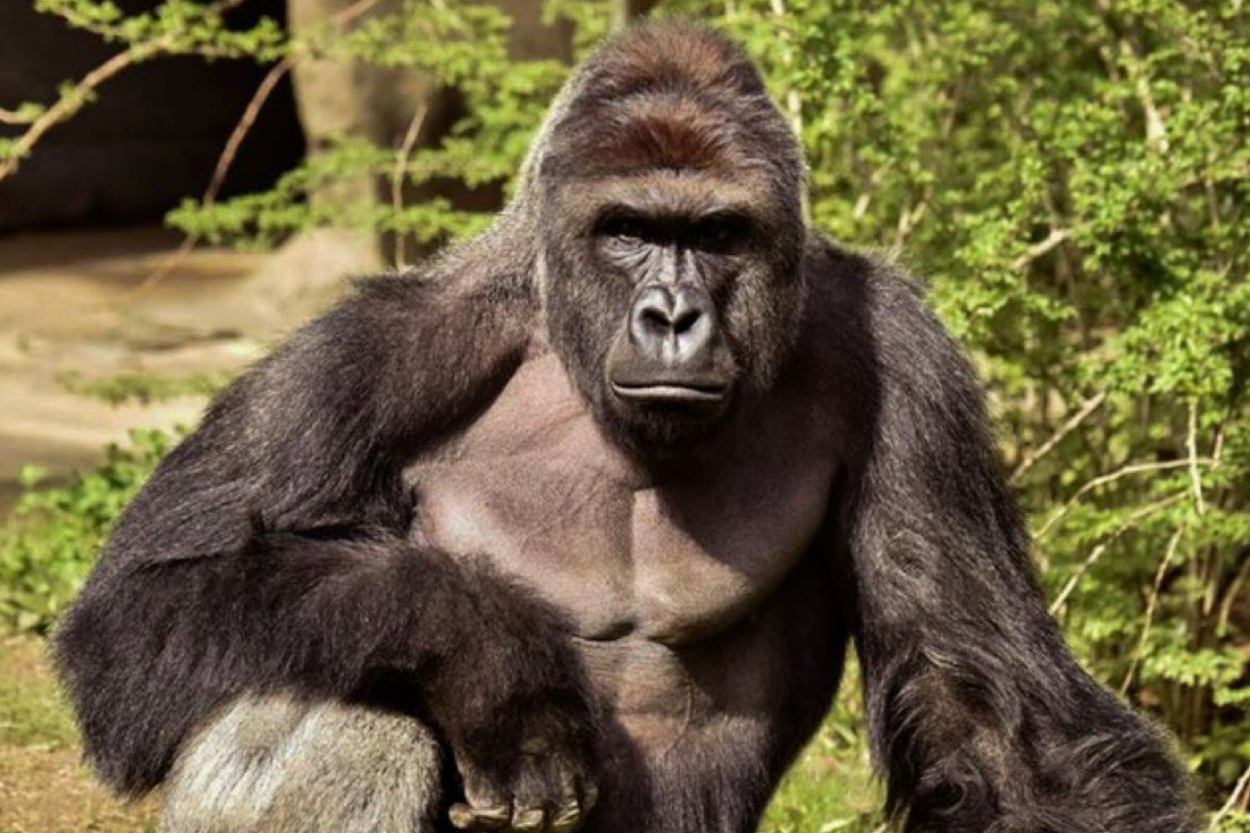
The deaths of two animals that became international symbols of the Cincinnati Zoo have renewed painful memories of incidents separated by a decade. Harambe, a 17-year-old endangered gorilla, was fatally shot in 2016 after a young boy fell into his enclosure. Now, the death of Fiona, the hippo whose premature birth and remarkable survival made her a global sensation, has brought the zoo back into the spotlight for another heartbreaking reason.
Fiona died on Thursday after swallowing a visitor’s hat that accidentally entered her enclosure. The Cincinnati Zoo said its veterinary team made multiple attempts to move the foreign object through her digestive system, but the efforts were unsuccessful.
The two deaths have triggered an outpouring of grief, comparisons across social media and renewed questions about animal safety at the facility. For Cincinnati residents, Harambe and Fiona were more than popular zoo animals. Both became part of the city’s identity, attracting international attention and creating emotional connections with millions of people.
Why Harambe’s Death in 2016 Shocked the World
Harambe was a 17-year-old western lowland gorilla living at the Cincinnati Zoo when a three-year-old boy entered his enclosure in May 2016. Zoo workers faced an emergency as the child came into contact with the powerful animal.
After assessing the situation, zoo officials decided to shoot Harambe to protect the child. The gorilla’s death immediately sparked an international controversy, with people questioning whether the response was necessary and whether the enclosure’s safety arrangements were adequate.
The incident attracted widespread media coverage and became one of the most debated animal-related stories of the year. Critics accused the zoo of failing to prevent the child from entering the enclosure, while others defended the decision to use lethal force, arguing that the child’s safety had to take priority in an unpredictable emergency.
The controversy also extended to the boy’s family. Some online campaigns demanded that his mother be held responsible, but the county prosecutor determined that there was no basis for criminal charges.
Social media reactions quickly moved beyond conventional expressions of grief. Tongue-in-cheek petitions called for Harambe to be commemorated on Mount Rushmore, the Lincoln Memorial and even the US dollar bill. More serious online campaigns used the slogan “Justice for Harambe” to demand accountability.
How Harambe’s Death Changed the Gorilla Exhibit
The Cincinnati Zoo faced intense scrutiny after the shooting. The incident raised questions about how visitors could access animal enclosures and what safeguards were needed to prevent similar emergencies.
Following the controversy, the zoo reopened its gorilla exhibit with a higher and reinforced barrier. The change was intended to strengthen the physical separation between visitors and the animals.
Although public anger eventually subsided, Harambe remained a powerful reference point in discussions about zoo safety, animal welfare and the responsibilities of facilities that keep endangered species in captivity.
His death also became an unusual part of internet culture. Memes, jokes and viral posts kept his name circulating long after the initial controversy, even as conservationists and animal lovers continued to remember the gorilla for reasons beyond online popularity.
Fiona’s Remarkable Survival Made Her a Symbol of the Zoo
Just months after Harambe’s death, the Cincinnati Zoo found itself in the international spotlight for a very different reason. In January 2017, a hippopotamus named Fiona was born prematurely, creating serious concerns about whether she would survive.
Fiona’s early condition required intensive care from the zoo’s veterinary and animal-care teams. Her progress was documented through videos, photographs and regular updates, allowing people around the world to follow her development.
Audiences watched her take bottles, spend time in the water and gradually develop the strength and coordination needed to move around. Her survival became an uplifting story at a time when the zoo was still dealing with the reputational damage caused by Harambe’s death.
Fiona eventually grew into one of the Cincinnati Zoo’s most recognisable animals. Her story attracted visitors and international attention, turning her into a symbol of resilience and the dedication of the people who cared for her.
Her popularity was also unusual because it developed through a long-running relationship with online audiences. Rather than becoming famous through a single incident, Fiona built a following as people watched her grow from a vulnerable premature newborn into a healthy adult hippo.
How a Visitor’s Hat Entered Fiona’s Enclosure
According to zoo spokesperson Michelle Curley, Fiona’s death followed an accident involving a visitor’s hat. The item reportedly struck a ceiling fan before being deflected through a small opening above the enclosure’s viewing windows.
The hat entered Fiona’s habitat and was swallowed by the hippo. Zoo officials said the veterinary team made multiple attempts to move it out of her digestive system, but the efforts ultimately failed.
In announcing her death, the Cincinnati Zoo said: “Despite multiple attempts to move the hat out of her system, it was ultimately too much to overcome.”
The incident has drawn attention to the risks posed by foreign objects entering animal habitats. Even an ordinary item such as a hat can become dangerous if an animal swallows it, particularly when veterinary teams cannot safely remove it.
The zoo’s explanation that the hat entered accidentally has not eased the sadness among visitors and people who followed Fiona’s life. Her death has also prompted comparisons with Harambe because both incidents involved visitors and ended with the loss of animals that had become closely associated with the institution.
Social Media Connects the Two Tragedies
As news of Fiona’s death spread, social media users quickly began sharing images and messages linking her story with Harambe’s. Some AI-generated pictures showed the gorilla welcoming the hippo across a rainbow bridge, while others depicted the pair together among clouds near the gates of heaven.
The images reflected the emotional connection people had developed with both animals. They also demonstrated how artificial intelligence is increasingly being used to create personalised memorial imagery during moments of public grief.
Not all reactions were focused on remembrance. Some users questioned whether the zoo had done enough to protect its animals, arguing that both deaths might have been prevented through stronger safeguards.
Others urged people to show compassion towards the zoo’s staff, particularly the keepers and veterinary professionals who had cared for Fiona throughout her life.
Dino Buddies, a local Wildlife outreach company, issued a statement asking the public to consider the grief experienced by the people who worked closely with the hippo.
“As devastated as we are, we cannot begin to fathom the grief that Fiona’s keepers, veterinary team, and the entire Cincinnati Zoo family are experiencing today,” the organisation said.
It also encouraged people to extend kindness and understanding to the staff as they mourned an animal they had cared for deeply.
Cincinnati Residents Remember Harambe and Fiona
The emotional response has been particularly strong in Cincinnati, where both animals became widely recognised local figures.
Marianne King, a resident who shared her reaction on Facebook, described Harambe’s death and Fiona’s death as the two saddest days of her time in the city.
For residents, the connection between the incidents goes beyond the fact that both happened at the same zoo. Harambe became a symbol of a controversial decision that divided public opinion, while Fiona represented hope and the possibility of survival after a difficult beginning.
Joanne Prater, who lives in the Cincinnati suburb of Loveland, said Fiona’s death dominated conversations at a high school fundraiser she attended on Thursday evening. She noticed that people repeatedly brought up Harambe while discussing the loss of the hippo.
“They are tokens of Cincinnati. You can’t say Fiona or Harambe without everybody knowing who that is here in Cincinnati,” Prater said.
She added that she believed both deaths might have been preventable, while acknowledging that accidents can happen.
Why the Two Deaths Have Renewed Questions About Zoo Safety
Although the circumstances surrounding Harambe and Fiona were different, both incidents have renewed public discussion about how zoos protect animals and visitors.
Harambe’s death followed a child entering a gorilla enclosure, leading to questions about physical barriers, visitor supervision and emergency response procedures. Fiona’s death involved an object accidentally entering an animal habitat through an opening near the viewing area.
These incidents highlight different aspects of zoo safety. Enclosures must prevent visitors from reaching animals, but they must also account for objects that could enter habitats through gaps, accidental drops or unexpected movements.
At the same time, the two tragedies should not be treated as identical failures. Harambe’s death resulted from an emergency decision made to protect a child, while Fiona’s death followed the accidental ingestion of a foreign object and unsuccessful veterinary intervention.
The public response also demonstrates how deeply individual animals can influence perceptions of wildlife institutions. A zoo’s reputation is shaped not only by its conservation programmes and visitor experiences but also by how it handles emergencies, animal welfare and communication after tragic events.
A Decade Apart, Two Animals Remain Part of Cincinnati’s Story
Harambe and Fiona became famous for very different reasons, but both developed connections with people far beyond Cincinnati. Harambe’s death became a global controversy, while Fiona’s survival inspired millions who followed her progress from premature birth to adulthood.
Their stories also reveal how quickly public attention can transform a zoo animal into a cultural symbol. Online communities, news coverage and personal memories helped turn both animals into figures recognised by people who may never have visited the Cincinnati Zoo.
For the zoo’s staff, however, the losses are not simply viral moments or subjects of online debate. They are the deaths of animals they cared for over years, and in Fiona’s case, watched grow from a fragile newborn into a much-loved adult.
A decade after Harambe’s death, Fiona’s passing has brought back memories that many Cincinnati residents had never forgotten. The comparisons may continue online, but for the people who knew and cared for the animals, the two tragedies represent deeply personal losses.
For breaking news and live news updates, like us on Facebook or follow us on Twitter and Instagram. Read more on Latest World on thefoxdaily.com.






COMMENTS 0