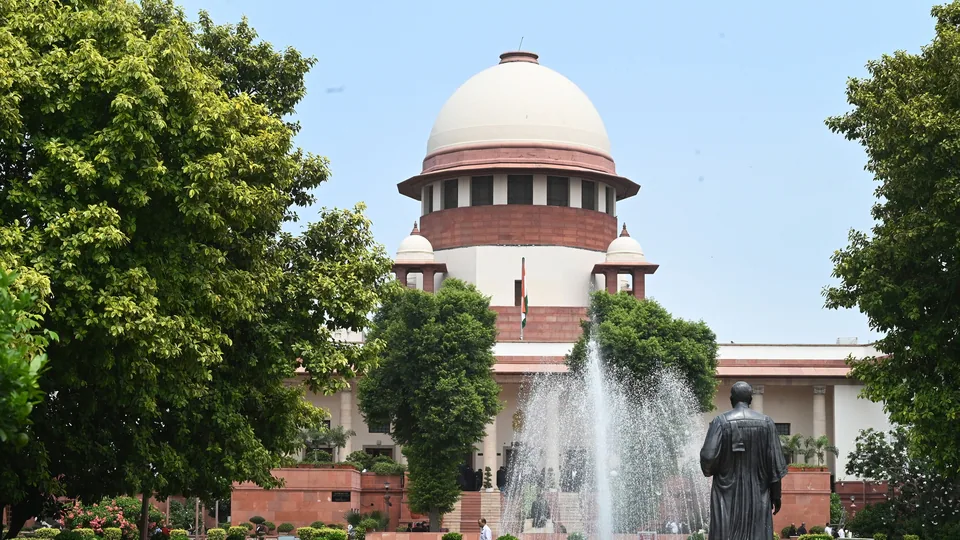
The Supreme Court has directed the Union government to grant war injury pension to an Indian Army veteran who developed rheumatoid arthritis while serving in Kargil, holding that pension policies must be interpreted according to their actual wording rather than the government’s preferred interpretation.
A bench of Justices PS Narasimha and Alok Aradhe dismissed the Centre’s appeal challenging earlier decisions by the Armed Forces Tribunal (AFT) and the High Court in favour of veteran Narendra Kumar. Both authorities had directed the government to grant him war injury pension instead of the disability pension he had received following his discharge from the Army.
The dispute centred on a 2001 Ministry of Defence policy covering disabilities arising from operations specially notified by the government. The Centre argued that the policy applied only to specifically notified operations and did not extend to ongoing operations such as Operation Rakshak, during which Kumar developed his illness.
The Supreme Court rejected that interpretation, emphasising that the government could not restrict the scope of an unambiguous policy through arguments that were not supported by its language. The ruling also called for greater clarity in the rules governing pensionary benefits for armed forces personnel.
Army Veteran Developed Rheumatoid Arthritis During Kargil Posting
According to the court order, Narendra Kumar joined the Indian Army in 1996. Between 2003 and 2005, he was posted in Kargil as part of Operation Rakshak, during which he was diagnosed with rheumatoid arthritis.
Rheumatoid arthritis is a chronic inflammatory condition. In Kumar’s case, the legal dispute concerned the pension category applicable to his disability and whether his illness fell within the scope of the Defence Ministry’s policy on war injury pension.
Kumar was discharged from the Army in 2013 and subsequently received a disability pension. He later approached the Armed Forces Tribunal, seeking the more specific benefit of war injury pension instead.
His claim relied on a Ministry of Defence policy letter issued in 2001. The policy covered disabilities arising from operations specially notified by the government, and Kumar argued that the provisions applied to his service during Operation Rakshak.
The Armed Forces Tribunal accepted his claim in April 2024, finding that his ailment originated during his posting in Kargil. The High Court upheld the tribunal’s decision in August 2025.
The Union government subsequently challenged those orders before the Supreme Court, arguing that the authorities had interpreted the policy too broadly. The dispute therefore focused on the meaning and scope of the policy rather than simply on the fact that Kumar had developed an illness while serving in the Army.
What the Centre Argued About the 2001 Defence Ministry Policy
The Union government contended that the 2001 policy letter applied only to specifically notified operations, citing examples such as Operation Sindoor and Operation Snow Leopard. According to the Centre, it did not cover ongoing operations such as Operation Rakshak in Jammu and Kashmir or Operation Rhino in Assam.
The government also argued that accepting Kumar’s interpretation would make other provisions of the policy redundant. It warned that a broad reading could potentially entitle every soldier posted in Jammu and Kashmir to the same benefit.
The Centre relied on its interpretation of the policy’s provisions to maintain that Kumar’s service during Operation Rakshak did not qualify him for war injury pension under the relevant category.
However, the Supreme Court was not persuaded by these submissions. It examined the wording of Category E(i), which deals with pension benefits linked to notified operations, and concluded that the provision was intended to give the government flexibility to cover situations involving war-like conditions.
The court treated the provision as an enabling clause rather than one that automatically excluded ongoing operations. It said that once an operation had been notified, the provision applied unless the policy or the relevant notification expressly stated otherwise.
In Kumar’s case, the bench said it found no basis for excluding Operation Rakshak apart from the oral submissions made by the Union government. The Centre’s interpretation, therefore, could not be accepted simply because it claimed the policy was intended to operate more narrowly.
Supreme Court Says Policy Must Be Interpreted According to Its Wording
A central principle of the judgment was that the government must follow the language of its own policy instead of imposing restrictions that do not appear in the text.
The bench said courts interpreting a policy must determine what it actually states, rather than substitute the policymaker’s imagined intention for the words used in the document.
The court observed that the government cannot interpret its policy in a manner that contradicts its plain wording or results in arbitrary, irrational or discriminatory outcomes.
It also rejected the suggestion that the court should introduce restrictions into a policy whose language did not impose them. The bench said the burden was not on the judiciary to narrow an unrestrictive provision through interpretation, particularly when the policy concerned pensionary benefits.
The judgment stated that a liberal interpretation was compelling in such cases and referred to the court’s approach to similar pension-related policies.
The reasoning was significant for Kumar because the Centre sought to exclude Operation Rakshak from the policy’s coverage despite the court finding no clear exclusion in the relevant provision. The bench held that the government could not rely on an asserted intention to override the text of the policy.
The ruling did not establish that every soldier serving in a particular region automatically qualifies for war injury pension. Instead, the court’s reasoning focused on the wording of the policy, the scope of the relevant category and the absence of a clear provision excluding Operation Rakshak.
Court Rejects Centre’s Reliance on Army Order 01 of 2003
The Union government also relied on Army Order 01 of 2003 in support of its argument that battle casualty reports were not initiated in ongoing operations.
The Supreme Court declined to rely on that order as a basis for restricting Kumar’s entitlement. The bench said the order caused more confusion than it clarified, rather than resolving the questions surrounding the application of the pension policy.
The court’s treatment of the order reinforced its broader concern that pension entitlements should not depend on unclear or inconsistent interpretations of government rules.
For Kumar, the Centre’s reliance on the 2003 order did not provide sufficient grounds to overturn the decisions of the Armed Forces Tribunal and the High Court. The Supreme Court consequently dismissed the government’s appeal, leaving the earlier directions in his favour intact.
Centre Asked to Clearly Define Pension Benefits for Notified Operations
While ruling in Kumar’s favour, the Supreme Court also addressed the need for greater clarity in the government’s approach to notifying military operations and specifying the pensionary benefits available to personnel who serve in them.
The bench said that when the government notifies an operation under Category E(i), it should clearly state which pension benefits apply and to whom. Such declarations would help prevent future disputes over whether particular operations fall within the scope of a policy.
The court’s direction reflects the importance of precise policy drafting in decisions affecting service personnel and veterans. If the government intends to restrict a benefit to particular operations or categories of personnel, those restrictions should be expressed clearly rather than left to competing interpretations.
Clear notifications could also help veterans understand their entitlements and allow authorities to assess pension claims against more explicit criteria. In the absence of such clarity, similar disputes may require courts and tribunals to determine the meaning of government policies after benefits have already been denied.
The judgment therefore addressed both Kumar’s individual claim and a broader administrative concern: the need for the Defence Ministry to specify the scope of pensionary benefits when issuing policies and notifying operations.
Supreme Court Flags Uncertainty in Defence Pension Rules
The bench also noted continuing uncertainty over which rules and policies issued by the Defence Ministry apply in particular circumstances and when they take effect.
It suggested that the ministry consider issuing comprehensive and clearly identifiable subordinate legislation governing service-related matters. The court linked this recommendation to the principles of fairness and good governance.
The observation points to a wider challenge in administering military pension benefits when multiple orders, policy letters and rules may be relevant to a claim. If the applicable framework is unclear, veterans and serving personnel may face uncertainty about their entitlements, while administrators may interpret the same provisions differently.
More clearly organised rules could help identify the applicable policy, explain how different provisions interact and reduce ambiguity over eligibility. The court’s suggestion placed responsibility on the government to ensure that the framework governing service conditions and pension benefits is understandable and consistently applied.
The bench’s comments also underline the importance of distinguishing between a policy’s actual requirements and an interpretation adopted by officials during the processing of individual claims.
What the Verdict Means for Narendra Kumar and Other Veterans
For Narendra Kumar, the immediate significance of the judgment is that the Union government’s challenge to the orders granting him war injury pension has been dismissed. The earlier decisions of the Armed Forces Tribunal and the High Court in his favour therefore remain in place.
The case also establishes an important interpretative principle for disputes involving military pension policies: the government cannot narrow an otherwise unrestrictive provision through an interpretation that conflicts with its wording.
For other veterans, the judgment may be relevant where pension claims depend on whether a particular operation falls within the scope of a government notification. However, the outcome of any individual claim will depend on the applicable policy, the relevant notification and the circumstances of the case.
The ruling should not be understood as granting war injury pension automatically to all personnel who develop illnesses during postings in Jammu and Kashmir or other operational areas. The Supreme Court’s decision was tied to the interpretation of the 2001 policy and the question of whether Operation Rakshak had been excluded from its coverage.
The court’s insistence on clear notifications may also encourage the Defence Ministry to specify the benefits available under future operational declarations. Such clarity could help reduce disputes and provide greater certainty for service personnel seeking pension benefits after discharge.
Conclusion
The Supreme Court’s decision in Narendra Kumar’s case reinforces the principle that government pension policies must be applied according to their written terms. By dismissing the Centre’s appeal, the bench upheld the earlier decisions granting war injury pension to the veteran who developed rheumatoid arthritis during his Kargil posting under Operation Rakshak.
The court rejected the government’s attempt to interpret the 2001 Defence Ministry policy narrowly when it found no clear basis for excluding the operation in question. It also called for explicit declarations of pension benefits under notified operations and recommended a clearer framework of Defence Ministry rules.
Beyond Kumar’s individual case, the judgment highlights the importance of transparent and consistent pension policies for military veterans. Its central message is that when the government defines benefits through a policy, it must respect the language it has adopted and make any intended restrictions clear.
For breaking news and live news updates, like us on Facebook or follow us on Twitter and Instagram. Read more on Latest India on thefoxdaily.com.






COMMENTS 0